
Documenting the Decline of the Bingo Hall
From thriving social clubs to piles of rubble.
The rough-hewn simplicity and rustic charm of traditional land-based bingo halls have captivated the imagination of thousands of people throughout the decades. Indeed, brick-and-mortar bingo halls are teeming with vibrant characters and interesting personalities that bring life to a time-honored establishment. So it’s not too surprising to learn that a few talented photographers have devoted their time and energies to document the humanity inside these old-school bingo halls. Washington resident Andrew Miksys was exposed to bingo at an early age. His father published the daily Bingo Today newspaper, which Miksys then delivered to bingo halls and convenience stores across Seattle. Miksys eventually toured America’s bingo halls to present a respectful look into the communal spirit that’s part of a bingo hall’s character.
There’s even more proof that the time-honored game is a veritable treasure trove of expressive portraits. German photographer Michael Hess is a structural engineer by training and a self-taught photographer by choice. Currently residing in London, Hess lived near a bingo hall in Southampton in 2005 and always wondered what happened inside. One fateful game in that same bingo hall was all it took to motivate Hess to travel to almost 70 bingo halls in the UK for the next four years. The result was Bingo and Social Club, a good-natured and graciously rare peek into the enigmatic society of bingo halls.
However, bingo halls are believed to be not long for this world, with many different bingo halls now closing all over the world. The classic game has found its new home online, where various companies have begun to launch online bingo portals which are much more convenient and easy to play. The Virtue Fusion software that runs the games on Betfair Bingo also allow for a variety of themed games to be held simultaneously, and land-based bingo halls just cannot keep up. As such, many bingo halls have shut down, their doors closing as though to keep their memories nestled within.
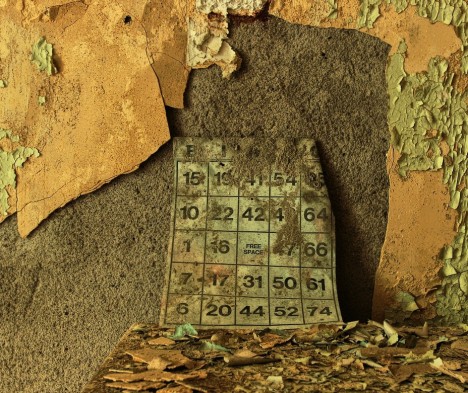
While they’re no longer visited by the average bingo player, these abandoned bingo halls have made for some truly evocative images, inspiring wayward photographers with the stories they seem to tell. Web Urbanist has even come out with a collection of haunting photographs of abandoned bingo halls called “Punched Cards”. The selection of photos has everything from dilapidated signage to the remains of old bingo cards and the remains of old structures that have now been reduced to rubble, and they make one think about all the history and memories that have been made in these places. Where people once crowded and fought to shout, “BINGO!”, there lies nothing but shambles and old signs. But often, these are exactly what the urban photographer is looking for.