Lost Plant Vault
Forgotten botanical traditions.
How plants solved everyday problems before modern products. Forgotten foods, materials and traditions. Historical education only.
Forgotten botanical traditions.
How plants solved everyday problems before modern products. Forgotten foods, materials and traditions. Historical education only.
an incorporated, non-profit, multi-agency organization founded in April 2007 by a group of individuals and organizational representatives who saw the need for a coordinated provincial response to the growing threat of invasive plants.
Invasives Canada - Canadian Council on Invasive Species
dedicated to safeguarding Canada’s ecosystems, communities, and economies from the growing threat of invasive species. As a national network of chapters, partners, and interested parties, we lead collaborative efforts to prevent and manage invasive species while promoting sustainable land and water management.
Ontario Phragmites Working Group
formed in December 2011 by dedicated professionals concerned about the growing threat posed by the aggressive invasive Phragmites australis to biodiversity, Species At Risk (SAR), recreation, tourism, infrastructure, and property values.
I have seen red trilliums growing wild and I've had some growing in the garden. They need shade and they need mulch over winter - as if they were growing on the floor of a forest, which is where they grow naturally. I never noticed a smell from them, not nice or stinky.
Cottage Life - Five Canadian Plants that Stink
- Eastern skunk cabbage (Symplocarpus foetidus); Western skunk cabbage (Lysichiton americanum)
- Red trillium (Trillium erectrum)
- Kamchatka lily (Fritillaria camschatcensis)
- Pawpaw (Asimina tribola)
- Dutchman’s pipe (Aristolochia macrophylla)
Planting wildflowers along the highway, covering the middle and sides with colour, possibly fragrance, and something that does not need to be mowed, sounds like a great idea. I thought so too. Until I thought more about it.
Wildflowers will attract more insects, small animals and bigger animals to the busiest roads which will not be good for their continued health. Between animals becoming roadkill and people trying not to hit them, it could be dangerous for both.
Seeds from some will create havoc when they blow around. Others cause allergies for people which will be distracting for drivers.
Also, just because they do not need to be mowed, does not mean there is no maintenance at all. People would have to go along a lot of highway to keep plants from growing into the road ways. That would not be free: gas, wages, vehicles and maintenance of vehicles, equipment... Probably other things I haven't thought of yet.
You may think all that unused land could even grow something useful, harvestable even. Herbs could work better than wildflowers. But, still have some of the same issues.
Any plants chosen to grow this way would need to be hardy, drought resistant, grow over spring, summer, and fall (not be dormant and leave bare ground for most of the year - which would give space for all those so called weeds to re-seed and not look pretty), not grow very tall or spread too much. This is probably one reason plants we call weeds are left to grow along the highways.
I love the idea, but it isn't as simple as it seems.
I've seen the illustrations here and there growing up in Ontario. I didn't pay attention to who created them. Just enjoyed the detail and the colours, the types of flowers: trilliums, lady's slipper, jack-in-the-pulpit, wildflowers I would look for in woodlands, gardens, anywhere they might turn up. Today I looked up the name and discovered she was the daughter of Susanna Moodie, a well known author here in Ontario.
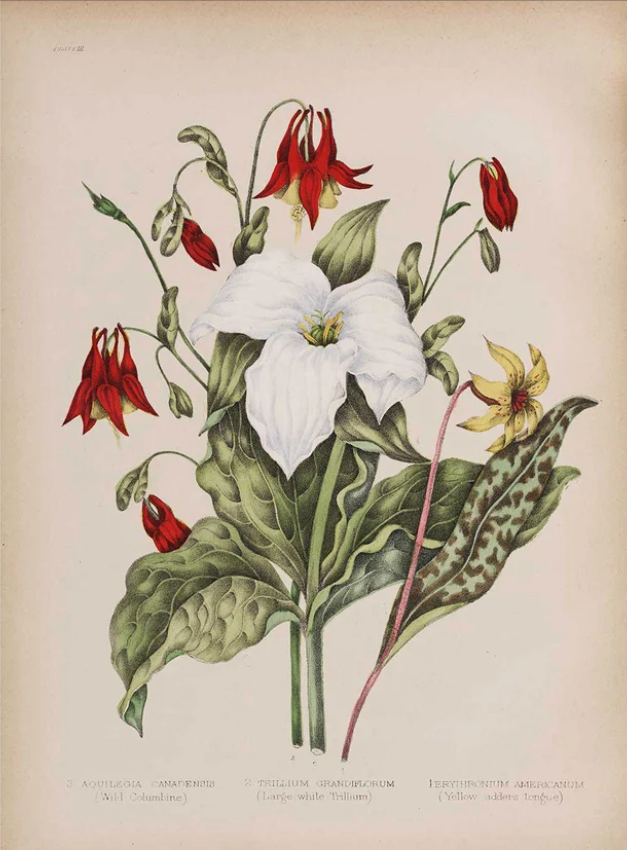
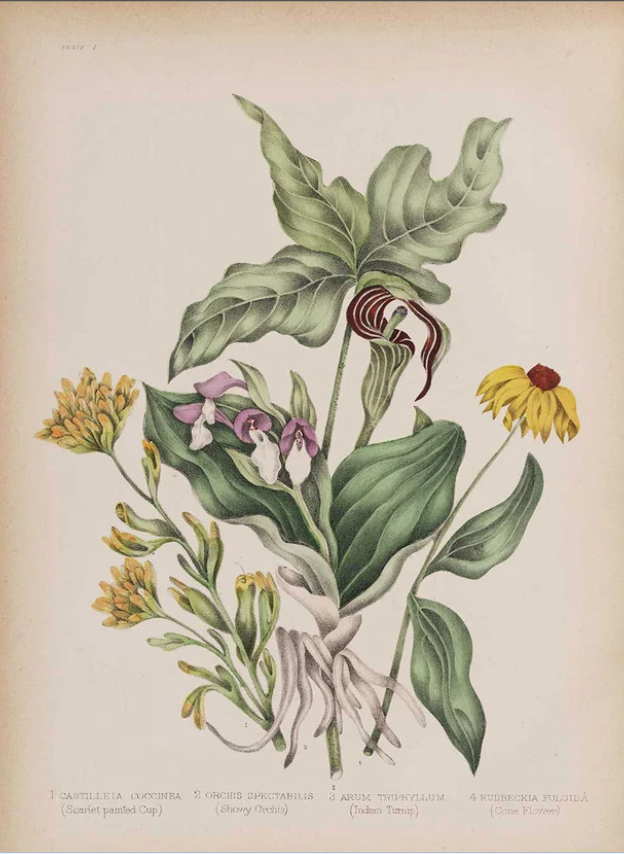
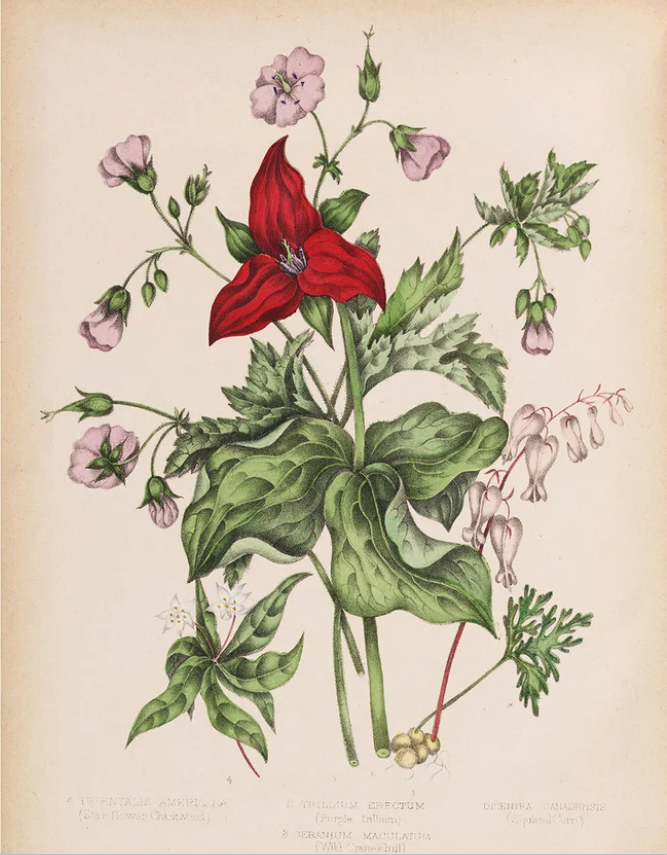
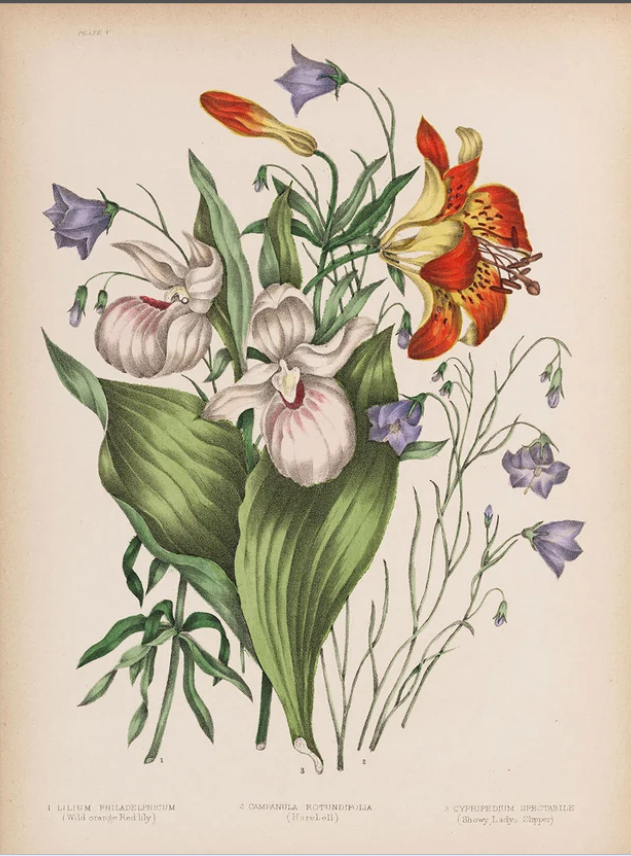
Canadian born, Agnes Dunbar Fitzgibbon Chamberlin (née Moodie; 1833–1913) was an Ontario artist.
She was born Agnes Dunbar Moodie. Her parents were John and Susanna Moodie. Agnes learned how to paint flowers from her mother.
Susana (Strickland) Moodie, sister of Catharine Parr Traill, wrote about life as a New Canadian, 'Roughing it in the Bush' about her experience farming in Ontario during the 1830's. Her sister, Catharine, wrote from a different perspective, about history in Ontario.
In 1868, Canadian Wild Flowers was published, viewed as one of the first serious botanical works published in Canada, which included text by Catharine Parr Traill. The book, very expensive for its time, was sold by subscription, largely through its author's own efforts; as an enterprising widow, she also worked as an illustrator to support her children and herself.
Agnes had 2 husbands (remarried after the first died in 1865) and 9 children.
In 1863, she began her paintings of Canadian flora to illustrate a book by her aunt, Catharine Parr Traill. After the death of her husband, she began work on a book of Canadian wild flowers, with her water-coloured illustrations and Traill's text. The book attracted 500 subscriptions, a significant number at the time.
Her paintings have been presented at exhibitions in Canada, USA, and England since 1886. She died in Toronto in 1913. Her heirs presented her paintings and copies of Canadian Wild Flowers and Studies of Plant Life in Canada to the University of Toronto in 1934–5.
I think we still have a copy of one of the reprints of the wildflower book. My Mother enjoyed Canadian and Ontario history along with gardening, antique furniture and other hobbies that became popular in the 1970's. That must be where I first saw these illustrations.