Posts tagged with “urban exploration”
† Posted on . Filed in . Tagged with .

Urban Explorers Don't Always Get Second Chances

Abandoned places are demolished before you make time to visit them. So, make sure, when you do get there, you have your camera ready. You may not get another chance.

My first time as an urban explorer was not with this camera. So far, the Panasonic has been my favourite camera and the second of four which I have bought.

Photographs of the First House I Explored (now Demolished)
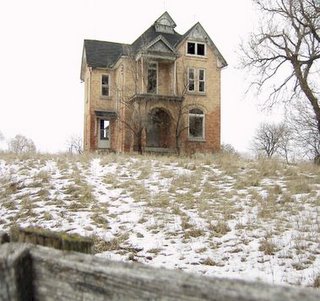
The first house I ever visited as an urban explorer. This is how it looked from the gate at the bottom of the driveway, just off the main road.
The first house I ever visited as an urban explorer. This is how it looked from the gate at the bottom of the driveway, just off the main road.

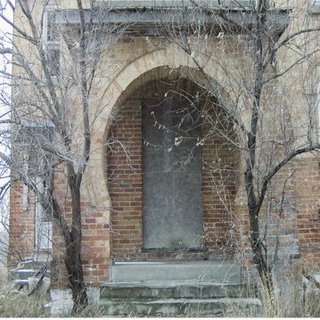
This was the front door. Lovely arch over it.
This was the front door. Lovely arch over it.

This was the left side of the house. Later I found photos of the inside and realize that was a stairway where the windows go up on the side.
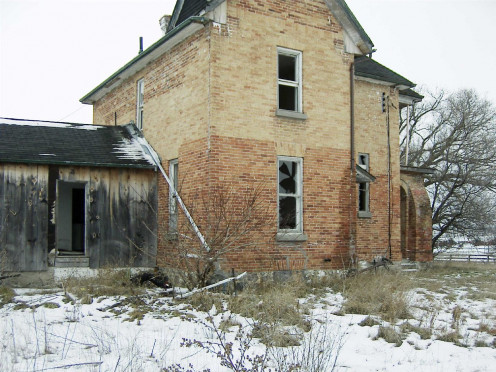
This was the left side of the house. Later I found photos of the inside and realize that was a stairway where the windows go up on the side.

This was farther to the back of the house. Likely the wooden addition was a summer kitchen.
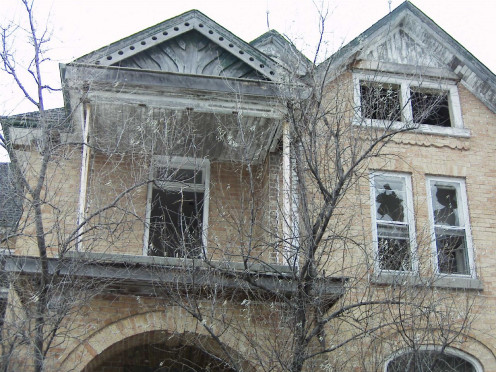
This was farther to the back of the house. Likely the wooden addition was a summer kitchen.

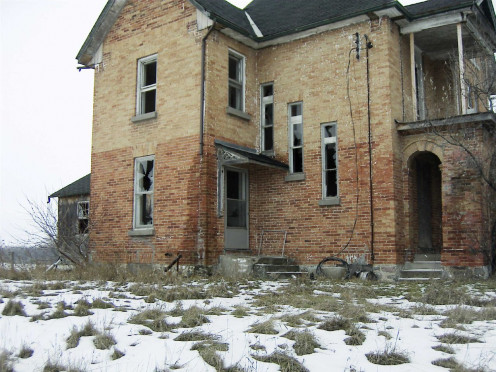
This is closer up looking at the front of the house. I like the gingerbread trim and brickwork. The colours were great.

This is closer up looking at the front of the house. I like the gingerbread trim and brickwork. The colours were great.

My First Digital Camera on my First Urban Exploration Adventure

The first camera I bought for urban exploring was made in China by a company I have not heard of before or since then. I bought that first camera at Zellers, a Canadian department store which I was working for at the time. I was so happy and proud to have my first digital camera. It was liberating to be free of film and film developing which made photography so expensive as a hobby.

That first camera needed two double A batteries. I brought extra batteries with me. But, the first time I used the camera the one thing I did not know what how important it is to have a memory card. I had none, just the memory which came with the camera itself.

So my first urban exploration adventure was not as long as I would have liked. I ran out of camera memory before I had taken even 20 photos. That may seem like plenty. But, when you are photographing an entire house, the remains of the garden, the barn and then the more interesting parts of the house where I wanted to zoom up and see more... I was out of memory.

Urban Exploration Doesn't Come with Second Chances

I still did get photos which I treasure. Unfortunately, that was the one and only trip I made to that first house. Before I got up the nerve or found the time, the house had been demolished. As an urban explorer, two things I have learned are the importance of having a camera I can rely on (with plenty of memory and a fully charged battery) and the fact that nothing lasts forever. You don't always get a second chance.

An urban explorer needs a good camera, a reliable backpack to keep it in, and a map to both mark your place and show you the way to go home again. You should also dress appropriately, don't forget the footwear!

† Posted on . Filed in . Tagged with .

An Urban Explorer Needs a Great Map Book

You may think the whole idea of being an explorer is to be the first to see something never before discovered. This isn't really what we do as urban explorers. Even the rural explorers are following past human settlement, construction and demolition. We explore in old footprints.

It helps to have a guide to where you might start. Then, when you have explored enough and the adventure of being lost is less fun than the idea of a fresh, hot coffee... the map book or guide book will show you which way to go.

My favourite is the Back Roads of Ontario, by MapArt Publishing.

Would you Doodle on Your Map?

A new map (in book form) is published each year. I don't buy a fresh book every year. Mine has notes, doodles, and marks where I found great treasure (a really unique, weathered and detailed old house). Also, the maps don't change so often that you need updated too often. But, it is nice to start again with a fresh map when my old one is getting dog-earred.

The MapArt book is an actual map, roads, rivers and all. But, I love to find a book like the one by Ron Brown pictured here. This is more than just a road map, it's reading someone else's findings, experiences and some forewarning about what you may or may not find when you look for the same places yourself. You also get to see photos someone else took. It's nice to see if you can find a better angle, maybe different light or see more than the than the author of the book noticed.

Ron Brown is one of a few people who write great books for anyone exploring Ontario history. Whether you are on the road with your camera or just want to read the history and see the photographs, the books have a lot to offer. They aren't all available on Amazon however. Some are out of print, some were published by small press and some are just plain old and forgotten.

If you want to explore take a great map book. One which shows you the roads and the back roads. But, take a look for other guide books for local history and backroad traveling.

I live in Ontario so I've shown the books I know (and have on my bookshelves) as a guide to letting you see what is out there when you start having your own adventures on the road with your trusty backpack, camera, boots and a map book!

What Does your Road Trip Map Look Like?

How do you treat your map?

  • It's in pristine condition, like new.
  • I took a course about map folding in school, my map is almost perfect.
  • It's a bit dog-eared with the odd rip or tear.
  • I've made a few notes on it and it shows some wear and tear.
  • I doodle on it, make notes, circle places I want to see again.
  • It's pretty marked up - but I just think of it as personalized.
  • My new map or the old one I couldn't really use any more?
  • It think it had enough of me and walked away on it's own one day.
  • I can't find my map.
  • Map..? We were supposed to bring a map?
  • It's at that stage where the paper is kind of fluffy now, almost like fabric.
  • I was attacked by aliens, they took a few chunks out of my map... they really did!
  • I don't own a map. They are too much responsibility and map folding scares me.
  • I just don't own a map. A map should be free, unowned.
† Posted on . Filed in . Tagged with .

An Urban Explorer Needs a Great Boot

It may sound funny, but the best boot I have found for exploring with, is the duck boot. You do need one which comes up onto your ankle rather than the one which is like a shoe. If you wear the wrong boot you may as well go exploring in open toed shoes. (I will admit to doing almost that a few times, but that doesn't mean it was a good idea).

Qualities important in a boot for urban explorers:

  • Weather proof (water resistant or water proof and include snow in that list because snow is just colder water).
  • Thick bottoms (you don't know what you might step on, into or worse).
  • Fitted to your ankle (so they don't slip off if you walk through mucky areas).
  • Easy to slip on (because you don't really want to be struggling with footwear when you could be out there... looking around).
  • Packable and durable, more or less (boots you can toss around in the back of your car or stuff into your backpack are a plus).

As an extra tip, stick those insoles into your boots. You get extra cushion for your foot and it helps if your feet get wet from outside water or sweat from your own feet.

My duck boots are a size too big so I can wear extra socks if I was out with them in winter. Or, I can easily wiggle my feet into them and out of them again. This does make them a bit awkward to walk around in so size is a relative issue.

The perfect duck boot for me would have nothing to tie up and just be slip on. I was surprised to find some really great looking boots for explorers on Amazon. I wonder if anyone thinks of them for more than hiking or hunting or whatever other people do while wearing duck boots.

Real urban explorers wear duck boots.

Just kidding about that. I think they are great, but I explore in rural areas. People who explore in sewers, drains and tunnels probably want to wear boots up to their chin, or so. People who climb rooftops to photograph above the city, might want a lighter boot with more traction. So, your boot choice will depend on where you are going. Plan ahead!

Don't try searching for "explorer boots" (you just get Dora).

† Posted on . Filed in . Tagged with .

An Introduction to My Urban Exploration

Urban exploration covers a lot of different types of exploring and people who explore. First, it's modern exploration. Not unlike explorers in history who go where few others have gone before, but we tend to focus on what was built and then neglected. The things people may see every day but don't get close for a good look.

Second, urban exploration is not about salvage or vandalism. Take only photographs and leave only footsteps - that's the rule. Trespassing is part of it, but most of us have our own rules about how far we go. I will take as many photos as I can from the street when I can't get closer. But, if access is available I will walk around the building and try to photograph it from all sides. Within reason. I don't want to take too many risks and as a BBW woman I do watch where I step and avoid close encounters with wild animals too.

I very rarely enter a building. For me this is breaking and entering and not respecting the property of others. If someone were to complain about my being on the property and taking photographs they would have a lot more reason to complain if I were inside versus just walking around in the grass, rubble and abandoned gardens.

Of course, I mainly photograph abandoned farm houses in Ontario. So, there are not many people around when I am there. The few times someone has approached me it was out of curiosity (most often). I would usually get some history of the place from these people and they were happy to tell me all that they know once they knew I was there to document it and not doing anything to cause harm.

So that's an introduction to this site and myself. You can read more about me on my other sites.

One other thing, the name of this site, Wrecky Rat Bird, comes from my nephew Zack. When he was a little boy we talked to him about the old abandoned places and he began calling them "wrecky rat bird" because they were wrecks with rats and birds living in them. I still call them all wrecky rat bird sometimes, so the name stuck even though the nephew is almost 19 now.

† Posted on . Filed in . Tagged with .

Is Ontario Really the Most Haunted Province in Canada?

Why do we assume historical places are haunted?

I would not say I don’t believe in ghosts. But, in my experience there are far less hauntings and haunted places than people would have you think.

I like to visit old buildings. Usually, living in a rural area of Ontario, I explore abandoned farms and farm houses. I like the houses in particular. I have explored at least 50 different old homes in various states of ruin and I have never had an experience which made me feel spooky, scared or consider any place to be haunted.

At most I think I once accidentally stepped on a toad in the long grass. That was gross enough. I get shudders just remembering. But, that was far from being ghost related.

Terry Boyle writes about local history and ghosts in Ontario, Canada.

I have quickly picked up each of his books as I find them. I don’t look for ghost stories but I do want to know about my own local history. (I consider all of Ontario to be at least somewhat local for me). Also, I will visit (and/ or have already seen) the places Terry Boyle has written about. I even have the photographs I’ve taken from my travels and adventures.

Maybe ghost lore and stories of haunted places come about from the loneliness of the locations and not the actual presence of anything spooky. Just the feeling that something was lost there, something has been abandoned and left to fall into ruin. Abandoned houses are sad. Old ruins are mysterious and that would be enough to make them seem haunted to anyone who wanted to find something more than just a sad, lonely and neglected place.

You can’t find the history of a place just from a visit there. I love finding a new (old) place. There is history and mystery to any old, ruined place. But, you need to research, talk to people and dig a bit to get more than photos and your own first impressions.

History is all about the story.

Terry Boyle Interview with Bookends TV