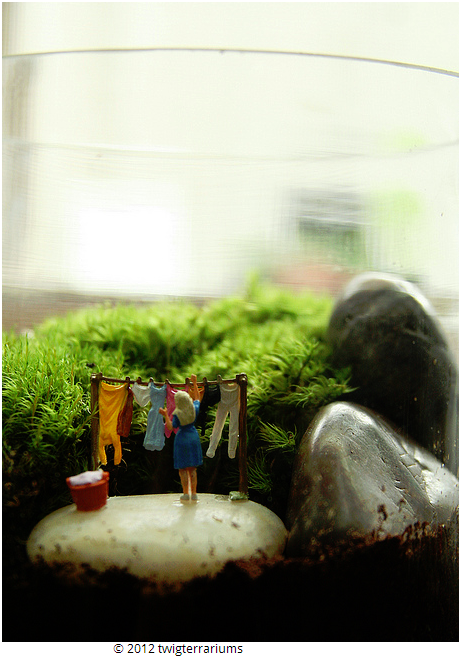
Posts tagged with “photography”
Posted on . Filed in . Tagged with , .

How to Choose the Right Camera Bag for You

Buying a camera bag is simple enough. But, there are important things to consider for protecting your camera and making sure the bag stores it well.

I take my digital camera with me on the road, literally. In various weather (I especially like rainy and overcast days for taking photos) and in all seasons, I am out there with my camera. My camera case has hay, seeds and one insect wing inside of it. I'm sure there is dirt and dust and assorted other common relatives of dust and dirt too.

It's ironic that your camera lens is so exposed to so much which could mistreat it and yet I don't have of many people having their lens scratched the way I used to. Is it luck or just using better gear, including the travel case or bag for your camera?

Get the Right Camera Bag or Case for You

Start by thinking about how you use the camera and what you need from a camera bag. Take stock of your needs and then shop for the camera case or bag that meets your needs. Don't be satisfied with less than what you need. Shop online, try a few different stores and try an actual camera store too.

  • Consider whether you need a small camera case which is light and can fit into a purse or do you need something bigger to hold more.
  • Do you need to store your battery charger and your camera cord in the case with your camera? Not everyone can store them elsewhere and know they will still be found in the same place when you need them.
  • If you travel often, with your camera, you need to consider keeping your camera safe from harm and theft.
  • If you want to take professional photos you may have more gear and accessories than the amateur or home photographer.
  • You want to protect your camera from all weather: rain, heat, cold..
  • Look for a case which gives you easy access to the camera so you don't spend time fumbling with zippers and snaps when you want to catch the action. Find a case that lets you close the top with one snap - but also has a zipper and better fastenings for when you travel and want to make sure the camera stays put.
  • Bring your camera with you when you shop so you can make sure it fits in the bag. You do not want a snug fit. If you don't have the camera with you check that you can bring the bag back to exchange it for a size up.
  • Squeeze the sides of the bag, all four sides and then the top and bottom. It should be firm - to protect the camera from impacts. Make sure you open the bag and pull out any cardboard stuffing added as packaging.
  • Try to avoid a heavy camera bag. When you are carrying it around it's only going to feel heavier.
  • Check the strap and attachments on the bag for strength and durability. See how the strap fits over your shoulder make sure you can adjust it to where you want it.
  • Does the camera bag have a clutch strap so you have the option of not carrying it over your shoulder. I like to just reach down and grab mine rather than fumbling with a long shoulder strap each time.

My Experience with Camera Bags and Cases

My old digital camera came with a nice case, it fit the camera well but it was flimsy. More like a camera envelope than and camera case. The next time I bought a digital camera (actually, I was allowed to pick whatever I wanted for my birthday) I went shopping for a better case to carry it around in. That camera was still the standard digital camera size. I could slip the whole thing into my purse easily. Even when I was using my less than huge purse. But, that case was firm with some kind of hard substance in both halves of it. So it stood up to abuse very well. Which was a good thing for anything carried around in my purse. It was also red, which made it easier to find quickly. Though my wallet and change purse were matching red, of course.

This time, when I bought a new digital camera I also had to buy a new case for it to travel in. The camera did not come with a case and my old case will not fit around the bigger sized lens. I'm up into the big lens cameras now. (I really wanted the big zoom for my photos of abandoned places which I can't always access due to fences, animals and no trespassing signs). I'm also giving my in between camera to my nephew. It's a few years old but still a great camera and he will need the case. But, he does have to find a new strap for it since the old strap broke off one day when I was dragging it out of my purse.

Anyway, I did pick out a new camera bag. They seem to call the bigger size camera carryalls, bags while the smaller carryalls are cases. I guess it makes some sense.

The one downfall of the new bag is it's size, it won't fit in my purse but it does fit into my regular backpack along with my purse and my map book and whatever books I'm currently reading. Also a few shopping bags and maybe a coffee travel mug. If I were sensible I'd bring smarter shoes too but I tend to always go around in sandals even when I end up in mud or wondering if there could be a rusty nail just waiting for me under all that long grass.

Posted on . Tagged with , , .

Little Tiny People Posed in the Big World

As a kid I liked tales of the little people living in their own tiny world inside the every day world of regular people. I would enjoy fantasy art with mice who slept in beds that were repurposed boxes of matches. They would sit on spools of thread around a table make of an old block of cheese. Not just mice.

My favourites were actual tiny sized people, not fairy creatures but real people who had some how become shrunken. Do you remember the story of Thumbelina? I liked that far more than Tom Thumb, who was a boy after all.

About a dozen years ago it seems, I first noticed the photographs of tiny people posed in the real world. The first was linked in a blog (I have long forgotten which one). Later I found several in an art blog post, with a link to a site where they had originally found the photographs. This time there was an article about the photographer, Slinkachu, who created the idea to pose miniature figures (he reformed and painted them all himself) into a new form of street art. Like a public diorama, which he left standing when he was finished photographing it.

What I really wanted to know was… how was it done?

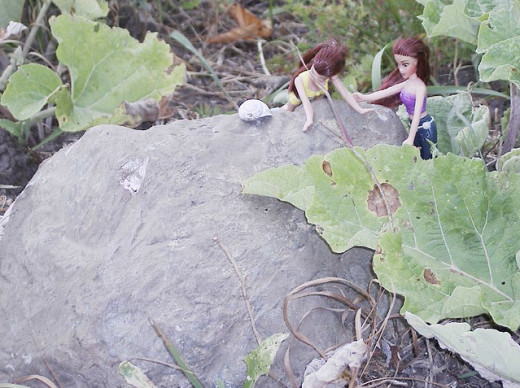
It turns out the tiny people are miniatures created for model rail road sets, dioramas as they may be called. I looked for tiny people. I was hoping to get lucky at the secondhand store. None that small in the toy bin but I did pick up two Bratz dolls, smaller sizes. I made them my tiny people in the big world. I posed them outside and indoors too. I tried to be creative but the more I worked at it the more I understood how much planning actually goes into those photos.

Of course, you need to use the macro feature on your camera. Get in close and then make sure you have the little people in focus. That wasn’t so easy either. I learned to take several extra photos because there would be at least half (or more) which would not be in crystal clear, sharp focus. It was disappointing when the very one which I had caught at just the right angle was the least in focus. But, I could usually try again, and I did!

I didn’t plan any farther ahead than the time it took me to get out the camera and the dolls as soon as I had the hint of an idea. But, it was fun, as a new hobby. I posted my photos to Flickr, some people thought I was sort of clever.

Posted on . Filed in . Tagged with .

How to Photograph Food with a Point and Click Digital Camera

Creative food photography for the holidays.

There is an art to photographing food and making it look good. Some "professional" food photographers don't use real food. Some of them use chemicals and the food becomes inedible. This isn't so much an option for everyone. Most of us plan to eat the food we are photographing, the photos were just an accessory to the main event.

It's all about the lighting. Photography is essentially capturing light and shadow, so this is the most important thing to consider and work with.

Choose a set of dishes, pots and pans, whatever cutlery and kitchen accessories you are going to have in the photo - especially the container/ plate the food is displayed on. You are creating a display of food so the food is featured and shown off but the extras add colour, design and mood to the picture.

Don't be intimidated by the food, get up close, closer even. Keep your lens out of the sauce but get as close as you can so the food mostly fills the frame of your photo. Pull back and experiment from there, but start up close.

You can use a point and shoot camera, without a flash, in natural light. I did!

Natural light works best. Put your food in a window if you can. Turn off the extra light in your kitchen and position your camera to catch the light as it falls on the food. Shadow in the background, light in the front.

You can focus and change the light with the addition of a white or black background, like a large sheet of white paper, white netting or black velvet. Experiment with this, see how diffused lighting changes your photo. Using a solid white background will reflect light back onto the food. A background can also block out the clutter of your kitchen table/ counter and the kitchen itself.

Set up props, pick the accessories which you use to display the food. You can set the stage with the details you add with the food, to show case and display it. Look for special dishes at thrift stores, you don't need a whole set so the odd plate out works for you. The extras should add atmosphere, details and compliment the food - keep the food from fading into the background (don't over accessorize).Also, smaller food photographs better but will make your accessories look huge in a close up picture.

Consider a tripod for your camera, if you don't already have one. The tripod lets you position the camera and gives you an extra set of arms to hold it exactly where you want it.

If you have a problem with blurry photos from camera shake (your hands aren't perfectly still when you take the photo) then the tripod will be a wonderful addition to your work with the camera.

Frame your photo of the food. Up to now you have been looking at the food itself. Now look at the outside edges of your camera's view. Choose where the focus will be in the middle of your photo and where you draw the line at the outer edges. There is a thing about threes in photo framing - consider your photo to be a screen with squares of 3 columns and 3 rows across. Sometimes you have a centre, or you can explore the idea of showing the food off centre. Like having the chicken breast to the right and the vegetables in the centre and the left. Or, the cake fills the left and the centre but the edge of the plate shows to the right third.

You're using a digital camera - experiment! We used to pay for every picture to be developed and have to buy rolls of film. Take advantage of the modern digital camera and take a bunch of photos to see how your lighting and display look. What worked, what didn't work, what could you change and improve?

You could pick a "best of" photo or you can take a look at what you have while the food is still hot on the table. Go back and get a fabulous photo before your food gets cold.

Don't under cook food to the point where it will look like something you wouldn't put in your mouth, but keep in mind that some food looks bland when it gets cooked awhile. Vegetables look better when they are still colourful and a bit on the crunchy side. If you prefer food to be cooked to a mushy level - do it after you take the photo.

Add a little garnish as a finishing touch - don't retouch your photo with PhotoShop. Keep your food real don't mess around with trying to add more shine, more colour or reposition parts of it. If you want to change something go back through the steps above, don't digitally enhance it in an artificial way.

Posted on . Filed in . Tagged with , , , , .

On Graduating from Rocket Squids

Last Night I Graduated from Rocket Squids on Squidoo

I didn't make as much use of he Rocket Squid program as I could have. I only read some of the articles posted for us and I didn't comment very much, or make an effort to meet more than a couple of people on Squidoo while I was there for mentoring. However, I don't think I wasted my time being there and I don't think it was a waste of time to join and be a part of Rocket Squids.

In fact, now that I've graduated I'm surprised to feel a bit like I'm missing something. I will miss the extra quests which came from Rocket Squids, also the bonus of seeing some of the new features on Squidoo first (along with the Giant Squids). But, because I do have over 25 featured lenses, I have applied to become a Giant Squid (kind of like being a Brownie and 'flying up' to become a Girl Guide). I hope I get accepted, but, of course, there is no guarantee. I may have left a few uncaught typos in my wake. I have always tried to write original and creative content.

Maybe I'm a little arrogant to think I didn't really need the Rocket Squid program. I have been writing online since 1996 after all. I've been freelance writing long before that. I'm not a kid, by far. I know how to write. Not that I'm perfect. I will say that to my nephew but he knows I'm joking.

I do have more to learn. Everyone does. The more I do learn the more questions I find to ask. So, the Rocket Squids did help me, yes, even me with all the experience I have had as a web writer, directory editor, forum moderator, newsletter diva, blogger, copywriter, network writer and so on. You can always learn more - if you take yourself a bit less seriously and listen to what others have to tell you.

Independent Blogger or Network Writer?

Is blogging still worthwhile? Is it worth the extra time, energy and resources to put into creating, maintaining and promoting your own site? Or, is it simpler to write for Squidoo (or other online networks) but only have a share of the profit from your work?

Do you have your own blog or site outside of Squidoo? If so, leave a comment with the link(s). I will visit your site and likely others who stop here will too.

If it were possible to add a third option here I would say the best option is to do both - run your own sites for the experience and be part of a network for the communicaitons and company. But, there are downfalls to each option. Being part of a network community and running your own sites too can burn you out. (I've been burnt out a few times over the years I've been publishing online).

Which is better: being your own blogger or working as part of a network of writers?

Writing for the Web...isn't Always Blogging But, it's a Place to Start

Don't get too tangled up in SEO, writing for Google. Writing online should be writing for people to read and search engines to pick up. Actually, even the search engines (Google and Yahoo) are noticing how much more important the social media and socializing in general are than the marketing. Marketing is all about sales, so often it misses the target entirely because marketers are trying to catch the attention of Google instead of actual human people. People are the ones who read your posts, leave comments and pass along links they valued or found interesting.

Are you on Twitter?

You can find me on Twitter. My username is @thatgrrl

I won't claim to be a Twitter addict but I do especially like Twitter as a way to connect to other writers, find new resources and ideas and the odd laugh too.

Don't be shy or intimidated by Twitter. It is simple to use, if you give yourself a chance to start. One thing which seems to bother people about Twitter (and a lot of social networks) is missing something when you aren't there. Get over that. Get over it quick!

Yes, you will miss some stuff. Some of it will be good. But, you will catch some stuff too and that is enough. Don't become obsessed. Just sit down, type a bit and enjoy the rush, flow and ebb of information.

There are Twitter groups for writers. They have scheduled get togethers on Twitter. You need to use a hashtag (each group will have their own - #writerstalk for example). People who run the groups can help you get started. But, mainly you just need to use Twitter to search for the hashtag the group uses and then you can read all the posts. When you reply use the same hashtag so everyone else will see your post too.

Write in Your Own Style and With Your Own Voice

How do writers write?

Anyway, here I am at the end of one path and maybe the start of another. Either way I will keep writing. I love writing. I especially enjoy the new lens format for reviewing items on Amazon. The fun is coming up with ideas around whatever I'm reviewing and making a fully robust post from the original item. There is a trick to it. Create layers to the original idea you are writing about. Don't go far off topic into some never never land... but, build up the topic with extras, layers and bundles of new and relevant ideas. This also works great for fiction writers.

You need to bundle ideas together in a way that makes sense and has flow! I think of it as having a conversation with someone I don't know. I also like to give readers extra information, a new spin on something and something else to think about or read about or study or research - new ideas to explore. It doesn't always work, but I do my best. I like bringing my own ideas, experience and opinions to something that could have been kind of bland just lying there flat on the page.

Writers all have their own style though. Each of us has our individual voice as well. So, if a writer is actually using their own voice, in their own style no two of us will ever have the same post even if we write about the exact same thing.

Writing Style Matters and Can be Developed ... but working on your writer's voice is more fun.

Writing style is about how you write, the more practical things. Some people write in a casual way with a lot of flow. Some people write in a reporter style, with the facts... mainly the facts. Some writers write like a sales pitch, not always a bad thing.

Then there is your writing voice. This is more about what you say than how you write. It's how you say it. Have you had a conversation with someone really connects with you versus someone who really seems to have nothing to say but keeps talking anyway? Your voice is important. It's how you connect to your readers. Your writer's voice is your personality typed onto the page.

Curated Content for Web Writers

Web publishing is always changing in small and less subtle ways. One upcoming idea is content curation. Based on the idea of art and museum curators who display stuff (for lack of a better word) in art galleries and museums for the public to come along and have a look.

On the web, content curation is still mostly about finding and displaying content. Finding the content can be the simplest part. Keeping the content displayed takes some extra work for those who do it well. Using a site like Scoop.it does help because the software is set up to upload the link, add an image and just let the curator fill in the blanks (mostly). One very good thing which Scoop.it does automatically is give a link back to the source of the content. Linking back and giving credit is very important. It is one of the important ethical issues which we face as web writers.

So... What did I learn from being a RocketSquid?

I learned about Squidoo. I learned about the people behind Squidoo - I'd already known about some and even bought a couple of books written by Seth Godin. Not because of Squidoo but because I wanted to read more about his perspective on web writing and publishing.

The Scroll of Originality

Content is king. You've heard the saying. But what kind of content? Is some content not king (or queen)? Is there a standard for great, high quality, remarkable content? You bet.

We at Squidoo believe that original, handcrafted, written-and-loved-and-tended-by-you content is not only the most enjoyable to write, but also the most useful for readers to discover, and the most likely to get spread to other people.

Even better, let's put a face on the word 'content.' On its own, 'content' is a broad, generic, vague term. What we've found works best for our Squidoo writers is opinion content. First hand reviews. Recommendations. Storytelling. Experience sharing. As we said 5 years ago when we started the company, Squidoo is an opportunity for you to share your point of view, your take on a specific topic. That's why lenses are called lenses -- they snap your point of view in to focus.

This is a handshake, a thank you, and a reminder to keep writing original lenses. Lenses that no one else could have written better or more uniquely than we know you can. It also comes with extra tips, to save you from spending time and energy on a low-quality, non-original lens that winds up getting removed.

The best rules of thumb for creating original content are:

Write about topics that interest you. When you're interested and have an opinion, it's easier to make a great lens.

Push yourself to create. Creation means building something from scratch. And it's extraordinarily rewarding when you do.

When you quote from or cite other sources on the web, link to them. Only quote small excerpts. Even ask in advance if you're not sure. And better yet -- follow it with your own unique perspective on that information.

Do the same for product recommendations. Even if you don't have first person experience with the product, you surely have an opinion about whether you wish you did, and what you might do if the item landed in your lap!

Achieve balance. If you hand curate and quote other sources, be sure to add plenty of your own original content to the lens at the same time.

"Duplicating content" isn't a great practice, and if there's too much duplicated content, that means it's not unique to your lens, right? It could get removed. If it's plagiarized (meaning, you use too much of someone else's content, or you don't cite even the smallest amount), your lens will get removed for sure.

Try original, with a twist: Be the editor in chief of a conversation on your lens. Even if you don't write it all yourself, moderating and adding context to other people's comments creates unique collaborative meaning.

This is an agreement to create, craft, build, bake, innovate, write, opine, talk, storytell, review, recommend, and stand out from the crowd. That's the magic of Squidoo. Thank you for being here.

By continuing to maintain and publish lenses on Squidoo, you are pledging to craft original, unique lenses. We at Squidoo are pledging to you in return that we will continue to support quality work and will help remove low-quality, aggressively non-original lenses.
Posted on . Filed in . Tagged with , .

An Urban Explorer Needs a Great Camera

So far my favourite camera for urban (and rural) exploration has been the Panasonic digital camera. It was the second digital camera I bought myself. At the time 10X zoom was the most I could find on a simple digital camera (without going for the more expensive SLR cameras). That first Panasonic was a DMC TZ3 with various other features, like a wide angle, which I didn't really get into using. It was the zoom I wanted.

When I go out to explore an abandoned place the thing I most want is to view it closer. Between having the path physically blocked by fallen debris, cement blocks and legally blocked by no trespassing signs and my own sense of how far I should go - it can be difficult to get up close and see all the details of the old places. Often, I would find more detail when I had a look at my photos at home even. So, getting a camera which could travel the distance for me was of real importance.

I also found the Panasonic was great (exceptionally great in my opinion) for capturing everything in accurate colours and shades and for not showing camera shake and thus getting everything in sharp focus.

After a few years I decided it would be nice to have a new camera and by then I could also get more than 10X the zoom. I looked online to see which camera I could get a lot of zoom from without spending more than I had in my budget for a camera.

My next camera was (is) a Fujifilm FinePix SL300 with 30X zoom (super wide). It is nice for the extra zoom but, I don't find it as good as the old Panasonic. Maybe you do get more for your buck in the camera world. I did spend more for the Panasonic (especially counting the years between purchases) than I did for the FujiFilm. Still, I'm happy enough with it.

One problem with going up higher in zoom power was the thickness of the camera lens. I can't fit it into my purse any more. This camera requires it's own carrying case/ bag. So, I bought a small Canon camera on impulse one day. It fits in my purse and it's there for anything I want to get a snap of. (I had given my nephew my Panasonic but later gave it back to myself when he left it behind when he went to university). Mainly the Canon is good for family photos, the odd quick photo of something interesting while I'm out shopping, running errands and all that day to day ordinary stuff which doesn't require a better camera.

Anyway, next time a new camera comes up in the budget... or, to be honest, next time I decide to stretch the budget mercilessly, I will buy another Panasonic Lumix. This one I have bookmarked on Amazon (see photo above) looks absolutely marvelous and it has 60X zoom!

I just searched for red camera bags because that's what I'd like to find. It needs to be easy to deal with when you want to grab your camera and put it away again quickly. Usually I want to be quick when I have to deal with things like taking photos in the rain or being attacked by animals (usually birds and bees in my experience).