Posts tagged with “maps”
Posted on . Filed in . Tagged with , , .

Ontario Schools Map Making Competition

I found this among archived pages. Unless it is revamped with a new name, I can't find it still active. Too bad. It would have been very creative and quite something to learn to create a good map. They may have been hand drawn. But, would likely all be digital, made with software, now. Kind of a shame. Nothing digital can be as unique and creative as hand drawn. In my opinion. You don't really need to be a great artist for a hand drawn map, just pick out the locations and draw the shape of the land around them. As easy as that, not quite, but kind of.

The OSMMC originated in the Geography Department at Trent University in 1969. Professor Al Brunger was the Director of the competition from 1969 to 2009. On his retirement, responsibility for the competition was taken by a group of Guelph Geographers. That group, under the direction of David T. K. Dagg, conducted the competition until a new home was found at Laurier in 2011.

In 2011-2012, the OSMCC was relocated in the Department of Geography and Environmental Studies at Wilfrid Laurier University in Waterloo, Ontario. Thank you for your patience during this transition.

Ontario Schools Map-Making Competition

Posted on . Filed in . Tagged with , .

Cartography: Map Collecting and Map Making

Have you ever made a hand drawn map, simply a way to show someone how to get from here to there? There's something special about a real hand drawn map. It's the closest we get to feeling like an old fashioned, early explorer - before GPS.

I like to explore, mostly old places. I don't mind getting lost, usually you find the most interesting places when you turn down the wrong road. What activity has more freedom, creativity and ingenuity than being an explorer? If you're athletic, that's nice, but not essential to getting out there, finding new places, things and people. You can even be an armchair explorer, to some extent but it loses some of the adventure if you really don't leave your known world and set sail for the unknown, the mysterious and the possibly risky world out there.

My Experience as a Map Maker

Drawing or making maps requires some science, and patience. Luckily, you don't have to be an exceptional artist in order to create a map. Use rules for straight lines if you want. But you can just as well draw them by hand. A hand drawn map feels more authentic and personal.

As an explorer I have drawn maps for other explorers. Maps have always been an important part of exploring. Making a map is like blazing a trail so other people can see where you have been and how you got there. Then, they can follow and choose other paths along the way.

From Here to There: A Curious Collection from the Hand Drawn Map Association A book from the Hand Drawn Map Association. Will you find inspiration for your own map making adventures? Or just wonder why, or who, made that strange map?

How to Make a Hand Drawn Map

Write the location or destination at the top of your page.

Orient your page to due north and draw the N for north with an arrow pointing up. You can go all out and draw a compass rose with all four directions and those in between.

Draw lines for the connecting streets from where currently are to where you are planning to go.

Sketch in landmarks at street corners or along the route. Try to find landmarks at any place you will need to change direction or turn down a different street.

My Adventures as a Map Collector

I don't have a big map collection myself. The maps I keep are functional for my exploring of the local area. I've got footnotes and margin notes and I've circled areas where I found something or want to go back and get a better look. Sometimes you find a place you really want to see but you spent the day searching and now it's too dark to really see what you found. So I mark the place on my map.

I used to keep my maps more pristine. But, I couldn't remember what all the tiny circles were for. As there got to be more and more of them I lost track of what each of them had started out being. So, it's better to make notes on the map - even though my first instinct as a book lover is to never harm the book, or the map. But, when you're an explorer you have to change some of your standards and theories in favour of the adventure.
Posted on . Filed in . Tagged with , , , .

An Urban Explorer Needs a Great Map Book

You may think the whole idea of being an explorer is to be the first to see something never before discovered. This isn't really what we do as urban explorers. Even the rural explorers are following past human settlement, construction and demolition. We explore in old footprints.

It helps to have a guide to where you might start. Then, when you have explored enough and the adventure of being lost is less fun than the idea of a fresh, hot coffee... the map book or guide book will show you which way to go.

My favourite is the Back Roads of Ontario, by MapArt Publishing.

Would you Doodle on Your Map?

A new map (in book form) is published each year. I don't buy a fresh book every year. Mine has notes, doodles, and marks where I found great treasure (a really unique, weathered and detailed old house). Also, the maps don't change so often that you need updated too often. But, it is nice to start again with a fresh map when my old one is getting dog-earred.

The MapArt book is an actual map, roads, rivers and all. But, I love to find a book like the one by Ron Brown pictured here. This is more than just a road map, it's reading someone else's findings, experiences and some forewarning about what you may or may not find when you look for the same places yourself. You also get to see photos someone else took. It's nice to see if you can find a better angle, maybe different light or see more than the than the author of the book noticed.

Ron Brown is one of a few people who write great books for anyone exploring Ontario history. Whether you are on the road with your camera or just want to read the history and see the photographs, the books have a lot to offer. They aren't all available on Amazon however. Some are out of print, some were published by small press and some are just plain old and forgotten.

If you want to explore take a great map book. One which shows you the roads and the back roads. But, take a look for other guide books for local history and backroad traveling.

I live in Ontario so I've shown the books I know (and have on my bookshelves) as a guide to letting you see what is out there when you start having your own adventures on the road with your trusty backpack, camera, boots and a map book!

What Does your Road Trip Map Look Like?

How do you treat your map?

  • It's in pristine condition, like new.
  • I took a course about map folding in school, my map is almost perfect.
  • It's a bit dog-eared with the odd rip or tear.
  • I've made a few notes on it and it shows some wear and tear.
  • I doodle on it, make notes, circle places I want to see again.
  • It's pretty marked up - but I just think of it as personalized.
  • My new map or the old one I couldn't really use any more?
  • It think it had enough of me and walked away on it's own one day.
  • I can't find my map.
  • Map..? We were supposed to bring a map?
  • It's at that stage where the paper is kind of fluffy now, almost like fabric.
  • I was attacked by aliens, they took a few chunks out of my map... they really did!
  • I don't own a map. They are too much responsibility and map folding scares me.
  • I just don't own a map. A map should be free, unowned.
Posted on . Filed in . Tagged with , , .

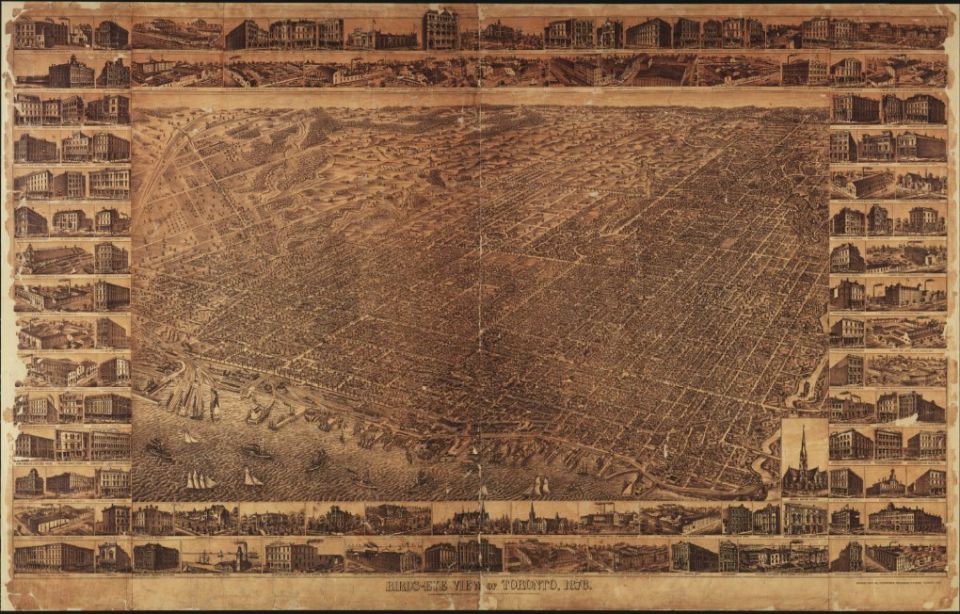
How to Make an Old Fashioned Map

No map is made perfectly. You just can't turn something round and bumpy into something flat and smooth. But, you can make your own imperfect, old fashioned maps.

Map making is cartography - the study, collecting and making of maps. Have you ever wondered how early people created maps? How they could understand where land ended, where the water came in and how high the mountains reached, even though they had very rudimentary skills (in comparison to the modern technology) in geography, science and mathematics?

As school kid, I used to wonder how they knew the shape of the coastline. How could they guess well enough to draw it. They didn't even get the perfectly right dimensions for the land itself. In the old times, especially the more ancient people, may as well have been drawing fantasy maps from their own imaginations. Or, so I thought.

How to Make Paper Look Old

You can make paper look old with cold, strong black tea, instant coffee or strong, regular coffee, a cookie sheet and a blow dryer or clothes iron to crisp it up again.

Your paper can already be written on or still blank. It may be better to write or draw your map on the paper first as it could rip or tear easier once you have finished giving it the age treatment.

Just let the tea of coffee become strong and then leave it to become cold. Crumple up your paper (don't let it rip). Uncrumple the paper and smooth it out. Place it on the cookie sheet and pour the cold tea/ coffee over it. Let it soak up to an hour, turning it over once and pressing it down to be sure no edges are missed.

Pull it out, let it dry slightly, then use the blow dryer or clothes iron until your paper is completely dry. Use a cigarette lighter to singe the edges a little for a bit more of a vintage look.

No Map is Precisely Perfectly Made

No map is perfectly made. There isn't a perfect method to take the true measurements of the land and put them on a flat piece of paper. Imagine a globe of the world map. Then think about how that globe would have to be changed in order to become a flat map. This is what causes the distortions in map making.

Most maps you will see are created with the Albers conic equal-area projection. This is based on keeping the area and shape of the land correct rather than being mathematically precise.

When you draw your own map you need to gather as much information as you can about the place you want to draw. Take all the measurements and then convert them to a smaller scale and keep the same conversion for everything you draw. This will mean a lot of math skills if you are trying to be very correct and precise. It's much easier to draw a fictional map than something real.

At the end you will need a map legend too. That's how you show various features like shopping malls, schools, etc. without having to write them in by name each time. Legends are a short cut for map makers - plus they keep your map from becoming very cluttered.

What Type of Map Will you Make?

Most maps are political, physical or based on some other theme like oil production, telephone lines, forest density, etc. A physical map is all about the land itself. The focus is in rivers, lakes, hills, mountains, and everything else you could see with your eye. Meanwhile, political maps are all about man made definitions like borders between countries, provinces, states, counties and the locations of towns and cities and roadways.

The Finishing Touches

Don't forget the map legend and the compass rose (or at least the arrow pointing north). Also, every explorer should sign the map they have created.

The Drawing of the Map

Start with pencil as you make your first rough draft.

Consider how large or small your map will be. A map showing a larger area will have less detail to focus on versus a map which is based on a smaller area and would need to bring in more attention to detail and focus on the features of the area.

Begin the map from one side, drawing your rough outlines until you have included all the space you need for each area. When you have gotten to the other side of your map step back and get a long range look. If that works out (if you don't need to make some changes to fit in some features in the right locations) begin fleshing out the details.

You might find it helpful to use grid paper rather than giving yourself a complete clean page. The grid could keep your distances straighter as you work out where everything should be drawn in.

When your map is looking good make a clean version and, once that is done, trace your lines in pen. Then begin to add names for the locations and features on the map.

Posted on . Filed in . Tagged with , , , .

A Fan of the Map

I do like maps, strongly, not quite enough to love them. Love being such a big word in small letters. I use a map when I explore rural ruins. I use it to find the locations when others tell me they have found an abandoned farmhouse in my area. I have a backroad map which (so far) has been very reliable, even when I've taken some pretty far fetched turns.

For his birthday, I gave my nephew two full poster-sized maps. One of Canada and the other of the World. We put them up in his bedroom. Is it only a co-incidence that geography is the subject he seems to be having the most trouble with this year? I hope so. I may not be ready to tell him everything he needs to know about geography but I would like to see him learn about rocks, maps and navigation. One of the most important things in life is knowing how to navigate your way.

I remember the last time I looked at a really old map. I liked seeing the terrors written on there like monsters and the edge of the world. Thanks to cartographers and world explorers and ancient navigators we know the world does not end with a sudden drop. Modern explorers and those into geocaching use a GPS to find their way around. But even then, the old fashioned map is at the root of every exploration.

Old/ Vintage Maps

Hand Drawn Maps