Posts tagged with “creative arts”
Posted on . Filed in . Tagged with , , .

How to Become a Pixel Artist

Pixel art is an image drawn pixel-by-pixel using a limited color palette and usually primitive/ retro computer graphics tools. Microsoft Paint, a bitmap graphics editor, was a popular software for creating 2D sprites and pixel art.

Pixel art was used for 2D games. It's retro now. 3D games took over and there weren't many 2D games around any more. MapleStory is one which still uses pixel art. Computer icons and those tiny smiley graphics are also still created using pixel art.

Like ASCII art, pixel art is coming back into usefulness now that there are small applications (for mobile phones, etc.) which need simple art files and illustrations.

I've begun making pixel art. Mine is the size of icons. I've used some of my pixel art as favicons for my sites. It's interesting to work with pixels. You need a fairly steady hand, or the patience to go back over your work and remove tiny extra lines and pixels one by one. Most of the graphics software make it easy to fill in your colour. To make the more detailed art you need to pay attention to shadowing and light. Just as photographers and other graphic artists do.

Pixel art used for icons is much simpler. It's flat. You can use two basic colours, one for the outline to give it shape inside the basic outline and the other just to give it colour rather than leaving it black and white.

I'd like to do the more detailed pixel art. I've been working my way up to it. I'm not ready to share my early creations, they are a bit discouraging while I figure out the process and how to make the light and shadows work to give my graphics depth rather than just looking odd and warped.

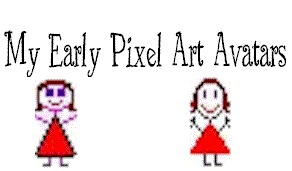
My Pixel Art Avatars in Real Size and Enlarged

Posted on . Filed in . Tagged with , , , .

Crazy Quilting: Repurpose your Sewing Scraps

Crazy quilting is another way of creating patchwork quilts. Crazy quilts don't use a pattern (traditionally). They are the ultimate in scrap quilting. Crazy quilts are often heavily embellished too. Some use ribbon embroidery.

Crazy Quilting is More than Just Embellished Patchwork

The first crazy quilt I saw was embroidered with delicate stitches, beads and other little things. There were images of birds, spiders and other creatures and things the quilter must have liked or been thinking about. She (I'm assuming it was a woman quilter) had used fabric scraps, fabric and textiles from used clothes, her own wedding gown and her Mother's wedding gown, cigar bands and assorted other textiles which I no longer remember. That quilt was full of local history and her own personal history. All together it was an elaborate masterpiece to keep you warm, snuggled up in your bed each night.

Early crazy quilts were from the 1800's, were made with silk and velvet then heavily embroidered. Often beads, buttons and accessories were added for an extra glamorous touch. Though the idea was to recycle, they were meant to be showy creations. It's a shame to see some modern crazy quilts which have become far more on the practical side versus being gorgeous and decadent looking. But, the concept is still the same.

Vintage Vogue - Crazy Quilt Blocks - https://thatgrrl.com/blog/includes/download.php?file=vintage-vogue-crazy-quilt-blocks.pdf

Posted on . Filed in . Tagged with , .

Made with Crochet Granny Squares

I taught myself to crochet granny squares. I made lots of them. I used a lot of coloured yarn but then I stopped. I never did start doing anything with them all. I've still got some of them around. So this is my quest to get back to crocheting and to make something with the granny squares I already have.

What I'd really like to find for sewing up all those granny squares is a backpack. The kind I can use as a purse. So it has to be medium sized with enough extra pockets, zipper pockets and fold over pockets, for my keys, the book I'm reading, my digital camera, paper and pens I keep for making notes, my bus pass, my wallet, my mobile pharmacy, and all the other essential stuff I carry around day to day.

So far I can't find anything to suit me. But I have found some very interesting, unique and creative patterns and ideas.

Granny Square History

Crochet itself seems to have been around since the 1350s and likely before. People didn't always make a point to write about the work of women. So there are many things we won't ever know about. Those we have now were likely passed down a long time, though many generations of women.

Granny squares date back to at least Victorian times. They were known as patchwork squares. Most often they were a good way to use up scraps of yarn from other projects. So the patchwork squares were a simple pattern which could be used for everyday stuff rather than the fancy work like crochet lace and doilies.

Granny squares found new popularity in the 1970's when people wanted simple and colourful crafts to make and wear.

Posted on . Filed in . Tagged with , .

My Idea for the Home Office Vision Board that Wouldn't Stick

My adventure started with the plan to make myself a vision board for my home office.

A vision board is something you can decorate with your ideas, hopes, dreams and most of all, your goals. It's like creating a scrapbook of your future and displaying it where you can see it. This way you are never far from your goals, should you need fresh inspiration or encouragement. A vision board is a practical solution to self-support but it can also be creative and fun.

My vision board was going to be a magnetic white board I could write on and stick things onto (with magnets). This way it could double as a calendar for events I didn't want to forget. Seemed like a good combination for my mini home office.

I bought one of those magnetic whiteboards. I found one which was priced for my budget, seemed sturdy enough, came with accessories (like dragonfly magnets) and looked the right size for what I wanted. I would have liked bigger but space was an issue. (My home office is one half of my bedroom).

I unpackaged my whiteboard. It came with stickers to attach it to the wall. The claim was the stickers would mount the board without leaving a sticky mess if you wanted to move the board later. Well... they were right about one part of that. The board did not leave a sticky mess any of the four times it fell off the wall. The first time I had to look around to figure out what had made the noise. I found the board on the floor, one dragonfly magnet missing, and not yet found.

Nothing bonked into the board on the wall. I don't have pets or children. The whiteboard just falls off the wall, all on it's own. I would stick it up again, adding extra pressure to the sticking points and yet... down it would fall a couple of days later.

This was not what I wanted. You can't see your vision board if it keeps falling off the wall and losing parts.

Eventually, the board was left down then moved around from one bookshelf to the dresser to somewhere else when it got in the way. The great whiteboard vision board quest seemed like a bust. Well, not every adventure goes as planned. I pretty much forgot the whiteboard for awhile. One day I moved the dresser and only noticed the whiteboard when it fell in behind the dresser. It has been there since, giving the dust bunnies visions of whatever dust bunnies dream up. Dust bunny world domination?

Then I got the idea... another idea for the vision board plan.

Why not mount it on a standing display? Like an artist easel, a drafting or craft table, something like that! I found very nice easels... some which were cheaper and seemed to be too cheap (flimsy) and others looked great but were far over my vision board budget. I found my dream vision board on eBay! It was so perfect and yet so very, very impractical. It could double as a room divider and would take me until next year to pay off on the credit card. So the easel idea was not seeming to work out so well. I did try a few other searches and found a few other options which I ruled out due to budget, flimsiness or made for children and looked it!

You may be looking up at the top of this post and see the magazine rack up there. THAT was my solution! Not only sturdy enough to hold something the weight of a few magazines, but open ended so my whiteboard would fit right in there. True it won't be freestanding on the floor or nailed to the wall and out of the way. But, it won't be lost behind the dresser, part of the dust bunny world domination plot either.

So I am ordering the magazine rack which this post shows at the top. I found you could get a lot of magazine racks which were not open at the ends. This would be fine if you measured your whiteboard and knew it could fit inside. I'm not even going to try that. I like the open ends because it will be easy to slip the board out and add new dreams, goals and visions to it. The magazine rack will keep it standing upright without requiring hardware or hammering nails into my walls. I can set it on my desk or give it space on a bookshelf or the top of my dresser.

So, the adventure will all work out. You could also use a letter holder. I do have one of those but it is already stuffed with stuff-to-do.
Posted on . Tagged with , , .

Little Tiny People Posed in the Big World

As a kid I liked tales of the little people living in their own tiny world inside the every day world of regular people. I would enjoy fantasy art with mice who slept in beds that were repurposed boxes of matches. They would sit on spools of thread around a table make of an old block of cheese. Not just mice.

My favourites were actual tiny sized people, not fairy creatures but real people who had some how become shrunken. Do you remember the story of Thumbelina? I liked that far more than Tom Thumb, who was a boy after all.

About a dozen years ago it seems, I first noticed the photographs of tiny people posed in the real world. The first was linked in a blog (I have long forgotten which one). Later I found several in an art blog post, with a link to a site where they had originally found the photographs. This time there was an article about the photographer, Slinkachu, who created the idea to pose miniature figures (he reformed and painted them all himself) into a new form of street art. Like a public diorama, which he left standing when he was finished photographing it.

What I really wanted to know was… how was it done?

It turns out the tiny people are miniatures created for model rail road sets, dioramas as they may be called. I looked for tiny people. I was hoping to get lucky at the secondhand store. None that small in the toy bin but I did pick up two Bratz dolls, smaller sizes. I made them my tiny people in the big world. I posed them outside and indoors too. I tried to be creative but the more I worked at it the more I understood how much planning actually goes into those photos.

Of course, you need to use the macro feature on your camera. Get in close and then make sure you have the little people in focus. That wasn’t so easy either. I learned to take several extra photos because there would be at least half (or more) which would not be in crystal clear, sharp focus. It was disappointing when the very one which I had caught at just the right angle was the least in focus. But, I could usually try again, and I did!

I didn’t plan any farther ahead than the time it took me to get out the camera and the dolls as soon as I had the hint of an idea. But, it was fun, as a new hobby. I posted my photos to Flickr, some people thought I was sort of clever.