Posts tagged with “creative arts”
† Posted on . Filed in . Tagged with .

Kaleidoscope

One of the old, odd and curious devices children had in the 1970's (not just then, but that's when I had one) is the kaleidoscope. I have no idea where mine ended up. It was a cardboard tube with plastic beads inside the end. As you turned the tube the beads rolled around and created different patterns when you looked through the lens at the top. I think it would be related to those keyhole/ pinhole cameras. Do I have that name right? I read about them years ago.

I've seen some variations in kaleidoscope styles. Some have little gems inside, instead of beads, or something else entirely. The one I would have like to buy (and try) was a natural DIY kaleidoscope which you could put anything flat enough to fit in and view it. The ad showed flowers, bits of leaves and other things found outside. Not rocks mostly likely, they would scratch it and be too large to fit. I found several of this kind on Amazon and elsewhere but none were shipped from Canada, or at least from Amazon itself. Also, I thought they should have a nicer wood and finish. They look a bit too cheap, as they are.

Amazon kaleidoscope link.

Vintage kaleidoscopes had interchangeable gears/wheels/discs to switch out. Others I found had a glass marble at the end of the tube, some were able to change those too. Yet more are artsy and individual looking, and even more expensive. What really matters is what you see when you look through.

I want lots of colours and different shapes. A few only had black and white, which was interesting but not as pretty. More colours and, of course, more shapes, will give the kaleidoscope more patterns. If you have one, try to turn the scope just a tiny bit and what the colours and shapes twitch just the least little bit. I would try to keep an eye on one particular bead and follow it.

Life is like a kaleidoscope, a slight change and all patterns alter.

The Brewster Kaleidoscope Society

Kaleidoscope from Wikipedia:

A kaleidoscope (/kəˈlaɪdəskoʊp/) is an optical instrument with two or more reflecting surfaces (or mirrors) tilted to each other at an angle, so that one or more (parts of) objects on one end of these mirrors are shown as a symmetrical pattern when viewed from the other end, due to repeated reflection. These reflectors are often enclosed in a tube, usually containing on one end a cell with loose, colored pieces of glass or other transparent (and/or opaque) materials to be reflected into the viewed pattern. Rotation of the cell causes motion of the materials, resulting in an ever-changing view being presented.

History

Multiple reflection by two or more reflecting surfaces has been known since antiquity and was described as such by Giambattista della Porta in his Magia Naturalis (1558–1589). In 1646, Athanasius Kircher described an experiment with a construction of two mirrors, which could be opened and closed like a book and positioned in various angles, showing regular polygon figures consisting of reflected aliquot sectors of 360°. Richard Bradley's New Improvements in Planting and Gardening (1717) described a similar construction to be placed on geometrical drawings to show an image with multiplied reflection. However, an optimal configuration that produces the full effects of the kaleidoscope was not recorded before 1815.

In 1814, Sir David Brewster conducted experiments on light polarization by successive reflections between plates of glass and first noted "the circular arrangement of the images of a candle round a center, and the multiplication of the sectors formed by the extremities of the plates of glass". He forgot about it, but noticed a more impressive version of the effect during further experiments in February 1815. A while later, he was impressed by the multiplied reflection of a bit of cement that was pressed through at the end of a triangular glass trough, which appeared more regular and almost perfectly symmetrical in comparison to the reflected objects that had been situated further away from the reflecting plates in earlier experiments. This triggered more experiments to find the conditions for the most beautiful and symmetrically perfect conditions. An early version had pieces of colored glass and other irregular objects fixed permanently and was admired by some Members of the Royal Society of Edinburgh, including Sir George Mackenzie who predicted its popularity. A version followed in which some of the objects and pieces of glass could move when the tube was rotated. The last step, regarded as most important by Brewster, was to place the reflecting panes in a draw tube with a concave lens to distinctly introduce surrounding objects into the reflected pattern.

Brewster thought his instrument to be of great value in "all the ornamental arts" as a device that creates an "infinity of patterns". Artists could accurately delineate the produced figures of the kaleidoscope by means of the solar microscope (a type of camera obscura device), magic lantern or camera lucida. Brewster believed it would at the same time become a popular instrument "for the purposes of rational amusement". He decided to apply for a patent. British patent no. 4136 "for a new Optical Instrument called "The Kaleidoscope" for exhibiting and creating beautiful Forms and Patterns of great use in all the ornamental Arts" was granted in July 1817. Unfortunately, the manufacturer originally engaged to produce the product had shown one of the patent instruments to London opticians to see if he could get orders from them. Soon the instrument was copied and marketed before the manufacturer had prepared any number of kaleidoscopes for sale. An estimated two hundred thousand kaleidoscopes sold in London and Paris in just three months. Brewster figured at most a thousand of these were authorized copies that were constructed correctly, while the majority of the others did not give a correct impression of his invention. Because so relatively few people had experienced a proper kaleidoscope or knew how to apply it to ornamental arts, he decided to publicize a treatise on the principles and the correct construction of the kaleidoscope.

More than you wanted to know, but its still interesting to read. The Wikipedia link has more.

Instructables has a fancy kaleidoscope to make. Not one of the simpler cardboard types.

I wonder if there is some kind of digital kaleidoscope? A software program. I didn't look for one, but I'd be surprised not to find something like that.
† Posted on . Filed in . Tagged with .

If you Still Have a Personal Web Site...

I think a personal website is an online page (or more) created to share interests without marketing at people. Usually, its a simple site. Almost something I could build myself (at first glance anyway) limited as I am with plain HTML skills and a dash of CSS, maybe some javascript. Well not really, but I'm not 100% clueless about javascript.

There are less personal websites, or are they just so much harder to find? It could be either way. I tend to find ideas, links, and groups for personal site makers in clusters. Start somewhere and follow the trail with all sorts of interesting and unique stops along the way. So, here are the latest I have found. Some are more for people with knowledge beyond mine: developers and programmers who do not make cookie cutter stuff for WordPress. I don't make stuff for WordPress, but it seems phony (to me) when people call themselves web designers and only know how to deal with WordPress (not always well). I may as well call myself a web designer if that was all there is to it.

Octothorp - Github link

Octothorpes are hashtags and backlinks that can be used on regular websites, connecting pages across the open internet regardless of where they're hosted.

Octothorp is redeveloping/ bringing back the blogroll and webring idea. I think its improved a little. People shouldn't need to update every link in the ring, there should be some automation (as far as I have understood it) that would stop showing a link if it disappears. This was one problem with the old blogrolls/ webrings.

Do you know, the original webring is still online? You may never have heard of it, even if you are as old as I am.

Expanding Unidirectional Ring Of Pages

EUROPa is a different way to connect up and explore the World-Wide Web. It was started at Imperial College, London, UK on 1994-12-22 by Denis Howe just to see how far it would spread.

Blag

blag is a blog-aware, static site generator -- it uses Markdown and is written in Python.

Blag might be even simpler than Chryp Lite, which I'm using now. But, I don't think it is simple enough for me to work with. You need to open up terminals in your OS. I used to do that when I had Ubuntu Linux. But, its been years since I was able to get Ubuntu to work on any computer I have bought (retail) in a long time. I'd go back to Ubuntu, if I could save everything (kind of a big job). Then remove MS Windows, which the PC is not keen on allowing. Installing Ubuntu was not hard, or difficult. Using it was easier than Windows really. Plus, I could laugh at sites claiming I've been attacked by MS Windows in some way. If you are running Linux, you might like to try Blag.

11ty - Eleventy is a static site generator. Requires javascript and being able to run things in your computer terminal. It looks nice and clean but... not so simple as I would like these days.

Bukmark Club - "To be eligible for a listing in this directory, a website must have a curated collection of bookmarks and/or links to other websites".

I have had so many collections of links for assorted topics. It comes from all the years of editing at The Open Directory Project, now Curlie.org. Unless you just have a handful of links, its is a LOT of work to keep a collection of links updated. You need something to help you go through and find any which are broken. But, I'd still like to update some of my pages of links and add them to this directory. :)

Places to list your personal website:

Description of a personal website which I thought was a bit rough around the edges but worked:

The entries on this website were written to be written and not necessarily to be read. While they have been made public, the same could be said of garbage bags discarded in the woods or stomach contents expelled against a wall. The author expects nothing from the reader and asks only to be accorded the same courtesy.

Rationale More from the same person, on another of his sites.

There is something inherently suspect about publicly volunteering information without being asked or provoked. Anyone who engages in such behavior bears the burden of explaining why they chose to do so rather than remain silent. In the absence of a satisfying justification, silence must appear far preferable.

Starting a personal website such as this one may come across as presumptuous or arrogant, provided there is no evidence of prior interest in one’s person. The author of such a website appears to be making an implicit claim that it will be useful, interesting, or relevant to someone else. It is only natural to expect them to defend this claim.

I regret to say that any justification I can provide will likely be insufficient and disappointing. At the time of writing, I have no reason to believe there exists any general interest in myself. Moreover, I most emphatically do not believe that such interest ought to exist. I do not particularly wish to be known. I have nothing particularly important to say. I am not even particularly interested in the general concept of communication with others.

The truth is that I created this website for purely personal reasons. I view it as an experiment in proving to myself that I, in fact, do exist, and that there is something that could be said about myself. I needed this because I tend to consistently doubt these two points.

It could be argued that I could have achieved the same result by writing some facts about myself on a loose piece of paper or by digging a hole in the ground and shouting the facts into it, rather than publishing them on the web for the whole world to see. This is a sound argument. In response, I can only offer a vague intuition that proving one’s existence must have something to do with establishing an objectively verifiable presence in the external world.

I assume you have visited this website of your own volition. I am afraid you will have to furnish your own reasons for reading its contents, and if none can be found, you have only yourself to blame. Whatever your motivation, by being here you are contributing to the success of my experiment. Thank you.

I've reposted all of this because some of the best stuff I find disappears without notice. Very likely this site (mine, all of them) will disappear without much notice or fanfare too. If someone does continue to pay the web host, it doesn't last forever. I'm glad for the Wayback Machine and Internet Archives. Now and then I give them a few dollars I can spare, thinking of the future and hoping I won't entirely disappear from it. I'm silly that way. I think its a sign of age.

† Posted on . Filed in . Tagged with .

Weird Web October and Inktober

Weird Web October is a challenge to try and make a website every day of October, based on the theme for each day, inspired by Inktober. It’s open to you and everyone! #weirdweboctober

My name is Jay Zuerndorfer and I decided to organize Weird Web October after talking about the idea with fellow attendees of the 2024 XOXO festival.

Jake Parker created Inktober in 2009 as a challenge to improve his inking skills and develop positive drawing habits. It has since grown into a worldwide endeavor with thousands of artists taking on the challenge every year.

Inktober now has merchandise. Kind of ruins the idea for me. But, I understand wanting to market it and make money from the point of view of Jake Parker and whoever else has become involved.

† Posted on . Filed in . Tagged with .

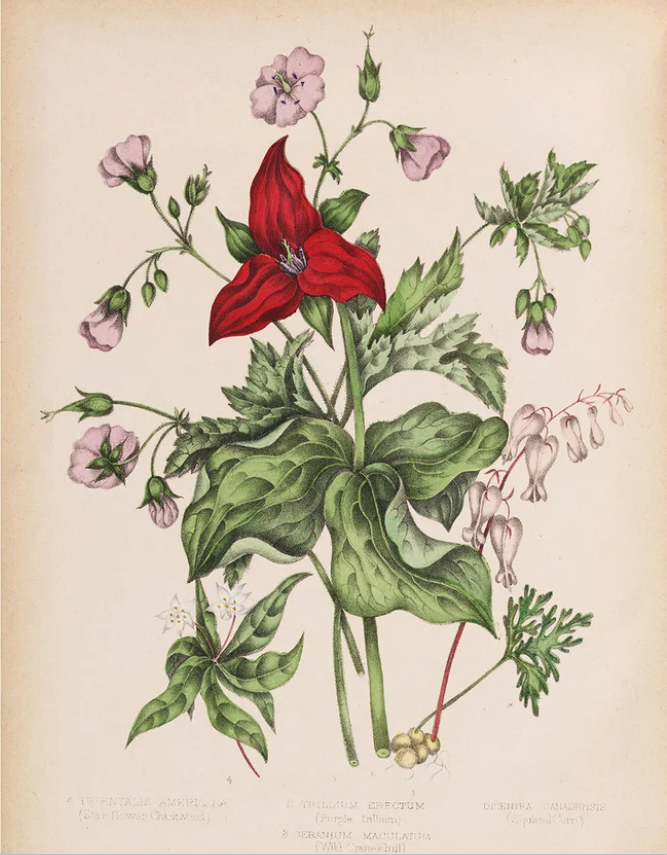
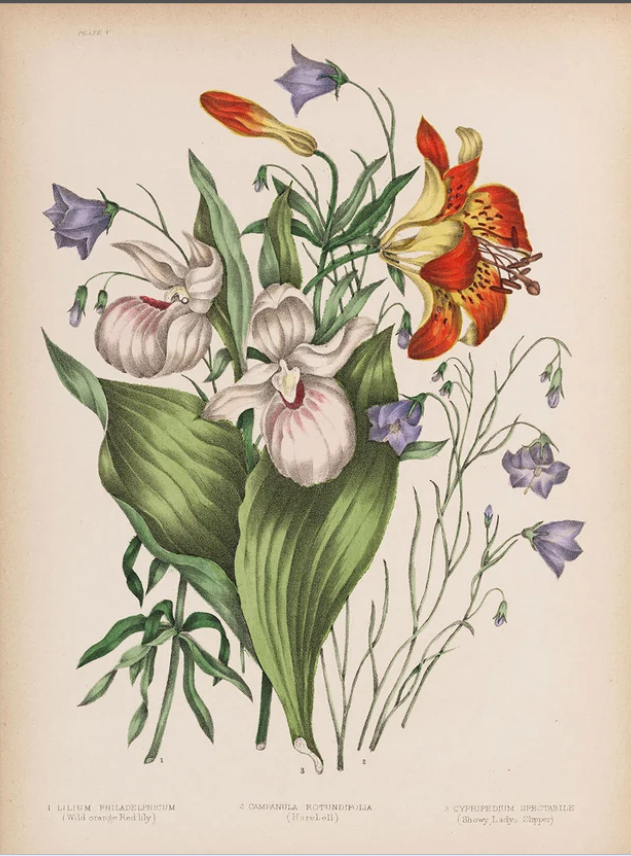
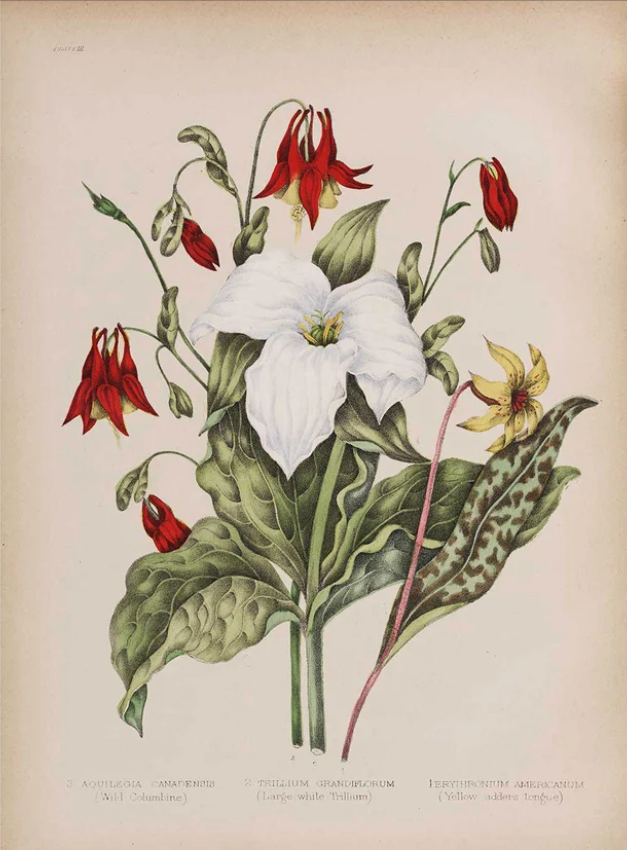
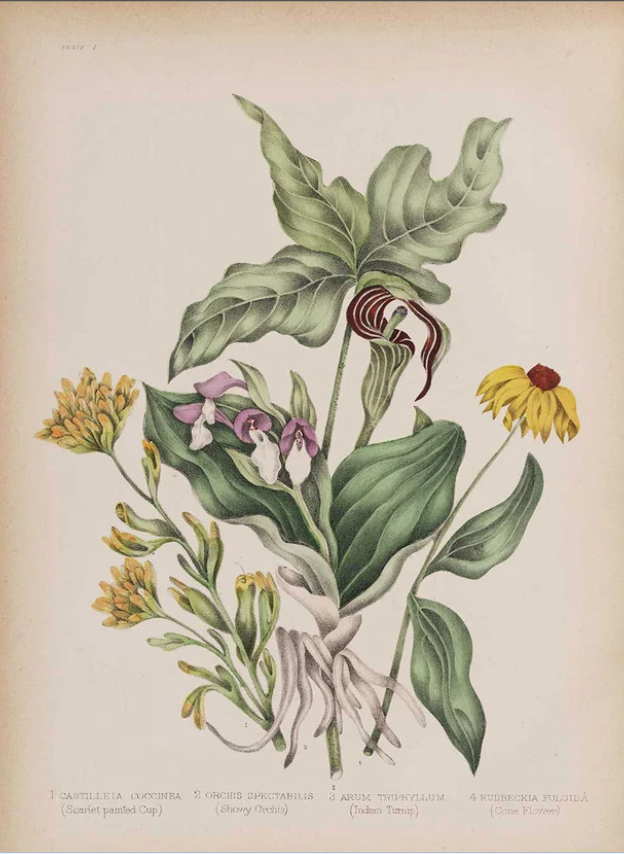
Ontario Wildflower Paintings by Agnes, daughter of Susanna Moodie

I've seen the illustrations here and there growing up in Ontario. I didn't pay attention to who created them. Just enjoyed the detail and the colours, the types of flowers: trilliums, lady's slipper, jack-in-the-pulpit, wildflowers I would look for in woodlands, gardens, anywhere they might turn up. Today I looked up the name and discovered she was the daughter of Susanna Moodie, a well known author here in Ontario.

Canadian born, Agnes Dunbar Fitzgibbon Chamberlin (née Moodie; 1833–1913) was an Ontario artist.

She was born Agnes Dunbar Moodie. Her parents were John and Susanna Moodie. Agnes learned how to paint flowers from her mother.

Susana (Strickland) Moodie, sister of Catharine Parr Traill, wrote about life as a New Canadian, 'Roughing it in the Bush' about her experience farming in Ontario during the 1830's. Her sister, Catharine, wrote from a different perspective, about history in Ontario.

In 1868, Canadian Wild Flowers was published, viewed as one of the first serious botanical works published in Canada, which included text by Catharine Parr Traill. The book, very expensive for its time, was sold by subscription, largely through its author's own efforts; as an enterprising widow, she also worked as an illustrator to support her children and herself.

Agnes had 2 husbands (remarried after the first died in 1865) and 9 children.

In 1863, she began her paintings of Canadian flora to illustrate a book by her aunt, Catharine Parr Traill. After the death of her husband, she began work on a book of Canadian wild flowers, with her water-coloured illustrations and Traill's text. The book attracted 500 subscriptions, a significant number at the time.

Her paintings have been presented at exhibitions in Canada, USA, and England since 1886. She died in Toronto in 1913. Her heirs presented her paintings and copies of Canadian Wild Flowers and Studies of Plant Life in Canada to the University of Toronto in 1934–5.

  • Summarized and quoted from Wikipedia.

I think we still have a copy of one of the reprints of the wildflower book. My Mother enjoyed Canadian and Ontario history along with gardening, antique furniture and other hobbies that became popular in the 1970's. That must be where I first saw these illustrations.

† Posted on . Filed in . Tagged with .

Pixel Art and 8-Bit Artists

Pixel artists work with tiny dots, pixels. Created with the use of raster graphics software, images are edited on the pixel level. Pixel art is a style of digital art,

A pixel is one tiny dot of colour in an image. Pixel art then, is an image created with tiny dots. It is also known as low resolution art and 8-bit art.

An image created in the pixel art style is not usually smooth, like a photographed image. If you look, you can see the dots, especially around the edges. Comic books were created with pixel images so you could see the dots if you looked closely at those too.

Once an image is evolved past the pixel art level it gets that polished, finished look and (to me) it isn't really pixel art any more. It becomes computer generated or digital art. The main difference between pixel art and any other computer or digitally created art is that the artist works with the pixels, the actual dots which make up the image.

The word pixelated, in reference to an image, means the image is blurry - the pixels have too much space between them and have likely been stretched out due to the image being enlarged past the point it was meant to be shown.

Pixel art is coming back into use because it isn't a bandwidth hog the way a photograph or an image with higher resolution would be. So, for mobile technology, pixel art allows more images to be used because they take up less space in the memory and can be sent much faster too.

Pixel Art is Used for...

  • favicons
  • avatars
  • video games
  • low res images
  • dollz (pixel dolls)
  • and various other new, retro and developing places

Techniques for Making Pixel Art Pixelating, making pixel art, starts with a simple line drawing, sketch or outline. Colours are added to give the image shape, shading and definition.

Start with the basic lines of the image you want to create, this is called the line art. Line art can be original or created from a scan of another drawing. The artist creates their own version of the original drawing, with their own vision and concept.

Dithering and hand-made anti-aliasing are used to bring different shades and colours into the art. Dithering basically uses two colours and by varying the density you can get different tones of colour. Anti-aliasing will smooth curves and changes between colours.

Saving the finished art

Pixel art is saved to either a PNG file or a GIF. JPG images files will make the pixel art appear mussed or messy.

Pixel Art is also Useful for Creating FavIcons You have likely noticed a favicon before, maybe you didn't know it had an official name. A favicon is the short form of, favourite icon. Favicons are used as tiny images which your web browser picks up and shows on the address bar next to the URL for the site you are visiting.

You may even have created your own favicon at one time. I have. The trick is creating something which will still look like something recognizable within the limits of the size the image has to be.

Pixel Dolls. net