Posts tagged with “barn”
Posted on . Filed in . Tagged with .

What Do You Know About the Eaton Hall Farm, Eversley, Ontario?

Originally posted as the Ontario Barn Preservation newsletter, February 2025.

Dear Members,

Part of saving old barns is finding a way to keep them in use. A barn in practical use, especially for a business, is a barn which can be supported, physically and financially. So far there are no grants for Ontario barns. But, there are a lot of interesting ways to use a barn in small rural businesses. 

I've posted links to those turning old barns into event venues. It can be a beautiful and exciting enterprise, but not for everyone. 

I think of other things which can be grown and sold, with less money and labour invested. (At least in theory). I've looked at Ontario mint and lavender farms because both of these grow quite easily and the plants grow well even in poor soil and without a lot of watering. Also, nut trees. In that case we decided it wasn't realistic because my brother is allergic to nuts. 

The I read about Ontario truffle farming. Did you know we have our own native truffles which can be farmed without a lot of space required? I've still got a lot more reading to do about the truffles but I'm sharing the idea and the information I've found. Maybe this will save your barn and give you something new to take up, as a hobby or a business.

Ontario Truffle Association The link is broken today but it was working in 2025.

North American Truffle Growers Association

Farmtario - Building a market for Ontario truffles

CBC - Eastern Ontario farmer discovers new variety of truffle

What Do You Know About the Eaton Hall Farm, Eversley, Ontario?

The town, Eversley, Ontario, is a hamlet, part of King City. 

Above photo (Note: I did not include the photos in reposting this) found on Camera On King & Aurora: Eaton Hall Barn - 50 Years After the Fire

History source: Hiking the GTA (This is cut and pasted from two original posts with more information and photos than I have posted here). 

Hiking the GTA: Eaton Hall

Hiking the GTA: Eversley - Ghost Towns of the GTA

The 700-acre property has a history that goes back to First Nations who camped around the lake and made use of the nearby Carrying Place Trail. The Toronto Purchase in 1787 allowed King township to be surveyed and opened to farmers in the 1820s. Some of the earliest in the area of Eversley was the Ferguson family who had a kettle lake on their section of the Oak Ridges Morraine. 

One of the most prominent buildings in the old community of Eversley is the Henry Pellatt barn because it is quite close to 15 sideroad. It was built in the early 1920s and later sold to the Eaton family along with 400 acres of land which they added to their estate, Eaton Hall. The foundation is surrounded on four sides with 3 over 3 windows giving it a unique look and allowing lots of light into the animal pens. Henry Pellatt owned Casa Loma and the nearby Mary lake estate in the 4th concession.

Starting in the 1920s Eversley was transformed by the arrival of the Eaton family who bought 700 acres in the north west area of the community.

The Eatons went on a building campaign as they sought to develop their estate into a working farm that could produce eggs and butter as well as other products to be sold in their stores. They built a dairy building, a chicken house, an ice house, and a greenhouse. They added a large cattle and horse barn which suffered two fires.

The Eaton Horse and Cattle Barn was completed in 1923 and was a notable sight in Eversley until it was destroyed by a fire in 1937. Lady Eaton promptly had it rebuilt but the two silos and clock tower were destroyed in a second fire on April 18, 1966 and were never replaced.

Eaton Hall: Pride of King Township - Book by Kelly Mathews.

Publisher's description of the book: "In 1901, Florence McCrea married into one of the most prosperous families in the Dominion of Canada, becoming Lady Eaton fourteen years later when her husband, John Craig Eaton, was knighted. Not long after the death of her husband, Lady Eaton retired from her home in Toronto to the seventy-two-room, Norman-style chateau she had built on their King City property. She named it Eaton Hall. The estate fueled the local economy and community, supported the Canadian World War II effort and established a firm place in the hearts and minds of the residents of King Township. Rediscover an enchanting and bygone age with the life and history of Lady Eaton and her grand Eaton Hall."

YouTube: Toronto Landscape TV - Eaton Hall (2010)

After Lady Eaton's death (1970) Eaton Hall was owned by Seneca College but unused by 2012. Presently Eaton Hall Country Inn and Spa is owned by Peter & Paul’s Hospitality Group, a venue for events.

Posted by Laura Laura

Highlights from the monthly Directors meeting...

What do you use your old outhouse for? Will uses the old outhouse for a garden shed. My Dad wanted to use the old outhouse at the end of our driveway for the children to wait inside for the school bus. My Mom protested by burning it. 

In case you missed it!

Local Gardener magazine features Ontario gardens and gardeners. (Not just Ontario but those are the gardens I looked at first when I noticed this on their website). They also have gardening podcasts and a free newsletter "10 Neat Things".

Ontario’s Ice Harvest History - Lillie's post starts with the mystery of a barn on a small, rocky island in a lake. A neighbour let her know the barn was for horses used in the ice trade. Lillie has done a lot of research about the ice harvest and trade in Ontario. Lillie sells hardy Canadian seeds on Etsy.

The Back-Breaking Leaf - National Film Board of Canada, 1959. Tobacco farming/ harvesting in Delhi, Ontario.

Muskoka, Ontario artist, Sherry Beiers, is looking for images of barns she can turn into paintings. Would you like your barn painted?

Posted on . Filed in . Tagged with .

Does Your Barn Have a Lightening Rod?

Originally the Ontario Barn Preservation newsletter, June 2024.

Dear Members,

I've been thinking about the trees which barns were made from, originally. There were huge trees long ago. I wonder if people now can even imagine the size of the trees in early Ontario history. Jim Campbell and the others at the first Tenon Talks were talking about the size of trees used to make barns a hundred, and more, years ago. Jim said most of the barns in his area were made from pine trees.

Online, I found the Ontario Tree Atlas Project, from the University of Guelph. They created a pdf file, a science survey of Ontario's tree species. Here is a link to read it online, or download it.

Also useful is the Ontario Government's Tree Atlas, online.

Coming up to road trip season you might like to find places to visit from an Ontario travel blog by Stephanie, The World as I See It.

Does your barn have a lightening rod?

I like practical heritage things like lightening rods. But, I wondered how practical they really are. In order to be legitimate, they need to be grounded. This means a copper or aluminum line runs from the lightening rod on the barn roof (house or other building) down the side and is then buried in the ground attached to a metal rod, called a grounding rod. The idea is for lightening to be directed down the the earth to dissipate safely in the ground. A large building, like a barn, may have bonding connectors linking the rods. So, its an old fashioned surge protector.

How many lightening rods still around are actually grounded? Not all of them I'm sure. Nothing wrong with a pretty, decorative lightening rod... except that an insurance company might want a functional lightening rod before insuring a barn. 

This question came up in email recently. The contractor said the barn could not be insured without a lightening rod. That brought up the question of how effective a lightening rod is at preventing lightening strikes and possible barn fires. The consensus at OBP was, not much. Some even thought a lightening rod could cause more lightening to hit a barn. 

In the end, I think a lightening rod is still pretty decorative and a little touch of history for a barn, but it doesn't have a real, practical use. Which is a little disappointing but, I'll get over it. 

Laura

Highlights from the monthly Directors meeting...

New barn related words: silage, hay harpoon, and hay hole. My brother and his friends would have loved to know a phrase like hay hole not so many years ago. Now he's too old and serious for those kind of things. (Most of the time, I know he'll still laugh about it).

At least twice now the subject of heritage designation has been brought up. Some barn owners are concerned that we will be pushing, or are affiliated with, heritage designations for their barns. We are not. It may be useful for some barn owners to look into, but we don't especially support or have influence about heritage designations. If you have concerns please ask us. 

Heidi, our Regional Representative for most of Northern Ontario has left. I hope she will come back when she feels she has more time. If you know, or you yourself, would be interested in becoming a Regional Representative please let us know. It'd be glad to find someone else in Northern Ontario because we don't hear very much about barns and rural history from the north. 

In case you missed it!

I posted about heritage apple trees in Ontario to our social media accounts. If you missed it, here's the post.

Are you curious about heritage apples in Ontario? I see them growing along the roadside, unpicked or cared for all over Ontario when we go on road trips, visiting and so on. My Mother and Grandparents talk about the apples they used to have for making pies and wonder where they could still find those now. They don't see them sold in farmer's markets and certainly not in stores any more.

I found a few good links and then this book, by Sher Leetooze, "Identifying Heritage Apples Across Ontario".

Orchard People The Kitchen Orchard The Ontario Heritage and Feral Apple Project

Pick some wild apples this year. You could even try planting some of the old trees seldom seen any more. Give them a chance to get a new start and have apples close at hand when you get into pie making mode.

See also, a CBC link: Set in Stone: Ontario man turns the clock back at ancestral farm

I have also posted to our social media about dry stone walling/ fencing. A skill I have admired and even tried a few times in a small way. I'm sure it would be useful if you were making Inukshuks. 

Dry Stone Canada

Dry Stone Walling Across Canada

Screen capture from https://sdstone.ca/why-drystone

One Last Thing...

I cross posted this wonderful photo from Facebook today. 

Posted on . Filed in . Tagged with .

Your Barn Could be for Dancing!

Originally the Ontario Barn Preservation newsletter, August 2024.

Dear Members,

Thank you to Claudia Smith and Dr. John Carter, we have a new Barn Book Reference List. If you're looking for something to read this summer, especially about Ontario rural history and barns, take a look at our new list. 

Hugh Fraser and Randy Bagg have updated the information about 'Your Old Barn Study' on our site. There is a new and improved checklist about how to start the Study and what you might get together before you start. 

The next Tenon Talk is scheduled for September, 10th at 8:00 PM. Members will get an email notice with the link. 

A FAQ - Frequently Asked Questions

I've been working on a FAQ for the Ontario Barn Preservation website. I hope it will help people looking for barn repairs or information about what to do when their barn isn't in great shape. Most of our emails are asking for help with fixing up an old barn. 

I also found a wonderful pdf (free to download) file from the Iowa Barn Foundation: "First Steps in Barn Preservation". I wish we had written this. It includes a checklist at the end. 

Your Barn Could be for Dancing!

My Grandparents met at a country dance, in Ontario. I don't know if it was in a barn (a barn dance) but it could have been. In school we were taught how to square dance. Our gym teacher thought it would keep the class busy near the end of the school year when not much was planned. 

Now line dancing seems to be the popular country style dance. I guess its simpler for people. But, learning the steps was a lot of fun. Square dancing is one of the things I remember most about any gym class while I was in school. 

I found square dancing groups in Ontario, and Canada. So, pull out your dancing shoes. If you have a barn, you might look at local groups and see if they need a place to dance. With a barn full of fiddle music, laughing and dancing it won't be long before you join in yourself. 

Canadian Square and Round Dance Society

Ontario Square & Round Dance Federation

Happy Summer,

Laura, Administrative Assistant with Ontario Barn Preservation

In case you missed it!

I posted this YouTube video link to our social media accounts. It's a movie made in 1923, a silent movie, about logging/ lumbering in Ontario. 

https://www.youtube.com/watch?v=gn-4HnohRdQ 

I've been enjoying the video posts from Hidden Spring Farm in Coldwater, Ontario. https://www.youtube.com/@HiddenSpringFarm

"Hidden Spring Farm is a Homestead in the making. It's also a Farm Stay & Experience startup. Created by Chad & Remy Smith in 2020, Hidden Spring Farm is a super private and tranquil 90 acres and perfect to start an operational farm stay vacation rental. With a little tlc, hard work & creativity, we're hoping to turn this farm into a unique and amazing farm stay experience, while allowing us to share this property's beautiful qualities with others."

Beautiful quilted barn art from Quiltcore. Sold on Etsy as postcards, greeting cards, prints, t-shirts, mugs, and more. Artist from Olds, Alberta.

The Ontario Association of Agricultural Societies - A great source to find Ontario agriculture fairs listed.

Posted on . Filed in . Tagged with .

Wild Animals Living in a Barn

Originally posted as the newsletter for the Ontario Barn Preservation, November 2024.

Dear Members,

A variety of things happen in early winter. Flu and colds. (I'm feeling better, thank you, and I hope none of you have been ill). Christmas shopping, or the thought of Christmas shopping and baking and cleaning. The first snowfall and finding where you left the snow shovel last season. 

Then there is the annual Canada Post strike just as you start thinking about sending or getting Christmas cards in the mail. 

I (Laura) do have a Christmas card in the works for our members again this year. My niece, Emma-Jeanne, has hand drawn a holiday barn with a few suggestions and ideas. I hope you will like it. She loves drawing and painting. She is a pastry chef by trade. 

Merry Early Winter, 

Laura I found this image on a wallpaper website. A broken link to another site given as the source. So, I don't know who made it.
Wild Animals Living in a Barn

Have you ever tried to make a list of all the animals (wild, not domesticated) that might live in a barn, in Ontario? Let me save you the trouble. If you look for "wild animals living in barns" online, the search gives you farm animals: cattle, pigs, goats, chickens, etc. AI (artificial intelligence) still isn't all the bright. 

First, lets start with barn cats. They are on the fence (jumped up there like it was nothing) because they aren't fully wild, nor quite domesticated. 

My list of wild animals found in Ontario barns: barn owls (if you're lucky), foxes, weasels, badgers, coyotes, chipmunks, bats, squirrels, rabbits, snakes, toads, skunks, raccoons, opossums. A pretty vast assortment of birds, rodents and usually very unwanted mice, pigeons, rats (vermin). Water birds seem unlikely and fish... well, don't be silly. Spiders and assorted insects (I almost forgot the little creatures).

Then there are bigger animals like bears, deer and moose, they seem less likely to be around unless the barn is pretty forgotten and abandoned quite awhile. You aren't likely to see wolves, cougars, or lynx either. Though I wonder if they'd like to find an out of the way old barn for the winter too. Probably a great way to keep out of the wind and find rodent snacks all winter long. 

This is my list. You can probably think of others to include like fishers, those less heard about and not often seen. My brother had a fisher at his rural place near Barrie and Orillia. I didn't see it, I wish I had, from a safe distance. It liked the old outhouse. It hasn't been seen for a couple of winters now. I like to think it found a nice barn for itself. 

57,000-year-old mummified wolf pup discovered in Canadian permafrost - "An incredibly well-preserved wolf pup thought to have lived 57,000 years ago was pulled out of the melting permafrost by a gold miner in Yukon, Canada"

Found in the Yukon, from a time long before there were barns. See how important barns can be, not just for farm animals! 

Ontario Government - Wildlife Management - link

Ontario Government - Creating Wildlife Habitat - link

Hinterland Who's Who: Grizzly Bear

Laura

In case you missed it!

Ontario Rural Diary Archive - Another (like our own 'Your Old Barn Study') rural history project with the University of Guelph. "Centennial farm is no more. It has been replaced with suburban developments, a phenomenon happening in large parts of North America. In earlier times, our important cities were usually built in areas of good farmland. These cities have, of course, grown, and in the last few decades we have been covering up thousands of acres of some of our best farmlands with cement. We are increasing this rate of development all the time.

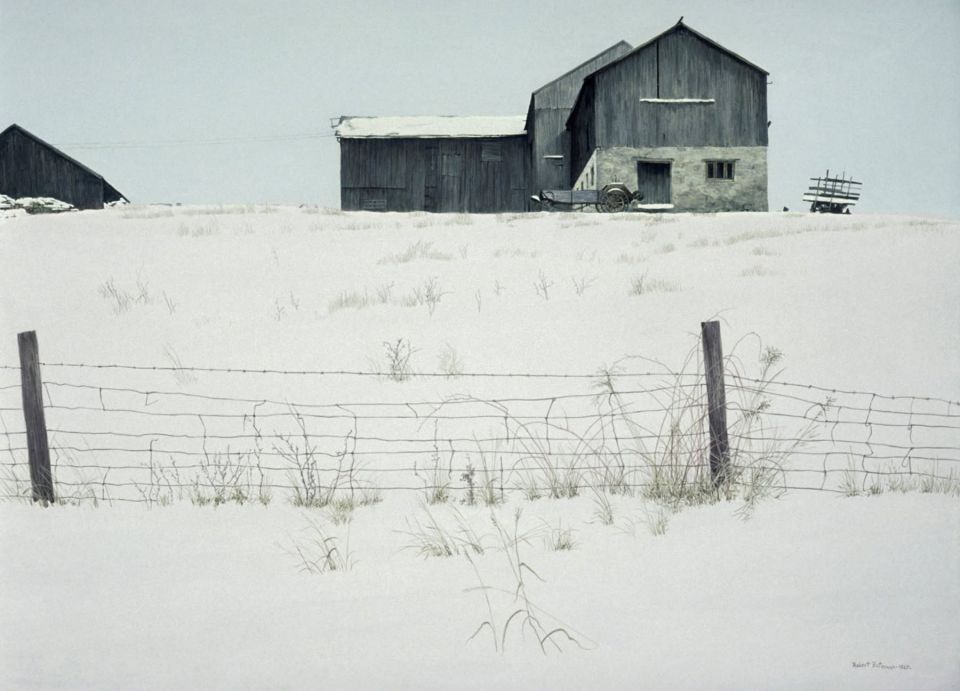
The year 1967 was centennial year in Canada. As a personal celebration, I did a series of paintings based on those things in my home county of Halton in Ontario which had been there for at least 100 years. Some of these subjects were works of nature but many were the works of man - old barns, farmhouses, fences and so on. Although these things lasted for 100 years or more, every single one of them has been destroyed within the last two decades - they were all gone by 1987.

I think that it is a pity that we in North America are so cavalier about our natural and man -made heritage. In Europe there has been for many years a serious effort to preserve the family farm and to preserve man-made works of previous generations. Such a commitment to preservation requires us to pay attention and to pay for it. The Europeans consider it a worthy cost. We North Americans apparently don't, and so our heritage disappears, very often through carelessness and more often through greed.

I enjoy painting man-made subjects from earlier eras because they have character and individuality. It is evident that they have been worked on by the human hand and by the forces of nature. This can no longer be said of our machine-made, packaged world which is increasingly enveloping us." ~ Robert Bateman - November 12, 2024 Canadian artist, Robert Bateman, posted about barns. I reposted this to our social media accounts. 

One Last Thing...

Inspiration for gingerbread house makers this year... A Gingerbread Barn found on Reddit. This could be an artsy version, with extra fancy icing doodles. Or, a less candy version without lots of little things that keep falling off. 

If you feel nostalgic for more Hinterland Who's Who I found the updated new videos. For me its just not the same without the old music to start it off and the same announcer's voice. 

Or, you could find more with YouTube and other places that host videos.

Bonus link. I'm not sure this was included here, or might have just been shared on social media for OBP. Canadian Centre for Rural Creativity

Posted on . Filed in . Tagged with .

The Following Prayer is a Bit Unfair

Originally posted to the newsletter for Ontario Barn Preservation, August 2025. (The last one I wrote any part of).

HERITAGE PRAYER

We keep forgetting all of those who lived before us. We keep forgetting those who lived and worked in our communities. We keep forgetting those who prayed and sang hymns in our churches before we were born. We keep forgetting what our fathers have done for us. We commit the sin, Lord, of assuming that everything begins with us.

We drink from wells we did not find. We eat food from farmland we did not develop. We enjoy freedoms which we have not earned. We worship in churches which we did not build. We live in communities we did not establish. This day, make us grateful for our heritage. Amen

cf. Cumberland Historic Village, near Ottawa - in the vestibule of Vars Knox United Church - adapted from a prayer in the old Covenanters' Church - 1804, Grand Pre, Nova Scotia.

How can you know people who lived before you were born? At best we have photographs, maybe a painting from the days with less technology. I do think about the people who would have dug the farmland, the wells and dealt with all those huge trees long before my family came to Canada. I have regrets for the trees even though I had no part of bringing them down, burning their stumps, and whatever roots they still tried to shoot up. 

I think everyone who is a part of OBP (or reads this far in the newsletter) has an interest in our history. Did you know they call old architecture 'built heritage' now? I guess someone decided to shine it up with a new phrase. 

I am grateful for our heritage. I am glad to be here, in the world, to see what there is of it in this time I'm living in. I will never see it all, freshly built. I will not likely be here when the last barn is gone. I wasn't here when the first one was raised. Do you ever wonder about farther afield than our own time and space, other lives lived on other planets? OK, that's getting a bit too far off topic. But, I do wonder if they have agriculture, farms, barns, and a built heritage too. 

Posted by Laura

In case you missed it!

Canadian Vintage Radio Society 

The Moving Past - A collection of Canadian archival films.

Farm & Food Care Ontario

P.E.I. Heritage Buildings - Site by C.W. Jeffery

The Canadian Railway Preservation and Restoration Association

Ontario Truck and Tractor Pulling Association