Posts in category “WordGrrls”
Posted on . Filed in . Tagged with .

Postcard People

Where would you like to be today? Imagine yourself picking out a postcard to send to family or friends. What would you be writing about your adventures? How much can you fit on the back of a postcard?

Postcrossing - A project that allows anyone to receive postcards (real ones, not electronic) from random places in the world.

Posted on . Filed in . Tagged with .

Could you Get Paid to Write?

It's a bit dramatic to pick up your first ever copy of The Writer's Market, which ever year you buy your first one. Suddenly you have taken a step into the world where people write and make money from it. This brings the responsibility of expectations. Paid writers should know how to write: spelling, grammar and punctuation. Paid writers should be professional and have a real office (for one thing). What a lot of pressure to perform!

In spite of all that... let this be the year you take that step. It's kind of scary but exciting too. Make a plan to be a paid writer by the end of 2014. Set that as your goal. You may have been paid small amounts as commissions on Squidoo and other writing networks but take a big step and get paid directly, get paid more and work with an editor at a publication which will judge your writing, possibly make changes and then pay you for it (not a percentage or commission but a real pay cheque for you!)

This deluxe Writer's Market includes online markets - a great thing for writers who have already had some of their writing published online. Posting to your own site counts too, even if you have been the only one proofreading and editing your work, it is still published (self publishing).

  • Start by getting someone professional (someone who does know grammar, spelling and punctuation) to review your writing work. Get feedback on the common mistakes you make so you can learn from them, be aware of your flaws and watch for them as they come up with you work. Making mistakes is not a bad thing as long as you work on learning from them. Like a word you have trouble spelling, just train yourself to remember the right spelling.

  • Don't procrastinate. Jump in by looking for a writing market you would like to get into. It might be something you know about from your own personal or professional experience - like a travel agent writing about travel for travel magazines. Take time to plan your method of attack for the market you pick. Choose more than one so you have more options if you get a rejection from your first pick.

  • Decide what you have to offer your chosen market. What does the publication need that you can provide? Study the publication if you have not read it a few times before. Each publication will have topics which are over done and some which just aren't relevant or timely enough. Find writer's guidelines for the publication - there are almost always guidelines so keep looking if you don't find them right away. Or, send a note to the publication and ask for their writer's guidelines.

  • Craft (and yes, it is a craft) a query letter. Direct it to one publication, one editor (get a name) and give your idea an extra push in some way. Read more about query letters - there have been some spectacular successes and just as many spectacular disasters.

  • Depending on what the publication expected (when you read the writer's guidelines) you may now begin writing or you may have already written the article/ book/ etc and submitted a sample of it with your query letter.

  • Don't get scared off or intimidated now. The writing is the part you know, remember? Just as there are other types of writers - there are other types of writer's markets and guides to those markets. Look also for photography and graphic artist guides to markets.

Most of all - Best wishes and good luck! I wish you every success in your freelance endeavours.

Don't spend too much time getting advice and suggestions. Time management is an important part of working as a freelance writer. You can't add more hours to your day so use them well.

Posted on . Filed in . Tagged with .

On Graduating from Rocket Squids

Last Night I Graduated from Rocket Squids on Squidoo

I didn't make as much use of he Rocket Squid program as I could have. I only read some of the articles posted for us and I didn't comment very much, or make an effort to meet more than a couple of people on Squidoo while I was there for mentoring. However, I don't think I wasted my time being there and I don't think it was a waste of time to join and be a part of Rocket Squids.

In fact, now that I've graduated I'm surprised to feel a bit like I'm missing something. I will miss the extra quests which came from Rocket Squids, also the bonus of seeing some of the new features on Squidoo first (along with the Giant Squids). But, because I do have over 25 featured lenses, I have applied to become a Giant Squid (kind of like being a Brownie and 'flying up' to become a Girl Guide). I hope I get accepted, but, of course, there is no guarantee. I may have left a few uncaught typos in my wake. I have always tried to write original and creative content.

Maybe I'm a little arrogant to think I didn't really need the Rocket Squid program. I have been writing online since 1996 after all. I've been freelance writing long before that. I'm not a kid, by far. I know how to write. Not that I'm perfect. I will say that to my nephew but he knows I'm joking.

I do have more to learn. Everyone does. The more I do learn the more questions I find to ask. So, the Rocket Squids did help me, yes, even me with all the experience I have had as a web writer, directory editor, forum moderator, newsletter diva, blogger, copywriter, network writer and so on. You can always learn more - if you take yourself a bit less seriously and listen to what others have to tell you.

Independent Blogger or Network Writer?

Is blogging still worthwhile? Is it worth the extra time, energy and resources to put into creating, maintaining and promoting your own site? Or, is it simpler to write for Squidoo (or other online networks) but only have a share of the profit from your work?

Do you have your own blog or site outside of Squidoo? If so, leave a comment with the link(s). I will visit your site and likely others who stop here will too.

If it were possible to add a third option here I would say the best option is to do both - run your own sites for the experience and be part of a network for the communicaitons and company. But, there are downfalls to each option. Being part of a network community and running your own sites too can burn you out. (I've been burnt out a few times over the years I've been publishing online).

Which is better: being your own blogger or working as part of a network of writers?

Writing for the Web...isn't Always Blogging But, it's a Place to Start

Don't get too tangled up in SEO, writing for Google. Writing online should be writing for people to read and search engines to pick up. Actually, even the search engines (Google and Yahoo) are noticing how much more important the social media and socializing in general are than the marketing. Marketing is all about sales, so often it misses the target entirely because marketers are trying to catch the attention of Google instead of actual human people. People are the ones who read your posts, leave comments and pass along links they valued or found interesting.

Are you on Twitter?

You can find me on Twitter. My username is @thatgrrl

I won't claim to be a Twitter addict but I do especially like Twitter as a way to connect to other writers, find new resources and ideas and the odd laugh too.

Don't be shy or intimidated by Twitter. It is simple to use, if you give yourself a chance to start. One thing which seems to bother people about Twitter (and a lot of social networks) is missing something when you aren't there. Get over that. Get over it quick!

Yes, you will miss some stuff. Some of it will be good. But, you will catch some stuff too and that is enough. Don't become obsessed. Just sit down, type a bit and enjoy the rush, flow and ebb of information.

There are Twitter groups for writers. They have scheduled get togethers on Twitter. You need to use a hashtag (each group will have their own - #writerstalk for example). People who run the groups can help you get started. But, mainly you just need to use Twitter to search for the hashtag the group uses and then you can read all the posts. When you reply use the same hashtag so everyone else will see your post too.

Write in Your Own Style and With Your Own Voice

How do writers write?

Anyway, here I am at the end of one path and maybe the start of another. Either way I will keep writing. I love writing. I especially enjoy the new lens format for reviewing items on Amazon. The fun is coming up with ideas around whatever I'm reviewing and making a fully robust post from the original item. There is a trick to it. Create layers to the original idea you are writing about. Don't go far off topic into some never never land... but, build up the topic with extras, layers and bundles of new and relevant ideas. This also works great for fiction writers.

You need to bundle ideas together in a way that makes sense and has flow! I think of it as having a conversation with someone I don't know. I also like to give readers extra information, a new spin on something and something else to think about or read about or study or research - new ideas to explore. It doesn't always work, but I do my best. I like bringing my own ideas, experience and opinions to something that could have been kind of bland just lying there flat on the page.

Writers all have their own style though. Each of us has our individual voice as well. So, if a writer is actually using their own voice, in their own style no two of us will ever have the same post even if we write about the exact same thing.

Writing Style Matters and Can be Developed ... but working on your writer's voice is more fun.

Writing style is about how you write, the more practical things. Some people write in a casual way with a lot of flow. Some people write in a reporter style, with the facts... mainly the facts. Some writers write like a sales pitch, not always a bad thing.

Then there is your writing voice. This is more about what you say than how you write. It's how you say it. Have you had a conversation with someone really connects with you versus someone who really seems to have nothing to say but keeps talking anyway? Your voice is important. It's how you connect to your readers. Your writer's voice is your personality typed onto the page.

Curated Content for Web Writers

Web publishing is always changing in small and less subtle ways. One upcoming idea is content curation. Based on the idea of art and museum curators who display stuff (for lack of a better word) in art galleries and museums for the public to come along and have a look.

On the web, content curation is still mostly about finding and displaying content. Finding the content can be the simplest part. Keeping the content displayed takes some extra work for those who do it well. Using a site like Scoop.it does help because the software is set up to upload the link, add an image and just let the curator fill in the blanks (mostly). One very good thing which Scoop.it does automatically is give a link back to the source of the content. Linking back and giving credit is very important. It is one of the important ethical issues which we face as web writers.

So... What did I learn from being a RocketSquid?

I learned about Squidoo. I learned about the people behind Squidoo - I'd already known about some and even bought a couple of books written by Seth Godin. Not because of Squidoo but because I wanted to read more about his perspective on web writing and publishing.

The Scroll of Originality

Content is king. You've heard the saying. But what kind of content? Is some content not king (or queen)? Is there a standard for great, high quality, remarkable content? You bet.

We at Squidoo believe that original, handcrafted, written-and-loved-and-tended-by-you content is not only the most enjoyable to write, but also the most useful for readers to discover, and the most likely to get spread to other people.

Even better, let's put a face on the word 'content.' On its own, 'content' is a broad, generic, vague term. What we've found works best for our Squidoo writers is opinion content. First hand reviews. Recommendations. Storytelling. Experience sharing. As we said 5 years ago when we started the company, Squidoo is an opportunity for you to share your point of view, your take on a specific topic. That's why lenses are called lenses -- they snap your point of view in to focus.

This is a handshake, a thank you, and a reminder to keep writing original lenses. Lenses that no one else could have written better or more uniquely than we know you can. It also comes with extra tips, to save you from spending time and energy on a low-quality, non-original lens that winds up getting removed.

The best rules of thumb for creating original content are:

Write about topics that interest you. When you're interested and have an opinion, it's easier to make a great lens.

Push yourself to create. Creation means building something from scratch. And it's extraordinarily rewarding when you do.

When you quote from or cite other sources on the web, link to them. Only quote small excerpts. Even ask in advance if you're not sure. And better yet -- follow it with your own unique perspective on that information.

Do the same for product recommendations. Even if you don't have first person experience with the product, you surely have an opinion about whether you wish you did, and what you might do if the item landed in your lap!

Achieve balance. If you hand curate and quote other sources, be sure to add plenty of your own original content to the lens at the same time.

"Duplicating content" isn't a great practice, and if there's too much duplicated content, that means it's not unique to your lens, right? It could get removed. If it's plagiarized (meaning, you use too much of someone else's content, or you don't cite even the smallest amount), your lens will get removed for sure.

Try original, with a twist: Be the editor in chief of a conversation on your lens. Even if you don't write it all yourself, moderating and adding context to other people's comments creates unique collaborative meaning.

This is an agreement to create, craft, build, bake, innovate, write, opine, talk, storytell, review, recommend, and stand out from the crowd. That's the magic of Squidoo. Thank you for being here.

By continuing to maintain and publish lenses on Squidoo, you are pledging to craft original, unique lenses. We at Squidoo are pledging to you in return that we will continue to support quality work and will help remove low-quality, aggressively non-original lenses.
Posted on . Filed in . Tagged with .

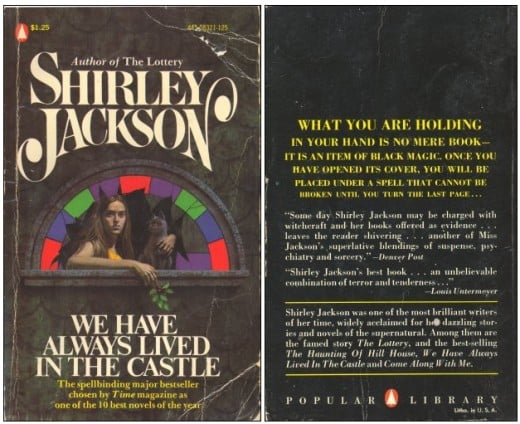
Shirley Jackson Still Lives in the Castle

The truly scary stuff isn't about monsters under the bed, vampires sucking blood or witches casting spells.. real horror comes from the things we take for granted, the things we trust the most and the things we think could never hurt us. Real horror is lying beside your beloved husband at night and seeing something odd in his eyes and then telling yourself you imagined it and what was wrong with you to even see something so crazy? Real horror is your sister putting something poisonous into the sugar bowl at a family dinner. Have you ever read "We Have Always Lived in the Castle" by Shirley Jackson?

I read it when I was a child. I thought it was a children's story and it was... yet it was the most horrifying thing I have ever read and the book has stuck with me my entire life. Over 30 years later and I still feel an eeriness just thinking about the book, the sisters and their lives alone with their secret.

I've read other Shirley Jackson stories, as many as I could find. I even read some of her non-fiction but reading those made me wish for more of her fiction instead.

Her books aren't always listed in the horror section. She's one of those writers who are hard to pin down into one strict genre. Sometimes I find her books displayed on the shelves for literature. I think that suits her, it's a bit generic and non-threatening. Who would suspect real horror from a book you find in the high-brow section of the book store?

Pick up one of her books of short stories or the collections with both the novels and short stories. It's a short story after all, it can't hurt.

Vintage Shirley Jackson books are better than the new editions, mainly for the book cover art. I have a huge weakness for book cover art from the 1960's and 1970's. They haunt you more, they have more romance, mystery and poetry to them. Compare book art from Shirley Jackson books - I found a link to someone who has a collection of them online. Which of those book covers would have you picking up the book and then flipping it over to read the back cover?

Posted on . Filed in . Tagged with .

Create a Blogger Wiki to Promote Your Content

Note: This was originally written for HubPages and the writers there.

When you write content on a site like HubPages you want it to be found by people interested in reading about your topic (niche/ genre/ subject matter). But, it can feel like you're alone in a vast ocean, standing on a rock, jumping up and down, waving and waving without anyone noticing you at all. So, you need to build a platform which rises you a little higher and makes you easier to find.

The established ways to do this are to use social media, backlinks, and other worthy and less worthy ideas which people lump into SEO (search engine optimization). The problem with some of these tactics is the difference between attracting human readers versus attracting search engine bots which don't actually read your content. Search engines won't read your content, won't link to your content and won't refer friends and followers to your content. A search engine will only list your content for the real people to find. It does not endorse your content the way a referral from a real person can.

So, you need to do something more to bring people to your content. Keywords are not enough. Too many keywords will detract from your content because no one really wants to read that promotional content which is directed to SEO and not human readers. Too many keywords make your writing dull and bland.

Use Google Blogger to Create a Wiki Resource

Try opening a Google Blogger blog, pick a name which suits your content.

Write an introduction post and an about page.

Look for other content such as content curation feeds and RSS feeds relevant to your main topic. Some of them, like Scoop.it, will have widgets which display the content feed. Plus, this is another place you can suggest your own links to as you write new posts. So you will see your HubPages post appear in the feed on the widget you have displayed. This is especially nice because people reading your wiki will see you as an authority beyond the content you have created yourself. It's like making yourself famous.

Create a few links to sites which you know are excellent references for your topic. You can ask for a link exchange with these sites - once your wiki is established, aged and seasoned a bit.

Now the part where your own content comes in.

Begin to post links to your HubPages posts/ content. Do not repost the content, just create an index. Sort your posts into subtopics branching from the main theme or genre which you write about. (If you write about several topics set up a fresh Blogger account and repeat the steps above for each topic).

Use your subtopics as post headers (titles) and add your links relevant to each subtopic in your topic/ genre. Check your links, make sure they are all going where they should be going - it is not too hard to miss something when you are cutting and pasting several links this way.

In your blog sidebar, over the links to outside reference sites, post links to each of the posts you have just created (the subtopics). Like building an index to your own subtopics in the sidebar.

In this way you are creating a wiki for your content which focuses on your HubPages content but not exclusively. A wiki is a personally created resource about one topic. Traditionally, a wiki is not run by just one person but several contributors sharing knowledge and resources. You can gather others to join you too. However, then you are sharing some of the limelight but building a wiki community is a great way to share your links among the community you create. So it is a trade off and something you can consider.

This idea does not work as well on WordPress.com because Blogger.com is Google's own appendage blog site. So, it gets some preference.

It does take extra time and energy to create this kind of index to your HubPages content, but it will bring you to the attention of the Google and other search engines. Also, extra Adsense (which you can easily load on Blogger too).

Don't let your wiki stagnate.

Maintain the blog, add your fresh HubPages content to the subtopics which you have set up.

Add new outside links as you find really good sites to refer people to.

Create an actual post for the blog once in awhile, monthly is fine. The post doesn't have to be labour intensive. An update about the work you are doing to research your topic is a good post. Or, something you heard/ read in the news relevant to the topic. The point of keeping a monthly post is to show the site is active, at least once a month.

Link to this blog in each of your posts on HubPages. Just add it to the links with a note about it being your wiki or reference site for people who would like more information, etc.

Share the wiki.

The link to your Blogger wiki is one more link you can promote to social media, content feeds, and all the other routine places and ways you promote your content.

Creating the wiki is giving your content (on HubPages or any other sites you write for) an extra boost, another way to be found in the great, big ocean.

Participate Outside of HubPages

If you aren't already involved in forums and other online communities within your topic make sure you get involved now. Join a relevant forum and be active. Daily is nice but not very practical. Aim for at least weekly and then read as many posts in the forum as you can and contribute. Of course, you can create a signature to use in the form with at least one link to your wiki or your HubPages link, both if possible.

From the comments on the original post:

That Grrl  Hub Author

@prarieprincess I got the idea as I was replying to someone else in the forum who was complaining about Google and traffic and etc, the same old stuff. I have never been overly reliant on Google for traffic. I like to look for my own ideas to bring in traffic/ readers.

One thing people writing here don't quite understand is that HubPages is not buying your content/ articles. If they were there would be copyrights involved. HubPages is buying your social media skills and whatever else you do that works to bring in readers (traffic) to the site. HubPages sells ads which appear with your articles. We get a percent of that. So, in reality the whole thing is not about your content but about the traffic you generate here.

Knowing this it is a really good plan to focus on bringing readers from outside of HubPages into HubPages without focusing on Google. This is because once you are in the database at Google you will either rise or stay about the same. There isn't a lot of point in putting all your eggs in that basket.

So, generating traffic in other ways is the key. I got the idea of the Blogger wiki because I had been looking at wiki sites that week and it popped into my mind that I already have all my old Blogger sites from when I began online ages ago. Why not use them for more than just leaving a trail of links. I know they still get traffic even though I have done nothing but ignore them for years.

Thus the Blogger wiki idea was formed. I added more ideas to what I could do with it as I went along. I don't have a finished example yet. I've got so many projects I'm working on that I am hoping to get my nephew out sometime to help me move stuff along.

That Grrl  Hub Author

I have my own blogs with domains and paid hosting. But, you don't have to go that way. I didn't start out that way. I've been online more than ten years. I was online several years before making the commitment to paying for web hosting. So don't feel you need to rush into it. A Blogger blog is still free for software and hosting and that will do just fine. More than that is just vanity - which is how they call it a vanity URL/ domain.

I would do both. There is no reason you can't have an index of all your HubPages post in the sidebar of the blog. Then create individual posts with summaries and links at the end for each post too. This blog is your space to bring your content to the foreground, show it off and get it found. People are using the term 'discoverable' lately. and that is just what you are doing.

The only thing you should not do is copy your post and create the dreaded duplicate content. However, unlike at HubPages, on your own site you can have all the links you want. (HubPages gives you a notice if you link to the same domain more than twice).

Have fun with the blog, decorate it. Add widgets for social media which you use and of course highlight your posts here. Then do post the blog link around - use it for your signature in online forums and communities. Get the link around so people can find your content. This is how Google search bots will also find your content and consider it as important because there are links to it in a source outside of HubPages. Also, the link back from your posts on HubPages will keep the bots looking at your links and finding more of your content. They used to call them spiders because they follow links from one starting point to other directions, branching out from the starting point, spidering out.