Wild Animals Living in a Barn
Originally posted as the newsletter for the Ontario Barn Preservation, November 2024.
Dear Members,
A variety of things happen in early winter. Flu and colds. (I'm feeling better, thank you, and I hope none of you have been ill). Christmas shopping, or the thought of Christmas shopping and baking and cleaning. The first snowfall and finding where you left the snow shovel last season.
Then there is the annual Canada Post strike just as you start thinking about sending or getting Christmas cards in the mail.
I (Laura) do have a Christmas card in the works for our members again this year. My niece, Emma-Jeanne, has hand drawn a holiday barn with a few suggestions and ideas. I hope you will like it. She loves drawing and painting. She is a pastry chef by trade.
Merry Early Winter,
Laura
 I found this image on a wallpaper website. A broken link to another site given as the source. So, I don't know who made it.
Wild Animals Living in a Barn
Have you ever tried to make a list of all the animals (wild, not domesticated) that might live in a barn, in Ontario? Let me save you the trouble. If you look for "wild animals living in barns" online, the search gives you farm animals: cattle, pigs, goats, chickens, etc. AI (artificial intelligence) still isn't all the bright.
First, lets start with barn cats. They are on the fence (jumped up there like it was nothing) because they aren't fully wild, nor quite domesticated.
My list of wild animals found in Ontario barns: barn owls (if you're lucky), foxes, weasels, badgers, coyotes, chipmunks, bats, squirrels, rabbits, snakes, toads, skunks, raccoons, opossums. A pretty vast assortment of birds, rodents and usually very unwanted mice, pigeons, rats (vermin). Water birds seem unlikely and fish... well, don't be silly. Spiders and assorted insects (I almost forgot the little creatures).
Then there are bigger animals like bears, deer and moose, they seem less likely to be around unless the barn is pretty forgotten and abandoned quite awhile. You aren't likely to see wolves, cougars, or lynx either. Though I wonder if they'd like to find an out of the way old barn for the winter too. Probably a great way to keep out of the wind and find rodent snacks all winter long.
This is my list. You can probably think of others to include like fishers, those less heard about and not often seen. My brother had a fisher at his rural place near Barrie and Orillia. I didn't see it, I wish I had, from a safe distance. It liked the old outhouse. It hasn't been seen for a couple of winters now. I like to think it found a nice barn for itself.
57,000-year-old mummified wolf pup discovered in Canadian permafrost - "An incredibly well-preserved wolf pup thought to have lived 57,000 years ago was pulled out of the melting permafrost by a gold miner in Yukon, Canada"
Found in the Yukon, from a time long before there were barns. See how important barns can be, not just for farm animals!
Ontario Government - Wildlife Management - link
Ontario Government - Creating Wildlife Habitat - link
Hinterland Who's Who: Grizzly Bear
Laura
In case you missed it!
Ontario Rural Diary Archive - Another (like our own 'Your Old Barn Study') rural history project with the University of Guelph.
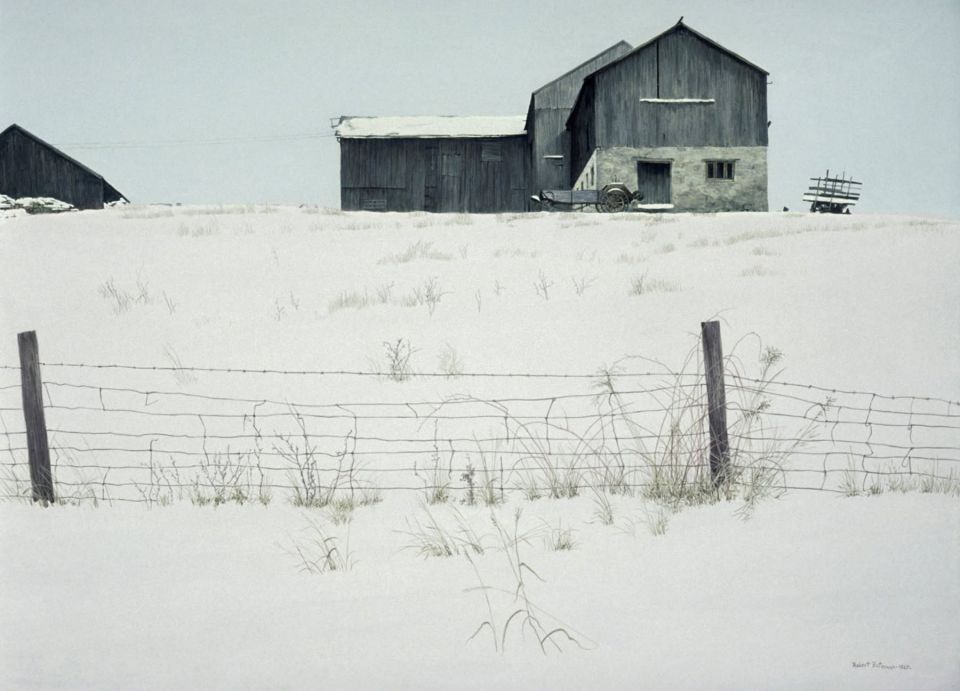 "Centennial farm is no more. It has been replaced with suburban developments, a phenomenon happening in large parts of North America. In earlier times, our important cities were usually built in areas of good farmland. These cities have, of course, grown, and in the last few decades we have been covering up thousands of acres of some of our best farmlands with cement. We are increasing this rate of development all the time.
The year 1967 was centennial year in Canada. As a personal celebration, I did a series of paintings based on those things in my home county of Halton in Ontario which had been there for at least 100 years. Some of these subjects were works of nature but many were the works of man - old barns, farmhouses, fences and so on. Although these things lasted for 100 years or more, every single one of them has been destroyed within the last two decades - they were all gone by 1987.
I think that it is a pity that we in North America are so cavalier about our natural and man -made heritage. In Europe there has been for many years a serious effort to preserve the family farm and to preserve man-made works of previous generations. Such a commitment to preservation requires us to pay attention and to pay for it. The Europeans consider it a worthy cost. We North Americans apparently don't, and so our heritage disappears, very often through carelessness and more often through greed.
I enjoy painting man-made subjects from earlier eras because they have character and individuality. It is evident that they have been worked on by the human hand and by the forces of nature. This can no longer be said of our machine-made, packaged world which is increasingly enveloping us." ~ Robert Bateman - November 12, 2024 Canadian artist, Robert Bateman, posted about barns. I reposted this to our social media accounts.
One Last Thing...
Inspiration for gingerbread house makers this year... A Gingerbread Barn found on Reddit. This could be an artsy version, with extra fancy icing doodles. Or, a less candy version without lots of little things that keep falling off.
If you feel nostalgic for more Hinterland Who's Who I found the updated new videos. For me its just not the same without the old music to start it off and the same announcer's voice.
Or, you could find more with YouTube and other places that host videos.
Bonus link. I'm not sure this was included here, or might have just been shared on social media for OBP. Canadian Centre for Rural Creativity