Posts in category “Canada History”
† Posted on . Filed in . Tagged with .

Do you Know About the Deadliest Disasters In Canada?

I did know about the Spanish flu, though not so much about the statistics. I did know about the Halifax Explosion, the government has made a historical reenactment movie about it. Its pretty hard to forget after seeing it.

I do not remember hearing about the Newfoundland hurricane. But, I do know about the tornado which happened in Barrie, Ontario much more recently (1985).

  1. Spanish Flu – 50,000
    The Spanish Flu of 1918 ravaged Canada and to date is the worst disaster in the country's history. It is also referred to as the 1918 flu pandemic, and it lasted from January of 1918 until December of 1920. The disease not only affected the Canadian populace. This H1N1 influenza virus infected over 500 million individuals and killed between 3% and 5% of the world’s population. It is believed to have caused more deaths than the Black Plague. In Canada, an estimated 50,000 people died.

  2. Newfoundland Hurricane Of 1775 – 4,000
    On September 9, 1775, a hurricane hit the island of Newfoundland, which makes up part of the Canadian province of Newfoundland and Labrador. The communities along the coast relied on the fishing industry as their main economic activity. When the storm hit, it destroyed the vast majority of the fishing boats as well as 2 armed ships from the British Royal Navy. In addition, the winds and rains caused a storm surge of between 20 and 30 feet, flooding the shoreline. The Newfoundland Hurricane is the first one on record for Canada and its deadliest natural disaster. It caused at least 4,000 deaths.

  3. Cascadia Earthquake Of 1700 – est. thousands
    The third deadliest disaster to hit Canada was the Cascadia earthquake on January 26, 1700. This earthquake registered between 8.7 and 9.2 off the coast of British Columbia and as far south as present-day northern California. It was so strong that it caused a tsunami in Japan. Because written records were not common in North America at this time, most of the information surrounding this disaster has been estimated. Scientists have relied on Japanese records of the tsunami as well as tree ring studies from the coastal forests of the Pacific Northwest of the US and Canada. Additionally, oral stories told by the indigenous peoples throughout this area all refer to a destructive earthquake complete with coastal flooding. Exact numbers are unknown, but estimates suggest that at least several thousand individuals died during this disaster.

  4. Halifax Explosion – 2,000
    On December 6, 1917, two ships collided in the Narrows strait between Halifax Harbour and Bedford Basin. The SS Imo, a Norwegian ship, steered into the SS Mont-Blanc, a French ship carrying explosives. The accident caused the cargo to explode. The explosion was so strong that it reached the town of Halifax, located in the province of Nova Scotia. It is recorded as the largest man-made explosion in the world to occur prior to the invention of nuclear weapons. The entire Richmond district was ruined, including buildings and trees. Additionally, the force caused a tsunami in Tuft’s Cove, killing the entire Mi’kmaq First Nations peoples. In total, approximately 2,000 people were killed.

  5. Tseax Cone Eruption – 2,000
    The Tseax Cone volcano erupted sometime between 1668 and 1714. The resulting lava flow blocked the Tseax river, creating the Lava Lake. Written records of this event do not exist, however the Nisga’a tribe has an oral tradition which tells the story of the eruption. According to these stories, two villages were completely destroyed. The ash and carbon dioxide that were released killed approximately 2,000 people. This makes the Tseax Cone volcano eruption the worst geophysical disaster in Canada’s history.
World Atlas - The Worst Disasters In Canadian History

† Posted on . Filed in . Tagged with .

Worst Canadian Shipwreck is Not the Edmund Fitzgerald

November 10th is the anniversary of the sinking of the Edmund Fitzgerald. This year will be the 51st year. But, the most Canadian thing about the Edmund Fitzgerald is the Gordon Lightfoot song. The song haunting Canada all these years is about a ship which was made in the US, sailed from port to port in the US, with a US crew. In 1958, when it began sailing the Great Lakes it was the largest ship on the Lakes and it still is the largest ship to sink in the Great Lakes. It did sink in Canadian waters.

As far as we know, the earliest shipwreck in Canada was in 1498. John Cabot disappeared on his second voyage. I've read about John Cabot, we heard about him in school too, but I don't remember anything about the second voyage where he was shipwrecked and disappeared. I'm sure I did, I just don't remember. Sad for the man who 'discovered' what would become Canada, to end that way. Note: discovered is the word used for the Europeans who first came to North America and began using it for resources, later sending people here to live.

What does it say about our culture these days that if I try to find the worst Canadian shipwreck the top results are all for the most famous shipwrecks, not the worst?

Early Marine Disasters
The earliest shipwreck in Canada may have taken place in 1498 when John Cabot disappeared on his second voyage. Two years later, Gaspar Corte-Real vanished on a voyage to Newfoundland. Perhaps the wreck of Delight is the earliest known marine disaster. It involved one of the Sir Humphrey Gilbert‘s ship on Sable Island on August 29, 1583, leading to the drowning of over 85 people. In 1711, a British fleet sailing to attack Quebec hit a rock. The fleet which included the 19 warships and 41 other ships was carrying over 11,000 people on board. Almost 950 men were lost during the shipwreck. The rugged coastline and lack of marine aid such as fog signal and life-saving stations have taken a great toll on ships, especially those that lacked lifeboat capacity for those on board.

RMS Empress Of Ireland
The RMS Empress of Ireland was a huge ocean liner which was considered Pacific Steamship Line’s fastest and luxurious ship. It had made crossing the Atlantic stress-free since the launch in 1906. On May 28, 1914, the ship left Quebec City for Liverpool at about 1630hrs with 1,477 people on board including the crew. Captain Henry G Kendall was making his maiden trip down the St. Lawrence River in command of the ship. The ship disembarked at Rimouski, Quebec to pick up mail in the morning hours of 29th. RMS Empress of Ireland got underway into the St. Lawrence. Meanwhile, the fog began rolling in as the ship approached Father Point. Another ship, Stortad, heading towards Rimouski, Quebec was sighted from a distance before the fog could close in completely.

Both ships resorted to sounding the fog whistle to warn the other. Shortly before 0200hrs, with passengers and crew asleep, the Stortad ship loomed out of the fog just meters from the Empress. It was too late to react, Thee Collier crashed into the starboard side of the Empress severely damaging it. Water quickly gashed into the liner. The passengers in the Empress had not observed maritime rules since they had left the watertight doors and the portholes opened contrary to requirements. Most of the passengers and crew in the third class deck drowned quickly as water entered the porthole. The ship lurched to its side and sunk within ten to 14 minutes making the rescue efforts tough. The disaster led to the death of 1,012 people including passengers and crew. The sudden sinking and loss of many lives were attributed to three factors: the location of contact, failure to close the watertight doors, and the open porthole.

RMS Atlantic
The RMS Atlantic was an ocean liner belonging to the White Star Line. It operated between Liverpool, the UK, and the US. The ship departed Liverpool on March 20, 1873, on her nineteenth voyage with 952 people on board including 835 passengers. The captain decided to make a stop at Halifax, Nova Scotia to replenish coal for the boiler. As the liner approached Halifax on March 31, 1873, the captain was spending his time on the bridge while the ship was making her way through the storm. The ship was pushed off-course to the west of Halifax Harbor. However, the officers who were in charge failed to wake the captain or reduce the speed of the vessel as they approached the unfamiliar territory. The officers did not spot the Sambro Lighthouse which warns against the rocky shoals. On the morning of April 1, 1873, the Atlantic struck the underground rock and quickly sunk killing about 535 people leaving only 371 survivors.

The Great Lakes Storm Of 1913
The Great Lakes Storm or the Big Blow was a hurricane that swept across the Great Lakes Basin including the province of Ontario. The freshwater fury took place from November 7 to November 10, 1913, and was most powerful on the 9th. The storm overturned and battered ships on four of the five Great Lakes, especially Lake Huron. It killed more than 250 people and destroyed close to 40 ships. The financial loss amounted to over $5 million. The storm shut down traffic and communication along the shorelines. The storm originated from the area of convergence of two major storm fronts and was accelerated by the warm water in the lakes with the waves rose to over 35 feet.

Fishing And Sealing Disasters
Fishing and sealing off the coast of Atlantic have claimed several lives over the years. Over 400 vessels and over 1,000 lives were lost in Newfoundland between 1810 and 1870. On March 31, 1914, Southern Cross sunk on its way home due to the weight of seal pelt. All the 173 crew members drowned. On June 20, 1959, a fishing fleet of 22 boats was hit by a massive storm at New Brunswick killing over 35 men.

Other Marine Disasters In Canada
The Montreal steamer burned near Quebec in 1857 killing 253 people. The deaths could have been reduced if the crew had responded to fire immediately. In 1881, an overloaded Victoria steamer capsized near the Thames River in Ontario. Many of the passengers on board jumped off the ship when it became apparent that it was sinking. However, the deck fell on them killing about 182 people despite the relatively shallow water. In 1918, Princes Sophia ran onto a reef on the Lynn Canal during a snow storm. Two days later, the ship sunk killing all the 343 people on board. The heavy sea delayed the rescue missions leading to the high number of deaths. On June 26, 1930, a drillship was struck by lightning killing 30 men with only ten men surviving.

World Atlas - The Deadliest Marine Disasters In Canada's History

† Posted on . Filed in . Tagged with .

Backyard History

Backyard History is a popular newspaper column, podcast, and books written by Andrew MacLean, telling forgotten stories of Atlantic Canada's past.

Backyard History unearths the often hilarious, mostly mysterious, always surprising untold tales of Canada’s East Coast, as only a Maritimer can spin them.

Available as a series of books and a podcast.

† Posted on . Filed in . Tagged with .

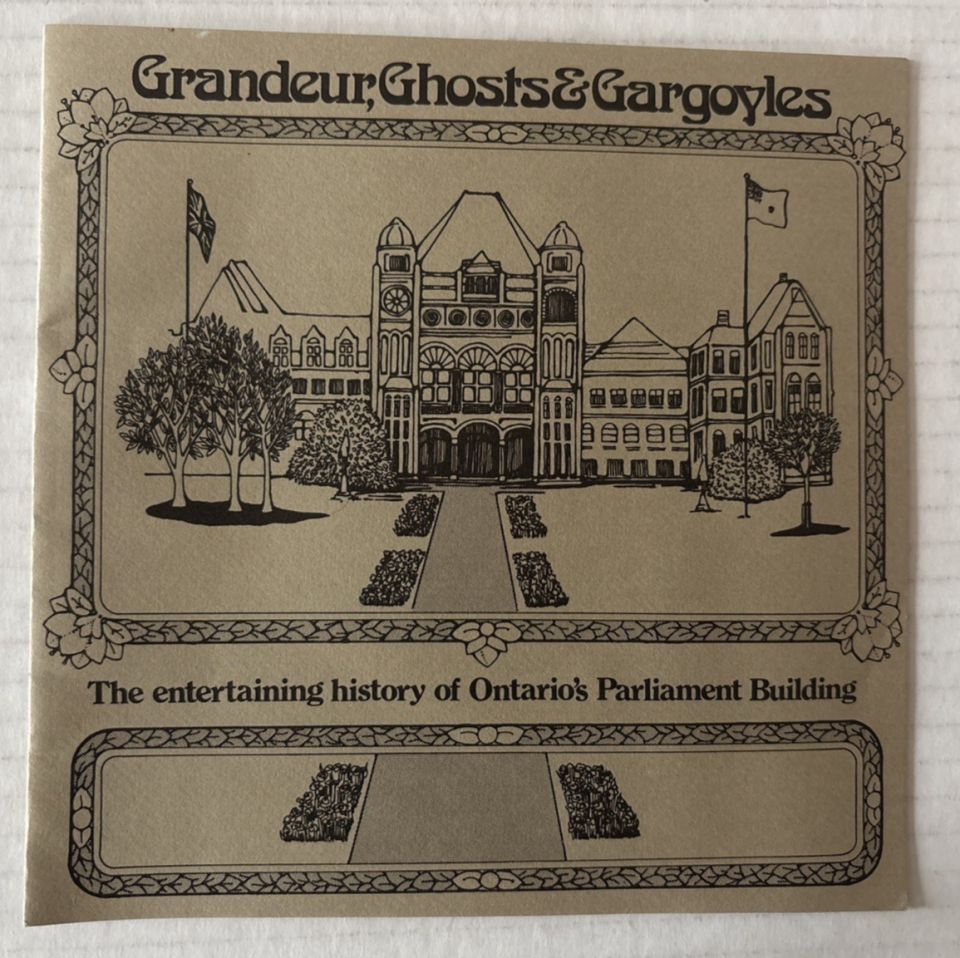
Grandeur, Ghosts & Gargoyles - Canadian Parliament Buildings History

Found online for sale for $20, a print edition. But, its not that old, from 1970, and booklet size. The price seems a bit high. So I went looking for it elsewhere. I found it. The whole thing can be read online or downloaded in various file types. That's what I did.

I also like the drawing of the Parliament buildings on the cover. A nice start to making an ASCII art of the Parliament buildings. A photo is a little harder to start with, more complicated, shadows and often not clear enough to pick out details. I'll see how the drawing compares to a photo, if its too simplified it won't work so well. Of course, I have so many ASCII art ideas already, it may never get done.

Grandeur, ghosts & gargoyles : the entertaining history of Ontario's Parliament building - 1970 - Gordon Donaldson, Canadian government publication. https://dn760109.eu.archive.org/0/items/31761120600010/31761120600010.pdf another edition - https://dn720003.ca.archive.org/0/items/31761120622477/31761120622477.pdf #CanadianHistory #OntarioHistory

† Posted on . Filed in . Tagged with .

Old Canadian Barns are Falling Down

Ontario Barn Projects, People and Resources

Canadian Barn Projects, People and Resources