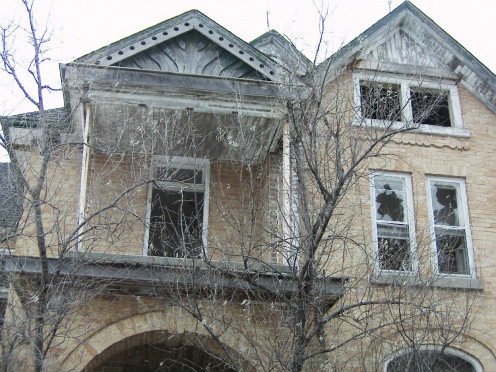
Posts in category “Backyard Exploring”
Posted on . Filed in . Tagged with , .

How to Choose the Right Camera Bag for You

Buying a camera bag is simple enough. But, there are important things to consider for protecting your camera and making sure the bag stores it well.

I take my digital camera with me on the road, literally. In various weather (I especially like rainy and overcast days for taking photos) and in all seasons, I am out there with my camera. My camera case has hay, seeds and one insect wing inside of it. I'm sure there is dirt and dust and assorted other common relatives of dust and dirt too.

It's ironic that your camera lens is so exposed to so much which could mistreat it and yet I don't have of many people having their lens scratched the way I used to. Is it luck or just using better gear, including the travel case or bag for your camera?

Get the Right Camera Bag or Case for You

Start by thinking about how you use the camera and what you need from a camera bag. Take stock of your needs and then shop for the camera case or bag that meets your needs. Don't be satisfied with less than what you need. Shop online, try a few different stores and try an actual camera store too.

  • Consider whether you need a small camera case which is light and can fit into a purse or do you need something bigger to hold more.
  • Do you need to store your battery charger and your camera cord in the case with your camera? Not everyone can store them elsewhere and know they will still be found in the same place when you need them.
  • If you travel often, with your camera, you need to consider keeping your camera safe from harm and theft.
  • If you want to take professional photos you may have more gear and accessories than the amateur or home photographer.
  • You want to protect your camera from all weather: rain, heat, cold..
  • Look for a case which gives you easy access to the camera so you don't spend time fumbling with zippers and snaps when you want to catch the action. Find a case that lets you close the top with one snap - but also has a zipper and better fastenings for when you travel and want to make sure the camera stays put.
  • Bring your camera with you when you shop so you can make sure it fits in the bag. You do not want a snug fit. If you don't have the camera with you check that you can bring the bag back to exchange it for a size up.
  • Squeeze the sides of the bag, all four sides and then the top and bottom. It should be firm - to protect the camera from impacts. Make sure you open the bag and pull out any cardboard stuffing added as packaging.
  • Try to avoid a heavy camera bag. When you are carrying it around it's only going to feel heavier.
  • Check the strap and attachments on the bag for strength and durability. See how the strap fits over your shoulder make sure you can adjust it to where you want it.
  • Does the camera bag have a clutch strap so you have the option of not carrying it over your shoulder. I like to just reach down and grab mine rather than fumbling with a long shoulder strap each time.

My Experience with Camera Bags and Cases

My old digital camera came with a nice case, it fit the camera well but it was flimsy. More like a camera envelope than and camera case. The next time I bought a digital camera (actually, I was allowed to pick whatever I wanted for my birthday) I went shopping for a better case to carry it around in. That camera was still the standard digital camera size. I could slip the whole thing into my purse easily. Even when I was using my less than huge purse. But, that case was firm with some kind of hard substance in both halves of it. So it stood up to abuse very well. Which was a good thing for anything carried around in my purse. It was also red, which made it easier to find quickly. Though my wallet and change purse were matching red, of course.

This time, when I bought a new digital camera I also had to buy a new case for it to travel in. The camera did not come with a case and my old case will not fit around the bigger sized lens. I'm up into the big lens cameras now. (I really wanted the big zoom for my photos of abandoned places which I can't always access due to fences, animals and no trespassing signs). I'm also giving my in between camera to my nephew. It's a few years old but still a great camera and he will need the case. But, he does have to find a new strap for it since the old strap broke off one day when I was dragging it out of my purse.

Anyway, I did pick out a new camera bag. They seem to call the bigger size camera carryalls, bags while the smaller carryalls are cases. I guess it makes some sense.

The one downfall of the new bag is it's size, it won't fit in my purse but it does fit into my regular backpack along with my purse and my map book and whatever books I'm currently reading. Also a few shopping bags and maybe a coffee travel mug. If I were sensible I'd bring smarter shoes too but I tend to always go around in sandals even when I end up in mud or wondering if there could be a rusty nail just waiting for me under all that long grass.

Posted on . Filed in . Tagged with , , , .

Budget Summer Vacation in your own Backyard

Enjoy Summer without Going Broke or Getting Burnt

Summer is the time people want to be outdoors, doing things and having adventures. It’s when we recharge our batteries from the winter just past and coming up ahead. So everyone, even those who don’t like the heat, humidity and sweat of summer will still try to get out there and do something.

Enjoying some part of summer becomes a bit of a problem if you have a tight budget, or nothing extra to spend at all. I am on a budget myself and I’m not especially a summer person who wants to be out there for too long. So, I put together a list of summer things to do, on a budget, which won’t leave you feeling over heated.

You can always do the armchair adventure idea. Have a staycation with virtual adventures and real snacks.

Pedal Power!

Take out that bicycle and pedal yourself to new locations. Have a plan or just go in some new direction and see where it takes you. Picture yourself as an explorer, sailing out over the vast ocean, suspecting the world is flat and you may at any moment sail right over the edge… but not yet. How far can you travel before you find your flat edge and decide to go back? Bring your own water.

Foot Power!

See your city or town on foot. Sign up for any walking tour you can find, free tours are often available through the local library for bird watchers and other groups who get together. You can be walking through a forest on a breezy summer day and not spend a thing to get there. Or, your tour of choice may be a haunted walk, having a night time adventure and trying to see the ghost.

Pot Luck Dinners

Invite people over for a pot luck. Everyone brings one thing: salad, burgers, buns, cutlery, water, etc. When it all comes together there is enough for a great feast and yet it won’t cost more than you would have spent on making something for dinner that night anyway.

Check Your Local Listings

Check the newspaper and online websites which list local events. Pick something and attend. There is bound to be something going on every weekend, somewhere, in a city.

In smaller towns the church has a pancake breakfast, bake sale or some kind of event involving people getting together with food and face painting.

Most towns have a farmers market on weekends too. Pick up fresh produce and take your time wandering around the booths.

Libraries, museums and art galleries will be trying to attract people during the summer. Check their websites and see what they have to offer. Most of it will be free – you just have to show up.

Check public parks for soccer games and assorted free things you may take for granted. You don’t have to be a parent to watch the kids play but it can make you feel happy to hear them laugh, cheer them on and just be part of a group doing something.

Pick Up Junk and Treasures

Spring cleaning, people moving to new homes and travel plans are all causes for people to sort through their stuff. You can find better trash to treasure during the summer than you will find tossed out during the winter. Take advantage of your neighbour’s spring cleaning to pick up something you can restore, renovate or repurpose. Summer is a great time to be a scavenger.

Of course, you can always haul out some of your own unfinished projects, books and clothing taking up space and have a garage sale. Whatever doesn’t sell can sit at the curb for someone else to pick up as a great find to treasure.

Hang Out at the Mall

Pick the one which still has air conditioning. Shopping indoors can be a sticky, hot adventure in the days of trying to be green. A fast food restaurant is a good choice too, if they keep it cool. You can buy a coffee or a bottled water and hang out for at least an hour. Bring a book.

Staycation Yourself in the Backyard

Pull out a blanket, the radio and a book. Make yourself at home in your own backyard. You can pretend to be at the beach, in the middle of a forest, at the top of a mountain – even bring your own sound effects if you find something to download online. You don’t need to go far to just be outside in the summer.

Be a Weekend Gardener

You don’t need a lot of space to have a few things growing. If you want to go all out and plot a big garden go ahead and enjoy it. But, if you just want to get your fingers a little dirty and have something to grow for it, that works too. Consider a window box which you can plant with herbs, or annual flowers. Container gardening is one way to keep your plants mobile, move them onto patios, decks or balconies and shift them around as they grow, flower or go to seed.

Pick plants which don’t need a lot of water. At first they will need some water to help them transplant and grow new roots. Most plants will let you know when they need watering, they droop and look sad. Over watering and too much care will kill plants too. If you have no luck at all try a cactus. They don’t mind being dry but they do like sun and won’t be happy to be left in the cold if you start them before summer is actually here. Herbs are pretty tough, plant herbs which are native plants in your area and you will be a weekend gardener in no time.

Get Wet

Find a source of water near you and put yourself into it. Not everyone will have a public pool or local swimming hole. But, you can put the sprinkler on to cool down or lie outside in a kiddie pool (pretend the kids are coming over later if you feel the need to explain yourself to anyone).

Do Kid Stuff

  • Fly a kite or paper airplanes
  • Blow bubbles
  • Build a sandcastle

Find Free Theatre and Music

Check for live events where you don’t need to pay or just bring canned goods for the food bank. Theatres may allow the public to sit in on dress rehearsals. If you investigate you can find live entertainment for free at least once over the summer.

Flower Picking

Find wildflowers like daisies and pick a bouquet. If you don’t have a vase put them in a tall glass or water pitcher.

Watch the Night Sky

It may not be the sunny daytime but the summer sky at night is soothing as the day cools off. Find a spot and relax under the sunset until the stars come out.

Build a Fort

Does your grocery store offer boxes? Bring home as many as you can and build a fort in the backyard. Kids can help but do it yourself just for fun. Why do we think we need to have children to enjoy building a fort?

Have at Least one Picnic

Summer is for picnics, ants and all. My Grandfather would take us to the grocery store and buy a loaf of bread, some cold cuts, maybe pickles and cheese too. Then we all drove to the park with him and played on the swings for awhile. Then he would bring out the supplies and we would eat our picnic, even with slightly dirty hands. I still have fond memories of picnic sandwiches with fingerprints.

Seed Spitting

Is it really summer if you haven’t had watermelon? Eat it outside and see how far you can spit the seeds. You can always do the armchair adventure idea. Have a staycation with virtual adventures and real snacks.

Posted on . Filed in . Tagged with , .

Canadian UE Links to Check

Angels of the Underground - Flash-only site of a group of Toronto explorers.
Function - A stylishly chaotic collection of images focusing on decay in downtown Toronto.
Hamilton Urban Exploration Journals - An inconsistently designed set of pages describing one explorer's past and future excursions (no photos yet, and not much text either).
HR Urban Exploration - Extremely under construction site featuring photos of abandoned buildings in Whitby and Oshawa.
Infiltration - You are here, so clicking this link would be pointless. Don't waste your time.
Infiltrators: Be Quick or Be Dead - Pics, maps and descriptions related to several sites in Oakville, as well as a glossary and some legal advice.
Margins of Paradise - Graffiti and urban exploration photos mostly from around Toronto.
Nanoman's Piccah Page - Information relating to Whitby Psychiatic Hospital.
Ontario Abandoned Places - Awkward-to-navigate site with some useful information and some pictures relating to abandoned towns around the province. Lots of locations covered.
Recession Art - Photos of abandoned industrial sites around Ontario --- unfortunately, no descriptions of the trips or the photos are available.
Subway Secrets at Cygnals - Pictures and accounts of tours of Toronto's abandoned subway stations.
The Urban Landscape - Urban exploration in Ottawa, Gatineau and Montreal; focussed on abandoned buildings so far.
Undaground - Pictures and some text about expeditions to the top of the Royal York hotel and under the former Degrassi High.
Underground Belleville - Some photos and mission reports from a now-disbanded group of explorers based in Belleville.
University of Waterloo Service Tunnels - A brief photo tour of the tunnels under the University of Waterloo.
Urban Exploration Barrie - A loose affiliation of folks from in and around the Barrie Ontario area.
Urban-Ex London - They say not to be confused with "Urban Exploration London", but if that's the case why did they use this name? Anyhow, a site about exploring London and southwest Ontario.
Urban Exploration London - A well-established group of explorers exploring abandoned buildings and drains near the mighty Thames.
Urban Exploration Resource - Advice and discussion about some of the popular tunnels and abandoned buildings around Toronto.
Vanishing Point - An encyclopedic guide to Ontario drains, featuring useful advice, interesting write-ups and incredible photographs. Inspiring.
Viewing Hole Gallery - Good pictures and commentary on several expeditions, mostly in the Toronto area.

  • Abandoned Farm Houses of Ontario - Photographic prints of abandoned farmhouses in Ontario. Taken by Allan Lewis.

  • Axle's Dark Playgrounds - Photos from exploring in Ontario.

  • Cygnals Zine: Subway Secrets - Pictures from tours of Toronto's abandoned subway stations.

  • Dave Till: Toronto Ghost Signs - Flickr photo set with photos of old painted signs around Toronto.

  • Edward Burtynsky - Photographer explores the intricate link between industry and nature. Based in Ontario.

  • Flickr: Abandoned Niagara - Abandoned and decaying buildings, barns, and homes in the Niagara region of Ontario.

  • Flickr: Air33 - A self-taught photographer living in Toronto. Architectural and industrial photography. Especially interested in exploring abandoned buildings.

  • Flickr: BrickWorks - Images and art depicting the Don Valley Brickworks in Toronto, Ontario.

  • Flickr: Creepy Ontario - This is a group dedicated to those who love to shoot pictures of the surreal, creepy and just plain unsettling.

  • Flickr: Ontario Rural Ruins - Derelict, abandoned, ruined buildings, places or things in rural Ontario. Old farm houses, abandoned commercial buildings, ghost signs, old signposts, whatever you stumble upon as you travel around Ontario.

  • Flickr: Thunder Bay In Decay - Decaying industrial and commercial buildings and miscellaneous debris in the area of Thunder Bay, Ontario.

  • Flickr: Toronto Architecture - All images must be of buildings, building interiors, building details or other architectural structures. Images of buildings going up or coming down are also welcome.

  • Flickr: Toronto Urban Decay - Sharing pictures of neglected and abandoned beauty in Toronto.

  • Flickr: Toronto Urban Exploration Photography - A group for Toronto urban exploration photography.

  • Flickr: Urban Toronto - For those who are interested in exploring and documenting the urban landscape in Toronto.

  • Flickr: Wasteland Warriors - Urban exploration, no armchair explorers here.

  • Flickr: Whitby Psych - Photos and art depicting the infamous abandoned Whitby Psychiatric Facility in Ontario, Canada.

  • Function - Urban explorations of Toronto, Ontario.

  • Google Groups: UrbEx Ontario - Members require approval to join. A loose affiliation of acquaintances who love to capture images of delicious structural decay. By researching and photographing Ontario abandonments, we all become more finely attuned to our recent past and rich history.

  • Infiltrators: Be Quick or Be Dead - Pictures, maps and descriptions related to several sites in Oakville, Ontario.

  • Kendall Anderson - Abandonments, decay, industrial mayhem based in Ontario.

  • Live Journal: Toronto Explorers - Post stories, pictures, locations and arrange meet ups with other explorers in the Toronto, Ontario area.

  • Nanoman's Piccah Page - Information relating to Whitby Psychiatic Hospital.

  • Ontario Abandoned Places - Features mines, railways, urban exploration locations such as factories and hospitals located in Ontario.

  • Sean M.L. Galbraith - Photographer and professional urban planner in Toronto, Ontario. Observing and documenting urban life.

  • Spacing - Understanding Toronto's urban landscape and public spaces.

  • The Heritage Photography Project - Abandoned houses in Ontario. Over 150 pictures from Genesis Creative Services.

  • The PhotoMat - Individual collection of photographs taken of urban decay in Toronto.

  • The Vanishing Point - Chronicling and photographing storm drainage and abandonments in Ontario and further afield.

  • The View From Up Here - Photoblog from around Ontario. Includes abandoned buildings, farmhouses and urban architecture.

  • Toronto Psychogeography Society - A loose collection of relentless flâneurs, explorers and walkers. Participants step out of their daily routine and explore the city's overlooked corners to imagine the dynamics of a better future urban environment.

  • University of Waterloo Service Tunnels - A brief photo tour of the tunnels under the University of Waterloo.

  • UrbEx Barrie : CopySix - Acquaintances who love to capture images of delicious structural decay in Ontario.

  • Urban Tresspasser - Exploring locations in Ontario. Photo weblog with some history of the sites.

  • Worksongs - A photoblog showcasing abandoned places in and around the Toronto area.

  • Deviant Art: Abandoned Echos - Alicia, Canadian experimental photographer. Includes old and abandoned structures.

  • Drains Of My City - Showcasing urban exploration in Edmonton, Canada. Includes discussion forum, missions, pictures, and information.

  • Flickr: Abandoned Quebec - A group to share photos of abandoned urban and rural places in Quebec.

  • Flickr: Abandoned Saskatchewan - Rural Saskatchewan and signs that humans once were there.

  • Flickr: Canadian Industry - Everything from the CPR to Research in Motion labs in Waterloo to 4-story-high oil sands trucks to old factories on the lachine canal to Burtynsky-esque photos of slag heaps in the Shield to the tar pools in Sydney.

  • Flickr: Rural Canada - Pictures from rural areas in Canada, small towns, ghost towns and old buildings.

  • Flickr: Vanished Montreal - Vintage pictures of Montreal and buildings or things that are going to be demolished soon.

  • Flickr: Vanishing Vancouver - This group is for photos of disappearing aspects, or little fragments of Vancouver. Share photos of houses slowly falling apart, a building downtown facing the wrecking ball, or photos of some places that are already gone.

  • Infiltration - Website on urban exploration, featuring a webring, dictionary, and many pointers.

  • Montreal's Abandoned Buildings - Descriptions and pictures of abandoned buildings in Montreal, PQ

  • New Bedlam Mental Hospital Patients Alumni - A Winnipeg-based explorer's attempt to preserve history, one photograph at a time.

  • Night Photographer - A gallery of night photography capturing moonlit landscapes, abandoned places, lightning, fireworks. Larrie Thomson based in Edmonton, Alberta.

  • SaskUrbEx.com - The only urban exploration site in Saskatchewan covering several locations in the province.

  • The Urban Landscape Project - Urban exploration in Ottawa, Gatineau and Montreal. Photographing the remarkable details of everything from construction sites, bridges, and modern architectural wonders to tiny features of derelict and decaying structures.

  • Urban Artography - Photography-oriented site featuring text updates and photo galleries which include tunnels, bridge rooms, construction, abandonments. Based in Edmonton, Alberta.

  • Urban Exploration Alberta - Dedicated to the exploration of drains, tunnels, buildings, rooftops, mines, and bridge rooms, in Alberta, Canada.

  • Urban Exploration Resource - Advice and discussion about urban exploration, focusing on Canadian exploring.

  • Ghost Towns of Canada Chat - Forum for discussion. Requires registration.

  • Ghost Towns of Western Canada Photo Gallery - A collection of photos of abandoned homes, churches, grain elevators, and other structures in the western provinces.

  • GhostTownPix.com - Stories, photographs, and history of ghost towns and abandoned structures in Ontario and Alberta, Canada.

  • Ontario Ghost Towns and Abandoned Places - Extensive collection of photographs, maps and directions, and short histories.

  • Wikipedia: Ghost towns in Canada - Ghost towns listed in Wikipedia.

  • Canadian Association of Professional Heritage Consultants - Provides a directory of Canadian professional heritage consultants, calendar of heritage events, recommended reading and list of heritage conferences.

  • Heritage Foundation of Newfoundland - Aims to protect, preserve, and promote the province's built heritage. Descriptions and histories of registered heritage structures, some with images.

  • Heritage Society of British Columbia - Aims to conserve historic buildings and other heritage resources. Activities, advice on maintenance and conservation of historic buildings.

  • North Shore Heritage Preservation Society - Promotes the conservation of historic buildings on the North Shore of Vancouver, British Columbia.

Alberta Urban Exploration Alberta Some very nice work by urban explorers in Red Deer and other Alberta cities. Drains of my City The city is Edmonton, though the webmaster has made quite a few trips to other places, and covers more than just drains. The Corrosion Project: Industrial Archeology Industrial expeditions going all the way back to the mid-80s; mostly around Calgary but venturing into Saskatchewan. All About Ghosts: Alberta

A list of haunted places in the province, complete with links to information about each site.
British Columbia

Wraiths

Some very nice work by urban explorers in the Vancouver area.

All About Ghosts: British Columbia

A list of haunted places in the province, complete with links to information about each site.

Vancouver Paranormal

Haunted places explored in the world's most liveable city.
Manitoba

All About Ghosts: Manitoba

A list of haunted places in the province, complete with links to information about each site.
New Brunswick

Danger Force Urban Adventure

Exploring forgotten train stations and such in the province of New Brunswick.

All About Ghosts: New Brunswick

A list of haunted places in the province, complete with links to information about each site.
Newfoundland

Forgotten Newfoundland

Large, extensive site covering forgotten places in this Maritime province.

All About Ghosts: Newfoundland

A list of haunted places in the province, complete with links to information about each site.
Ontario Infiltration The original urban exploration website and webzine, about "places you're not supposed to go." Located in Toronto. Viewing Hole Gallery Shockingly good photos of off-limits places of all kinds. Headquartered in Toronto but featuring sites from New York State as well. HR - Urban Exploration Illicit tours of abandoned places in and around Toronto. UEL: Urban Exploration London Exploring the abandoned in London, Ontario, and surrounding areas. UE Canada

Nearly defunct explorers' site out of Barrie, Ontario.

All About Ghosts: Ontario

A list of haunted places in the province, complete with links to information about each site.

Spooky Ontario

Dedicated to haunted, possessed, and otherwise spooky locations in Ontario.
Quebec Urban Exploration Montreal Abandoned, occupied, or underground locations of Montreal, explored and photographed. UEQ: Urban Exploration Quebec Highly talented Quebec City explorers with a bilingual website. The Urban Landscape Explore a world closer than you think, in Quebec. Also featuring sites in Ottawa. Urban Recon Montreal

Industrial wastelands and shattered places in Montreal.

Collectif 401

Explorers somewhere in Quebec, but the site is in French, so I don't know much more than that.

All About Ghosts: Quebec

A list of haunted places in the province, complete with links to information about each site.

Le Spectre de Montreal

Ghost photos from around the city, particularly the cemetery at Notre-Dame-Des-Neiges.
Saskatchewan

All About Ghosts: Saskatchewan

A list of haunted places in the province, complete with links to information about each site.

Posted on . Filed in . Tagged with , , , , .

What Urban Exploration is and is Not

Urban exploration is about exploring the modern world, as it is. This includes infiltration (going where you are not really wanted or allowed) documenting abandoned and derelict places and being an actual explorer - with ethics.

Don't get the idea urban exploration is all about trespassing, goofing around and leaving your mark. That is entirely the wrong way to get started. Urban explorers have a respect for the locations they explore. "Take only photographs; leave only footprints" is the motto for people who are true urban explorers. We value history and we want to continue visiting the places as they decay and change.

Demolition is the sad fact of urban exploration - photograph history today because it may be gone tomorrow. This is very literally true! However, don't think of demolition as the enemy, this just makes you bitter. Change happens and we need change - everything can't just stay the same forever. So, be sad, but be glad you got the photographs while you could. Photographs of place now gone are treasures.

Rephotography

You can also get into rephotography. Take an old photo and photograph it again, included in the original location as it has evolved now. Look for rephotography for some really exceptional examples online, or on photography sites like Flickr.

Where to Explore

There are endless places to explore in the modern world. Not all urban explorers look at old buildings. There are industrial ruins, tunnels and drains and tall buildings where you can get photos of the whole city as you stand looking out over it (rooftopping). There are also ghost signs - faded signs from shops and advertising on the sides of buildings. There are ghost towns, if you can find much left of them. Urban explorers also like cemeteries - the old gravestones. You may be a rural urban explorer (like myself) and look at abandoned farm houses, barns, farm machinery, old cars too.

How to Explore

Before you begin exploring you will need some basic equipment: sturdy footwear, a map and a camera. These are the basics, you can certainly have more and will need more gear if you are exploring tunnels and other risky locations. But, for the average or new explorer you should stick to less risky places where you just need a good pair of boots to keep you safe.

Be aware, there are risks in most places. When exploring old farms I have been attacked by birds dive bombing me, I've made the mistake of walking in the flight path of a beehive and I worry about where I step each time I put my foot down. Always watch were you are stepping - you could find a deep trench under tall grass, an abandoned well which was not properly covered or marked or a big rusty nail which came from the house or something dumped there by someone else. If you explore consider yourself responsible for your own safety.

How do you Find Places to Explore

The question people usually as is how do I find places I have explored. I look for them! It really is that simple. You can get in the car and drive around and find places. I highly recommend you have someone else drive while you navigate and watch for signs of an old house. I have tried solo exploring while driving and it is not that great. The extra pair of eyes watching for old houses is great but - one of you needs to be watching the road as well. (No, I didn't actually drive off the road but I was not a safe driver on the road).

You can also check the Internet for locations. Not every explorer will share the locations they find. We can be cautious about giving away information when we don't know you or your intentions. Some people like to find abandoned places to salvage them for parts, some just want to find something to destroy and vandalize. Urban explorers don't vandalize, we don't leave trash on the site and we don't salvage parts or take anything (though I make an exception for garden plants because I like to save a living thing from dying in the weeds).

Pay attention to the news too. If you listen to the news or read the newspaper you will sometimes hear about a business, school or other location being closed or abandoned. A place up for sale is not really abandoned but may be interesting to explore. An old school or factory being closed and likely to be demolished is technically abandoned and really nice to explore and document  in your photographs (before it's gone).

Read about local history. Find out about the old buildings, places and locations in your area. Chances are there are great places to explore right under your nose - you just haven't found out about them. What was the first house built in your town - is it still standing? What was the first industry or business in your town - where is it now? Visit your local museums and libraries, you will find a lot of local history there. Join your local historical society. Not only does this give you access to more resources but you will have a membership card to give you validation as a local historian. Keep your membership card with you when you explore. If someone doesn't like you being there you can at least prove your interest in history rather than being labelled a troublemaker.

What do you do After Exploring

What I like best, once I've scraped some of the muck off my shoes or boots and cleaned the rest of me up as well as I can, is a good coffee. I seem to pick rainy days to wander around taking photographs. Good for the photos but the leave me (and my camera) damp or right soaked through at times. I stop for coffee somewhere, visit the washroom to clean my hands and tidy up a bit.

The best part about after exploring is seeing your own photos and sharing them online (not all of them - I tend to pick the best and save the rest). I've been posting my photos to Flickr for a few years. I began a group for other explorers in my area. You can search the site and see if there are local explorers in your area. Share your photos and as you get feedback and get to know them you can begin asking them where they have been and what they have seen. Share tips, and locations. Let them know what you found when you were there. (Was there a dog, a dive bombing bird, an abandoned swing set in the back, something else interesting or useful to watch for?).

*Originally, I wrote this for h2g2 - The Hitchhiker's Guide to the Galaxy: Earth Edition ( the Unconventional Guide to Life, the Universe and Everything). But, they don't want illustrations added to the posts unless you have approval from a peer review, or more credentials from past work on the site. I don't know if I want to write for their site on top of the work I'm already doing so I'm just going to keep the post for here instead. *

Posted on . Filed in . Tagged with , , .

Urban Exploration... Did you go Inside?

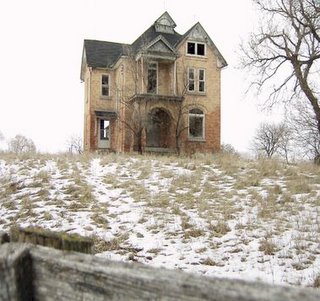
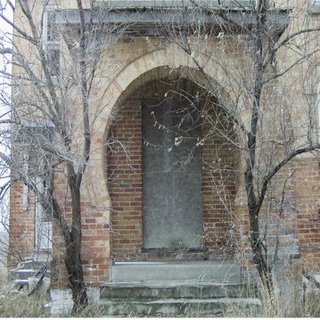
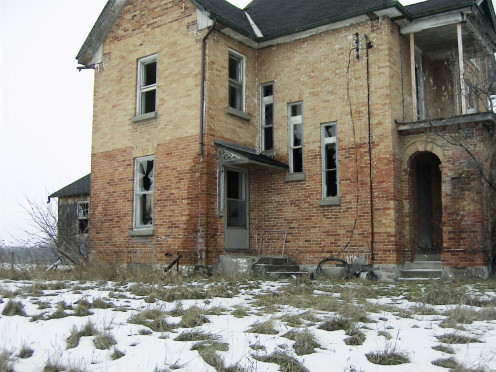
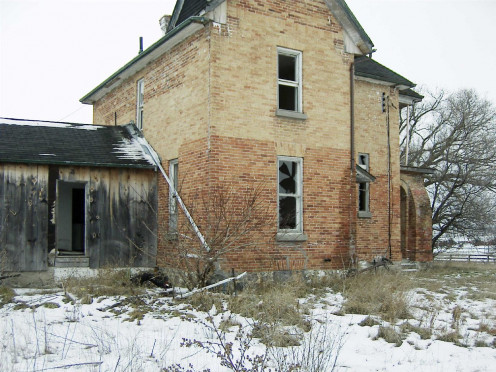
I explore abandoned places, most often farm houses here in Ontario. I post my photos to Flickr, my account there and some of them I select to post to the groups I began for Ontario Rural Ruins and Canadian Rural Ruins. People like my photos and will often ask, "Did you go inside?".

I very seldom go inside the abandoned places I photograph. Not everyone understands this. Some people think you aren't a real explorer if you don't go inside. But, I feel differently. I love to see the outside of the homes for one thing. I also prefer the places which are very deteriorated, eroded by the elements and overgrown by plants. Those kind of places are not safe to enter. I know one explorer who has some engineering and fire fighter background, he takes more risks and enters the places which are risky. But, he is educated about it and decides to avoid anything dangerous.

There is another issue about entering an abandoned or derelict place. You don't own it. So you're trespassing in reality.

At an abandoned place you decide for yourself how far you should go. For me, I walk around the building (watching where I step) but I don't go inside. That's the point where it doesn't feel right to me.

About Trespassing

Basically, trespassing is going onto the owner's property knowing you are doing so and not having permission from the owner. So, by the law urban and rural and industrial exploring of property you don't own yourself, is trespassing.

But, I do it anyway. Sometimes I do stop at a clear sign that the property owner does not want anyone there. If I see a 'No Trespassing' sign or if the property has a locked gate blocking access, I will stop there and just use my camera's zoom feature to get what photos I can. You can take photos from a public access area - that isn't trespassing. You can walk up and down the street along a 'No Trespassing' location and take as many photos as you like. (From the public side).

But, I do sometimes take a step onto the property so I can see more. I don't cause any harm. I don't litter or take anything away with me. I also don't enter the premises (the building) on the property.

The odd times I have had someone stop and ask me what I was doing it was a neighbour who was curious. Sometimes they will tell me all they know about the building and the people who owned it (especially when it comes to old farm houses).

Once, I was asked to leave the premises by security. This was at a location in Orillia, Ontario which had once been a sanitarium. I think they left me to my own devices for awhile before approaching me. I was able to have a nice walk around and I had just finished taking the last photo I wanted to get when they stopped me. They were very nice about it and I had no problem leaving by then of course.

Just to note: a trespasser would probably not be prosecuted if the property was not fenced in, did not have trespassing signs and the land was open - if the trespasser did not interfere with the owner's use of the property and if the trespasser left without incident once (or if) they are asked to leave. (You can be asked to leave by someone who is not the owner and that counts too).

This is why I am strict about the 'Leave only footprints; take only photos' theme of exploration. This is also why I almost never enter the building on the property but I will carefully walk around it to view as much of it as I can.

Some people may think the property owner is just being a miser, a Scrooge or a Grinch about the whole trespassing thing. So, you need to consider it from their angle. First, if you are injured while on their property (even uninvited or as a trespasser) the property owner is liable for whatever happens to you. Not quite fair is it? The property owner isn't even there to have a voice in your exploration, yet they are responsible for you while you are there.

Of course, any harm you do while there will be left for them to deal with or clean up. So don't leave so much as a coffee cup around and don't take anything you didn't arrive with on your person. A property owner can claim ownership of the photos you have taken while accessing the property, if you were not on public grounds while taking the photograph.