Archive of
Posted on . Filed in . Tagged with .

Joomla as an Alternative to WordPress

I want to create a site which will be more than a WordPress blog or a site running with the limits of WordPress themes and plugins. I looked at Drupal and others but decided Joomla seems the most user friendly, with community support and enough extra features for me to have the site I want to build. Joomla is open source.

WordPress is still great for a site which is intended as a blog. But, I want to evolve. For years I have wanted to build my own web directory and create a site which will let me have a calendar of annual holidays and events which I can also use to distribute egreeting cards with my ASCII art. I have been trying to do this with various WordPress themes, plugins and just using WordPress as it is. It's not working. WordPress is great at what it can do, but there are still limits to WordPress if you want more content than an online journal or basic website.

I had a plan for my site when I was running WordPress but I kept bumping into roadblocks where WordPress just was not enough. I'd download one plugin and another theme and have them break, lack support or just be a drain on my bank account without giving me the results I wanted. So, off to explore new territory: Joomla.

Joomla Installed Easily

I loaded Joomla onto my web domain and now I am teaching myself how to get my site off the ground again. I like learning new things. But, I admit, I'm not learning as easily and quickly as I would have done when I was still 30-something. But, I want to do this. Another exploration for Laura the Explorer.

Installing Joomla was straight forward enough. You can install it from your web host, an automatic install which just needs you to type in a name for the new database you are creating. You need to know your web host information for the domain. This is the same information you would need for installing WordPress. So, if you have done that before you won't find Joomla a challenge to install.

I do find both Joomla and WordPress could have a more user friendly guide for the installation. Someone who is completely new to setting up a site will not have enough basic information to make the install go as smoothly as it could. I'm not saying the install is a complicated process, it will just seem that way to someone who has no experience at all.

Joomla Builds Websites, Forums, Portals and Blogs Too

I have found modules and extensions which I am learning to work with on my Joomla site. As a bonus, my sister runs her business site on Joomla so I will be able to help her from time to time too.

I'd write more about what I'm doing but I am just working in the background on my site, in the admin section. I'm taking my time and deciding which Joomla theme I want to start with now that I'm not blogging. It's all different when you step out from the blog.

Posted on . Filed in . Tagged with .

An Interview with Michelle Rowen (Writer of the Immortality Bites Mystery Series)

I began reading the Immortality Bites series when the first paranormal romance came out in paperback at my local book store. The last three books in the Immortality Bites series have evolved from paranormal romance to the mystery genre. An interesting switch in genre while staying true to the original characters and style of the books.

Michelle Rowen is a Canadian writer, from the Toronto area. This year Michelle celebrated a ten year anniversary for heroine, the main character, Sarah Dearly. Ten years from the original idea, books published in two genres to now. Quite an accomplishment.

Finding Michelle Rowen Online

Michelle Rowen Twitter Facebook

A Quick Interview with Michelle Rowen

I was disappointed to read that you have put the Immortality Bites mystery series on the back burner. Do you have plans to keep Sarah Dearly going, maybe in another genre?

I'm very happy to hear you've enjoyed the series! I would say, more than "putting it on the back burner," that after writing about Sarah for a decade, over seven books in which she "starred," we've both come to a comfortable stopping place. I absolutely adore the paranormal mystery genre, so the future will probably include more books about a brand new main character, or perhaps I'll get the urge to revisit Sarah and Thierry one day and see where their adventures have taken them.

What was the hardest or most interesting thing about writing in the mystery genre?

I started writing in what could only be properly described as "paranormal chick-lit" when it was a hot genre back in 2006. Before too long, most paranormal readers began looking for grittier and sexier books, rather than quirky and funny. What I love about paranormal mysteries is that the "fun" stuff that I love can rise to the surface again. Mystery readers (specifically in cozy paranormals) are totally okay with talking animals, wacky spells, and sarcastic heroines -- which is what I love to write the most.

Why did you choose to write a mystery rather than science fiction, fantasy or the horror genre?

For many of the reasons stated in the last question... there's more room to explore the fun side of things that isn't entirely welcomed in other genres. Also, I will admit that Sarah is the one character I've written that stubbornly directed me in what she wanted -- probably since she's existed in my head for so long, she feels she can take such liberties. And after she got the vampire of her dreams (who, FYI, was not the guy she was originally supposed to end up with at the end of Bitten & Smitten!), she implicitly stated that now she was ready to solve some mysteries. There were always mystery and suspense elements in the original series, so it felt like a very natural evolution.

I really enjoy your writing style. What was your writing background before you became a published writer?

Thank you! It took me a while to find my voice. I spent my "wannabe a writer" years trying to write historical romances and literary fiction, to no great success or personal passion. I'd say that my love of Buffy the Vampire Slayer was a huge influence on me -- and I know it was a huge influence on many other paranormal authors. Around the same time, I discovered first person urban fantasies, in particular the earlier Anita Blake books, that helped me develop my own writing. I even wrote some fan fiction to practice, which will never, ever, ever see the light of day. grin They say write what you love to read, so that's what I tried (and still try!) to do.

What do you especially like to read yourself?

I'd love to say I read widely, but that is a goal I constantly fail at. Currently I seem to read a great deal of YA paranormal and fantasy books, almost always in first person, and...judging from my TBR shelf... not much else! I used to be a big Stephen King fan and would love to get back to his writing. And I am a major Karen Marie Moning fan who is counting down the days until the next Fever book.

What do you see as the future of paranormal novels? It seems to be a genre that's slowing down a bit.

I think, like with every "hot" genre, there is a life span to it. Paranormal has been super hot for, I'd say, twelve years now, which is quite a long time in publishing. A few years ago, I visited a bookstore to see that the shelves, particularly in the romance department, were full to overflowing with paranormals, as publishers scrambled to put out what readers were buying. Nothing can be sustained at those numbers for long, and readers' tastes change. As businesses that need to see a profit to survive, publishers will try to meet these changing interests. Luckily, now there is the option of self publishing and authors who love to write PNR can take the fates of their vampires, werewolves, or fae princes, into their own hands -- and straight to the reading public who can't find it as plentifully on the selves anymore. It's a great time to be a writer!

Reading Immortality Bites

The name Sarah means "princess" and I was expecting the character would be another of those vampire princess types who seem to have endless money and resources for shopping, beauty and fashion being a feature of the book as much as the story itself. I was very glad to be wrong.

Although fashion is part of the story it is not the focus. Instead you will find an adventure with plot twists, a strong backstory, unexpectedly likeable villains and characters you don't easily forget. The writing style flows and carries you along. I found myself unable to stop reading until after 4:00 AM when I came to the last page and all the loose ends were tied up in a fairly happy ending for most of the characters. No, not everyone gets a happy ending, some just get to carry on and maybe find themselves in another story.

The story is the thing in a book by Michelle Rowen.

Posted on . Filed in . Tagged with .

An Interview with Christopher Moore

Links for Christopher Moore Fans

Christopher Moore Twitter - @TheAuthorGuy Bluesky - @theauthorguy Christopher Moore's Blog

You don't need to read the books of Christopher Moore in any order. I can say that from my own experience. I have read them in no order what so ever.

I read "The Stupidest Angel" first. I thought it might be a funny Christmas story so I added it to my over night bag when I visited my brother over the Christmas holidays (about 3 years ago). Sure, it was in the holiday theme.

I would not now claim it as a family friendly, warm hearted holiday tale. Don't mistake this to mean the book was anything less than great. From that first book I have searched and dug for Christopher Moore books until I have now read all but 3 of them (I've started reading Lamb so that will leave just two soon).

A Quick Interview with Christopher Moore

I read a review you wrote about Dracula. I haven't read it yet but was surprised you have it as a favourite. It's not a funny book! :)

I started out a horror writer, it's just that people laughed at my horror stories, so I went that way.

Your books overlap from humour to horror, historical and dabble in science fiction/ fantasy - which is your favourite genre to write?

I don't even think about genre because my stuff straddles so many. I do prefer writing historical for a couple of reasons. One, I usually learn something cool in the research, and second there were no cell phones. Cell phones can be a great device to get information between characters, but for suspense they can be a killer, and I'm finding a lot of writers are depending on the "no service" device to keep the suspense heightened. (Last episode of True Detective. Why not call back-up? No cell service.)

Your one liners on Twitter are great. How do you keep fresh inspiration and ideas flowing for your books and Twitter too?

Well, I tend to react to the world in a humorous way by default, so Twitter is easy because I can react to anything in the news, a quote, a meme, anything. Twitter is sort of the natural habitat of the nonsequitur, so if something comes out of left field, it's okay, it will probably work. For a novel, I'm usually reacting to the world that I've created in the book, and usually from the point of view of the characters, so I'm constrained by say, 19th century Paris, so I have to think in that context. There are times, though, when I'm working on a book and I just don't have anything to put on Twitter because I'm in the world of the book. I'm still not sure I know how to do Twitter, right, anyway. Cleverness doesn't necessarily translate to followers. I think I've discovered that people respond better to being nice and insipid than being clever and funny.

I loved the idea of vampires being turned to statues but what I really want to know - Is Abby Normal going to be back soon?

You read all three, right? She's sort of the star of Bite Me. She also has a cameo appearance in the book I'm writing now, the sequel to A Dirty Job.

Sacre Bleu was more than just a fun read. You did a lot of research for that book. I think it must have been tricky to bring famous people from history into life, as characters in your story. How did you decide on their personalities and how far to take them into your fiction?

The thing about the impressionists is we know a lot about them, unlike the characters in Lamb, from 1st Century Palestine, about which we know almost nothing. So you have letters by Cezanne, for instance, both to Bazille, and about Bazille. Renoir's son wrote a biography of him while the artist was still alive, and Renoir comments on the personalities of the artists. Most of the letters, of course, are much more formal than anyone would speak, so I have them being more casual in their speech, and probably more casual than they actually were. Toulouse-Lautrec was the one I really took a lot of liberties with because I needed a character who was naturally funny, but when you see the photos of him, he seems like he was a pretty playful guy. Ultimately, though, I crafted the book around the artists who I thought I would like, personally, like Bazille and Renoir, and I didn't have the ones who didn't resonate as much with me, like Degas and Cezanne, although I think that the latter two were probably the better painters.

I'm looking forward to your new book, Serpent of Venice. But, I'm partial to Pine Cove because I began reading your books with The Stupidest Angel. I've read them in backwards order, finished reading Practical Demonkeeping this Spring and read the Lust Lizard last year. Are the people of Pine Cove going to survive the next monster you drop in on them?

I really don' t have any plans to go back to Pine Cove. When I was writing those books I lived in a little coastal town in California that sort of mirrored Pine Cove, but I left there in 2003 and since then my "go to" location has been San Francisco. I just don't have new observations about a small town I could put in a new book.

I read Frankenstein this year and began short stories by H.P. Lovecraft over the summer. Do the horror classics inspire you and which (if any) are your favourites?

I read those when I was coming up, in my teens, and with both of those, Frankenstein and the Lovecraft stories, you have to take them as products of their time. The stories and mood of Lovecraft stick with you, the feeling of dread, but his writing was very formal and sort of dense, I think largely because he was getting paid by the word, but also because of the 19th century stories that inspired him. So you learn very early on that you can't and shouldn't write like Lovecraft. Shelly is similar. She was brilliant, sort of beyond of my ability to comprehend of someone who was 19 year old, but she was of her time. Frankenstein is extraordinary in many ways, but I think I knew by the time I was 17 that I'd never be able to write that way and make a living, and that's what I wanted to do. So yes, you HAVE to read those classics. You have to know what has come before. (What T.S. Eliot calls "the poetic tradition") Otherwise you're going to do something that was done better a hundred years ago and you may not even put a good spin on it. There used to be a running joke among sci-fi writers that everyone, at some point, would write a "the star was a spaceship and Jesus was an alien" story and think they were the first one to have the idea. (I know I did.) If you don't know that's a non-starter, you just pile on. You read that stuff and you take what you can from it. You'll go back years later, after you know more, and Frankenstein will be a new book.

I wrote a story or two imitating Lovecraft and Poe in my teens and they were terrible, but that said, The Serpent of Venice is partly based on an Edgar Allan Poe story, so having read those classics have served me pretty well. I could probably do with a refresher read on a lot of them.

Why I'm a Fan of Christopher Moore's Books He writes horror, fantasy, and humour all some how rolled up into one winding yet believable story. The key is, believable. No matter what he writes about: vampires, monsters, drug dealers, serial killers, or ageing porn stars - the stories will keep you reading more and laughing along with him.
Posted on . Filed in . Tagged with .

Urban Explorers Don't Always Get Second Chances

Abandoned places are demolished before you make time to visit them. So, make sure, when you do get there, you have your camera ready. You may not get another chance.

My first time as an urban explorer was not with this camera. So far, the Panasonic has been my favourite camera and the second of four which I have bought.

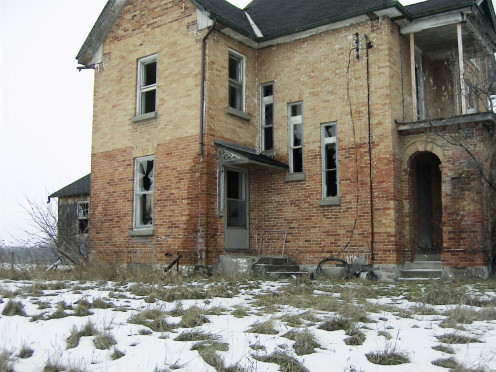
Photographs of the First House I Explored (now Demolished)

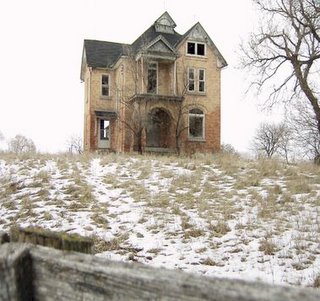
The first house I ever visited as an urban explorer. This is how it looked from the gate at the bottom of the driveway, just off the main road.

The first house I ever visited as an urban explorer. This is how it looked from the gate at the bottom of the driveway, just off the main road.

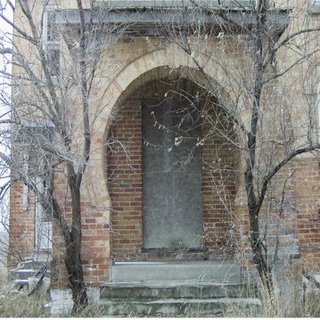
This was the front door. Lovely arch over it.

This was the front door. Lovely arch over it.

This was the left side of the house. Later I found photos of the inside and realize that was a stairway where the windows go up on the side.

This was the left side of the house. Later I found photos of the inside and realize that was a stairway where the windows go up on the side.

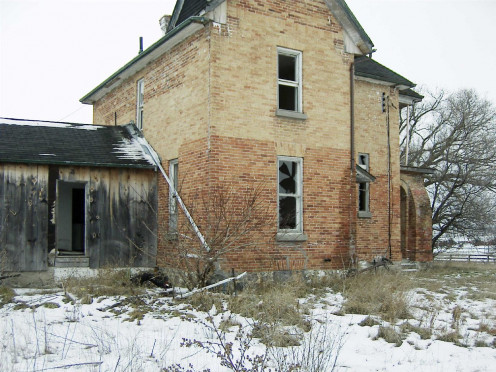
This was farther to the back of the house. Likely the wooden addition was a summer kitchen.

This was farther to the back of the house. Likely the wooden addition was a summer kitchen.

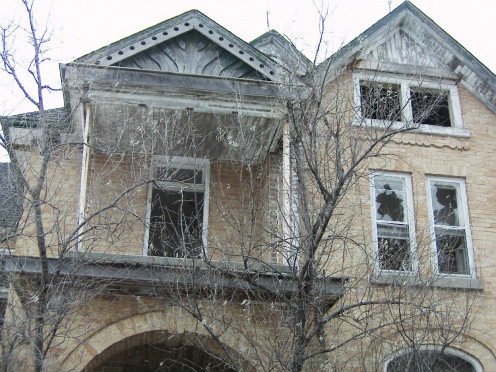
This is closer up looking at the front of the house. I like the gingerbread trim and brickwork. The colours were great.

This is closer up looking at the front of the house. I like the gingerbread trim and brickwork. The colours were great.

My First Digital Camera on my First Urban Exploration Adventure

The first camera I bought for urban exploring was made in China by a company I have not heard of before or since then. I bought that first camera at Zellers, a Canadian department store which I was working for at the time. I was so happy and proud to have my first digital camera. It was liberating to be free of film and film developing which made photography so expensive as a hobby.

That first camera needed two double A batteries. I brought extra batteries with me. But, the first time I used the camera the one thing I did not know what how important it is to have a memory card. I had none, just the memory which came with the camera itself.

So my first urban exploration adventure was not as long as I would have liked. I ran out of camera memory before I had taken even 20 photos. That may seem like plenty. But, when you are photographing an entire house, the remains of the garden, the barn and then the more interesting parts of the house where I wanted to zoom up and see more... I was out of memory.

Urban Exploration Doesn't Come with Second Chances

I still did get photos which I treasure. Unfortunately, that was the one and only trip I made to that first house. Before I got up the nerve or found the time, the house had been demolished. As an urban explorer, two things I have learned are the importance of having a camera I can rely on (with plenty of memory and a fully charged battery) and the fact that nothing lasts forever. You don't always get a second chance.

An urban explorer needs a good camera, a reliable backpack to keep it in, and a map to both mark your place and show you the way to go home again. You should also dress appropriately, don't forget the footwear!

Posted on . Filed in . Tagged with .

An Urban Explorer Needs a Great Map Book

You may think the whole idea of being an explorer is to be the first to see something never before discovered. This isn't really what we do as urban explorers. Even the rural explorers are following past human settlement, construction and demolition. We explore in old footprints.

It helps to have a guide to where you might start. Then, when you have explored enough and the adventure of being lost is less fun than the idea of a fresh, hot coffee... the map book or guide book will show you which way to go.

My favourite is the Back Roads of Ontario, by MapArt Publishing.

Would you Doodle on Your Map?

A new map (in book form) is published each year. I don't buy a fresh book every year. Mine has notes, doodles, and marks where I found great treasure (a really unique, weathered and detailed old house). Also, the maps don't change so often that you need updated too often. But, it is nice to start again with a fresh map when my old one is getting dog-earred.

The MapArt book is an actual map, roads, rivers and all. But, I love to find a book like the one by Ron Brown pictured here. This is more than just a road map, it's reading someone else's findings, experiences and some forewarning about what you may or may not find when you look for the same places yourself. You also get to see photos someone else took. It's nice to see if you can find a better angle, maybe different light or see more than the than the author of the book noticed.

Ron Brown is one of a few people who write great books for anyone exploring Ontario history. Whether you are on the road with your camera or just want to read the history and see the photographs, the books have a lot to offer. They aren't all available on Amazon however. Some are out of print, some were published by small press and some are just plain old and forgotten.

If you want to explore take a great map book. One which shows you the roads and the back roads. But, take a look for other guide books for local history and backroad traveling.

I live in Ontario so I've shown the books I know (and have on my bookshelves) as a guide to letting you see what is out there when you start having your own adventures on the road with your trusty backpack, camera, boots and a map book!

What Does your Road Trip Map Look Like?

How do you treat your map?

  • It's in pristine condition, like new.
  • I took a course about map folding in school, my map is almost perfect.
  • It's a bit dog-eared with the odd rip or tear.
  • I've made a few notes on it and it shows some wear and tear.
  • I doodle on it, make notes, circle places I want to see again.
  • It's pretty marked up - but I just think of it as personalized.
  • My new map or the old one I couldn't really use any more?
  • It think it had enough of me and walked away on it's own one day.
  • I can't find my map.
  • Map..? We were supposed to bring a map?
  • It's at that stage where the paper is kind of fluffy now, almost like fabric.
  • I was attacked by aliens, they took a few chunks out of my map... they really did!
  • I don't own a map. They are too much responsibility and map folding scares me.
  • I just don't own a map. A map should be free, unowned.