Archive of
Posted on . Filed in . Tagged with .

Does a Personal Assistant Sound Like a Glamorous Career?

What does a Personal Assistant do? I imagine they are a second-hand to whoever hires them. The job could be anything from picking up dry cleaning, making coffee to writing a speech and beyond. It seems like a never-ending job of running errands and performing personal services like walking the dog, grocery shopping and booking appointments.

There are times when I'd like a Personal Assistant but it's just not in the budget. Also, how would I explain everything I need done, exactly as I want it to be done? By the time I sorted out the details with someone else I could have done at least most of it myself. So, not practical for me in any case. But, what a neat career. I bet the pay is more than a department store cashier makes, with more time for coffee breaks. It may be they stand in line and have a lot of customer service to do, but they can do it with a coffee in hand.

Would you want to try the job of Personal Assistant for a day? Who would you choose to assist, assuming you get to choose of course? Likely it would be someone famous, after all those are busy/ wealthy people we know to choose from. But, a Personal Assistant could work for anyone overwhelmed with things to do willing/ able to hire someone to help them.

You would have to be bondable, very trustworthy and competent under pressure too.

Personal Assistant Pro.com

Dream Careers: Personal Assistant

As a personal assistant you have to be a good communicator, a “get things done” kind of person, and cool under pressure. Ask yourself how you handle challenges and crises in your own life. Do you fly off the handle, or do you normally take a step back and think before you react?

The best personal assistants have an ability to move comfortably in the world of wealth and fame. Your appearance, etiquette skills and even your fashion sense may factor in here. You should be persuasive, a good negotiator, and your listening skills should be above average. You should also be extremely organized, a skilled problem-solver, and understand instinctively what types of information need to be kept in confidence.
Posted on . Filed in . Tagged with .

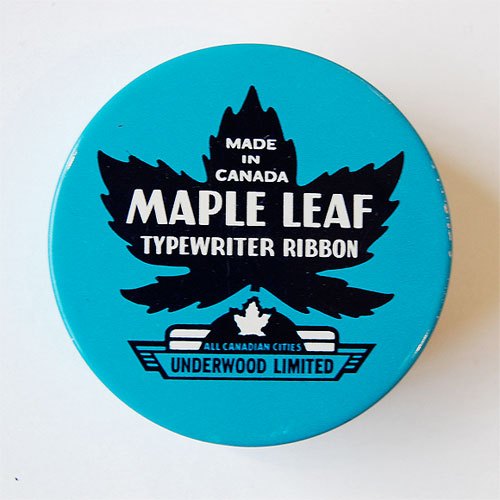
Typewriter Ribbon Tins

I've been reading about dead technology, things like wind-up watches, letter writing and typewriters. Then I found a link to people who collect typewriter ribbon tins. This got me thinking, it's not just the technology or industry itself which dies but all the little things that go along with it.

I had an old typewriter, or my family did anyway. I can remember the smell of the ribbon and the tinny smell of the old typewriter itself. The ribbon was wound around two spools and would gradually wind back and forth between them until someone decided the ink had become too faded and replaced it with a new ribbon. That's where the fancy ribbon case would come in. It would hold the fresh ribbon and spool.

Flickr: Typewriter Ribbon Tin Menagerie

As products go, what could be more banal than the lowly typewriter ribbon? In an effort to stand out from the crowd, ribbon manufacturers covered their products' tins with colorful type and graphic elements. Art Nouveau, Art Deco, and Mid-century Modern graphic design are all well represented. Some tins feature fanciful illustrations having absolutely nothing to do with typewriters, ribbons, writing, business or anything remotely connected with typing. As the industrialized culture of international business spread throughout the 1960s and 70s, soulless, bland graphics and cheap cardboard packaging took over. The tin was no more.

Collecting Typewriter Ribbon Tins -- Site by Darryl C. Rehr

Uppercase Collection of Typewriter Ribbon Tins on Flickr.

Posted on . Filed in . Tagged with .

Floaty Pens for Laura (Wherever she is)

"Life's more fun if you tilt things now and then. " -- Elizabeth Spatz

I had an online friend, Laura (which is also my own name), who loved floaty pens. Like so many people you meet online in chats, forums and various other virtual places, I lost track of her after the group fell apart/ faded away. Without turning this post into a tell all true confessions thing, I will say that I really liked Laura but (at the time) I was shocked to find out she was having an affair with one of the married men in the group. She was also married. I've become a little jaded or seasoned since those early days, back when we talked on IRC (Internet Relay Chat) and used mIRC.

Anyway, Laura had begun to create a site for her floaty pen collection. She shared the link with me. But, that was probably ten years ago. I don't have the link and so far I don't think I've found it. Many of the personal collection floaty pen sites I've found are pretty neglected/ forgotten. Not all, some are as active as this year, pretty good for a small niche hobby page/ site.

I do have a couple of floaty pens buried away in the stuff I haven't unpacked. I have been something of a vagabond, moving every 5 to ten years. Unpacking wears thin. One of my floaty pens came from my Grandmother's trip to London, UK. Another I had bought myself with my allowance money on a family trip to Niagara Falls, Ontario. A third pen is from the CN Tower here in Toronto, another family trip though we had arrived on a foggy day and never did go up to the observation deck to try looking for our house.

There is a recent pen, pink for breast cancer awareness. It's not as fun as watching London bridge rise and fall or the elevator go up and down the length of the CN Tower but it is pretty in pink, with the pink ribbon floating along a line of women standing together. I bought it at Zellers, when I was still working there as a cashier.

Happy Worker: Custom Floating Action Pens

History of Floaty Pens
In the 1950s, Esso (now Exxon Mobil) approached Peder Eskesen, a one-time baker and the owner of a small acrylic factory in Denmark. Eskesen had been working on a pen that contained mineral oil, and Esso wanted to have an original ballpoint pen made with a small oil drum floating in oil. Buoyed by this first floating success, in the decades that followed Eskesen produced numerous corporate and tourist souvenir floaty pens. A later standout invention was the famous (or infamous) tip 'n strip pen. Long a staple of dorm rooms and source for teenage snickering, these x-rated pens featured scantily clad female or male strippers whose black-colored underwear vanish completely with a simple tip of the pen. Of course, the mechanism behind these conceal & reveal pens have also been put to good use with other, less controversial corporate messages.

Float Art Design: History of Float Pens

Over 63 Years of Float Pen History
Typical Danish-made Eskesen floating pens create a detailed miniature scene inside the confines of a 16×80 millimeter translucent tube, and inside the tube, some object (a plane, a car, etc.) always floats by. The liquid inside the pen is not water but rather mineral oil, which allows the floating objects to float smoothly and slowly across the scene.

Eskesen was not the first company to attempt floating pens. Other styles had been created over the years. But inventors had been plagued by the problem of leaking mineral oil. In 1946, Peder Eskesen, a Danish baker, developed a method of effectively sealing the oil-filled tubes, launching him quickly in front of his competitors. Eskesen has continued on to become the leader in float pen technology, and the company's sealing process is still a carefully-guarded secret.

Early Eskesen pens often held 3-dimensional floating objects, such as the mermaid pen (below). There were many mechanical pencils made, and many of the parts were metal. In the 1960's, however, it became difficult to find workers willing to hand paint the 3-D floating objects, and the metal parts became too expensive to be profitable.

Eskesen's first pen order was for Esso (now Exxon) and contained a bobbing oil drum. Soon the company was marketing the pens worldwide.

Posted on . Filed in . Tagged with .

One Eye Green, the Other Eye Red

I went to a movie with my nephew, Zack. As we went in we were each given a pair of 3D glasses. I cringed. I've worn them for movies before, in the 1980's and once for a cartoon sort of thing in the 1970's. They were painful. Not just my eyes which watered and burned but the headache I was left with.  So I was not keen on another 3D experience, not even for Jack Sparrow himself!

This time I was surprised. The glasses were better made, not cardboard with one lens green and the other red. They could easily be mistaken for sunglasses. I did have to wear them over my own eyeglasses but that wasn't really a problem.

Someone has designed a much better pair of glasses for watching 3D movies. I even kept them after the movie, though almost everyone seemed to be tossing them into the receptacle provided. Zack didn't keep his. I think people just didn't have the appreciation for them which I did. To me, they were a miracle in comparison to the old 3D movie glasses.

Kids at the Bar: Collecting 3D glasses from around the world.

Kevin Baird's photo of a small collection of 3D glasses.

Etsy: Mylittlethriftstore has 3D glasses from the 1980's for sale.

I read about the idea of 3D in Wikipedia, stereoscopy. If you really want to get into stereoscopy look up the International Stereoscopic Union.

eHow: History of 3D Glasses:

Anaglyph images were invented in the 1853 by Wilhelm Rollmann.. The lenses in anaglyph 3D glasses were typically red and green until the 1970s, when manufacturers began using red and cyan lenses.

Flickr: 3D Glasses are Dope -- Share photos of your 3D glasses or people wearing them.

Technabob: Dolby Shows Off Ugliest 3D Glasses in History-- These 3D glasses were made for collectors I think. You can buy them (they aren't meant to be disposable and returned at the end of the movie) but if you try to walk out with them alarms will go off. Would you buy a pair or reuse those offered at the movie theatre, like a pair of bowling shoes?

You can make your own 3D glasses at home.