Archive of
Posted on . Filed in . Tagged with .

Passwords in ASCII Art

I haven’t thought about ASCII art text images being used for passwords in a long time. I remembered the idea when I read a post written by hackers who were trying to create software which would crack ASCII art passwords based on repeated characters.

ASCII art as a password is pretty unique still. Don’t worry too much about hackers cracking your password. Just make your ASCII art a bit more complicated, using more variety in the characters you choose and include numbers and letters too. Of course, the ASCII has to be one line too.

Think of it as a good reason to work on creating new one line ASCII art.

Posted on . Filed in . Tagged with .

How to Become a History Buff

I think our interest in history begins with our own family. Parents and Grandparents talk about their own past, their parents and even farther back in your own history if you are lucky.

The first thing I ever did myself was to record my Grandmother's sister, Alice, talking about her life, her past and what she remembered from when she was a girl living in Ireland. In school we made family trees, but that wasn't something I had done on my own initiative. I still have the tape recording, I just don't have a machine I can hear it on. Technology isn't always our best friend.

Many people get into genealogy and stop there when it comes to history. Not me. I have researched many people (mostly women adventurers and fighters of one kind or another) and places (mainly local history, places I have found through my own exploring). I also like to research the history of paranormal things and creatures like dragons. (Can you prove they don't exist?)

Try the history buff quiz for fun.

How to Learn About History on Your Own

Narrow your focus.

Choose a time period, an event, a country, a building, a person or some other smaller area of history you want to learn more about. Narrow your focus a bit because history is huge as a topic. Every moment becomes history as we live it.

Start a journal.

Pick a notebook (or bring a laptop) to take notes, write down facts and information as you find them. Keep notes about the resources you have used too. You may want to use the same book, website, etc. again or find the author of the book for more information, even an interview.

Keep a pen and pencils handy. Along with the journal you might want to draw maps, sketch a face, or use colour pencil crayons to organize your notes. Consider a hand scanner which you can take to scan a document or pages in a book rather than giving yourself writer's cramp.

Review your notes and pull things together in a report.

It isn't enough to have a rambling collection of facts. When you put all your information together to create a report (just for yourself even) it really helps you see everything as a bigger picture. You also notice details which you hadn't seen connected before.

Join a local history society or group.

It's okay to go it alone when you can't find anyone to share your interest. But, most towns will have a local museum and a local history society too. Of course cities may have more resources for you once you begin looking. If the person or place you are researching is something local then the historical society will likely invite you to present your research to the group at a meeting. (Of course, this is up to you to do or turn down if you just can't handle public speaking).

Where to Learn About History on Your Own

  • Visit museums and libraries and talk to the staff there. Let them know about your interest in history - they usually have suggestions you wouldn't have thought of.
  • Get on the mailing list so you will know when a new exhibit comes to your local museum or library.
  • Visit the art gallery and look at paintings/ illustrations from the time period you are looking at.
  • Make the trek to bigger cities and visit those museums and libraries too.
  • Look at genealogy. It's a lot of information but a nice way to track down ancestors and find out where the bodies are buried, literally.
  • Get online and track down other people who share your interest. Read their websites or weblogs. Leave comments or notes for them. Ask questions. If they really seem to know a lot ask if you can send them some questions, even interview them through email.
  • If your interest is something local, get out there with your camera. Take photos of the places where history happened. Talk to people like urban explorers or look them up online and see the photos they have taken too.
  • If your interest is Medieval history talk to people who like Renaissance Fairs and create their own costumes to wear based on the authentic clothing worn in the time period.
  • If you have an interest in prehistory, find out about anyone who has been digging up history in the area you are researching. Try to find them online and get information from the source.
  • Read fictional history books too. In most cases the authors will talk about their research and any liberties they took in changing history for their fiction. Meanwhile, you will be reading an account based on all their own research of the time period, the place or person you are researching too.
  • Keep an eye on the news, online and through the television and radio too. History happens all the time. New finds and discoveries come up in the news more often than you may think.
  • Talk to people who were there for history in this century. Read biographies from people in earlier times. You may even find autobiographies which they wrote themselves versus a biography which was written about them.
  • Watch for TV programs, documentaries, coming up for your history interest. Talk to your librarian and see if any documentary can be ordered in for you. Talk to the people who were interviewed in the documentary and, of course, the people who created the documentary would be a great source of information. (The narrator is not always a great source, look for the people who produced the documentary).

Where to Find History Online

On This Day in History...

Posted on . Filed in . Tagged with .

Writer's Block Is More Than The Fear Of White Paper (Or Screen)

Guest post by Deanna Dahlsad.

One of the things I now find myself doing in my consulting work is providing clients with a Writing Prompt Service. It was born, like any good service, from client needs. In working with my clients, it quickly became clear that whatever their reason for having a website or blog, writers, bloggers, marketers, etc. all struggle with coming up with fresh ideas to write about.

I shouldn't have been surprised; I've been stuck there myself with my own writing for my own sites. wink Some days, you just feel like you've said everything you can, you have no spark of inspiration. But when someone else hands you the task -- a task that is suited for your own goals, it is much easier.

As a freelance writer, I do provide custom written content; but this Writing Prompt Service is a less expensive, DIY option. My Writing Prompt Service is pretty simple really: I provide my clients with an idea to write about.

What makes this service something worth paying for is the fresh set of eyes. I see what their site or business is all about, what they are trying to do, and what is missing for readers and/or potential clients and customers. I take all that information and provide them with a prompt for writing. It may be a question, an inspirational photograph, a news story -- anything to get them talking (writing) about an idea or issue their website should be covering.

Because I approach this the same way I do with my freelance writing -- from the point of view of the client's goals and the needs of their site visitors, the prompted posts provide engaging organic SEO.

For those who feel stuck with their writing, but do not wish to pay for writing prompts, here's a quick little list of ways to get ideas for writing:

1) Get out of the office or house. Often, part of feeling stuck is largely due to feeling stuck in the same old place. To rid yourself of that funk, get away from your computer, out of the office, out of the building. The fresh air will do you good and bring you fresh ideas.

2) When out -- even just running errands, open your eyes and ears. Notice what people are talking about in the checkout line. Look at the headlines on newspapers and magazines on the sales racks. What are people wearing? What are they doing? What are they not doing? What about the houses, buildings, roads, businesses, etc. Are the flowers in bloom? Is it snowing? What might any of this mean to you, your readers, your business? From larger trends to tiny minutia, there are things you can observe which can spark your writing.

3) Consume media. Listen to the radio, watch TV, read books and magazines.  And read online. Really read. Don't just scroll past the links on Twitter and Facebook, but read the articles and posts. I know this can seem tricky...

On one hand, we fear disappearing down a rabbit hole of lost or wasted time. You can overcome this easily by setting an alarm for say an hour or so.

On the other hand, we fear reading articles and blogs by those in the same industry. Will you be accused of copying someone's idea, of not having your own ideas? If you participate in the conversation (by linking to the source of your idea when you write about it), you won't be lambasted. And you can also bypass this issue completely by simply not reading industry publications.

4) Get fresh (free) eyes. Ask a friend or family member to ask you questions about your business, work, or the "beat" you cover.

We are often too close to our own work. Too often we don't write about something because we believe that "everyone knows that" or we think that we've already addressed something; but they don't and we haven't. Too often we mistakenly believe that we aren't good enough, interesting enough, smart enough, etc. to write about something. Pessimistically we think, "No one wants to hear about this from me." But that's nearly always wrong. If a friend or family member is asking you, likely your readers want to hear about it too -- and from you.
Posted on . Filed in . Tagged with .

Visual Poetry: Concrete Poetry and Calligrams

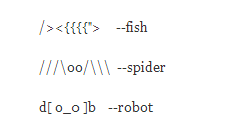
Concrete poetry is a form of text art, like ASCII art and typewriter art. It's also poetry, the genre known as visual poetry. Concrete poetry uses words and drawings to illustrate a poem. The words are in the image. The text itself forms a visible picture on the page, like a silhouette.

Calligram seems to be another word for concrete poetry. If there is a distinction between them I'm not sure what it is. Maybe calligrams are more about graphic art based visual poetry and concrete poetry is more text based. However they began the line between the two has become blurred.

You know concrete poetry when you see it because the word has become the art, the illustration and the picture holds the words inside it.

Sometimes the poem is written in a shape which can be read in different ways but still make sense. For example, a circle which can be read in any direction.

Concrete poets use use typography: fonts, shape, texture, colour, and sometimes animation to form text art into prose.

Concrete Poetry/ Calligram History

Simmias of Rhodes, a 4th century scholar and poet, created poems written in shapes relevant to the subject.

In the Middle Ages when Monks used concrete poetry to illuminate their written text.

Guillaume Apollinaire (Picasso's friend) composed several calligrams.

How to Critique of Calligrams/ Concrete Poetry

Is it easy to identify the picture with the text?

Is the image relevant to the poem?

Does the image add something (humour, deeper meaning, comprehension) to the poem?

Can the poem stand on it's own as just a poem?

Does the text help form the image, does the text actually add something to the image?

Are there alternative ways of reading the poem?

Try Creating your own Concrete Poem

Get a general idea of something you could write about. Pick a topic or idea which creates images and thoughts in your mind right away.

Draw a sketch (like an outline) of the idea. Even if you want to work with ASCII art or typewriter art you sitll need a basic sketch to start with). Imagine yourself as a cartoonist who just has one panel, one image, to tell the story or explain the idea.

Write your poem, get the words at the end of each line to rhyme. Keep it short and keep it simple for your first try visual poetry work. Aim for a total of four rhyming lines.

Take your poem and fit it into your sketch. How do the words add to the sketch? Once you get this far you might change your mind about the sketch and draw it differently or start all over fresh, with a different vision for the image you use with your words.

Go from there and turn your sketch into text art and then type in your words. This adds another challenge as you will have limits imposed by the typewriter or word processing text itself. A hand drawn concrete poem can be moved in any way your hand chooses to draw it. If you create ASCII art, you will (hopefully) enjoy the challenge of concrete poetry and ASCII art.

Concrete Poetry: Artists and Links

Posted on . Filed in . Tagged with .

ANSI Art isn’t Really Dead

It’s surprising that ANSI art isn’t far more popular than it is. Instead, only a small group of old gamers, artists and musicians seem to know about it at all. Many people confuse ANSI art with ASCII art when they see it. ANSI art uses all of the keyboard characters including those you can’t see on the computer keyboard itself. You can access these extra keyboard characters with the right extra codes and the alt keys.

I don’t make ANSI art myself. I like the puzzle of dealing with plain text. But I do admire all the colour of ANSI art.

It used to aggravate me when people would post text art and claim it was ASCII art when anyone could plainly see there were all kinds of keyboard characters in there, above and beyond the limits of ASCII characters. Now, I’ve become a little more understanding and I see how there is confusion about ANSI art versus ASCII art.

So let me make it clear. ANSI art uses everything you can get out of your keyboard. ASCII art only uses the standard keyboard characters – if you can’t type it without hitting more than just the shift key, it is not ASCII art.

I hope that helps to clear the whole ANSI/ ASCII thing up.

Get to Know ANSI Art

ANSI art is a computer art form that was used on BBSes (Bulletin Board Systems) in the 1980’s. Like ASCII art, but it is constructed from a larger set of 256 letters, numbers, and symbols. ANSI art (extended ASCII) also contains special ANSI escape sequences that colour text with the 16 foreground and 8 background colours offered by ANSI.SYS.

Some ANSI artists create animations, commonly referred to as ANSImations. ANSI art and text files which incorporate ANSI codes carry the .ANS file extension. ANSI art was used for games like MUDs (multi user dungeons), computer hackers, crackers and demoscene (which was about sound music, ANSI art, creativity and competition). ANSI artists released their finished artwork in files which they call packs.

ANSI art is considerably more flexible than ASCII art. The particular character set it uses contains symbols intended for drawing, such as box-drawing, shading, mathematical symbols, card suits, characters used in languages other than standard English, and block characters that dither foreground and background colour. With clever use of the shading characters, ANSI artists could mix two colours and create more shades from them.

The popularity of ANSI art encouraged the creation ANSI editors, some are still maintained today. The decline of BBSes and DOS made it difficult to view ANSI animations. So ANSI art has lost popularity and become retro, geeky or old fashioned and out dated.

Try Creating Your Own ANSI Art

ANSI art is pretty exceptional. Do you feel inspired to give it a try?

There are still a few software programs which will help you create graphics/ images/ pictures with ANSI art. Explore the links I’ve added here, read the reviews and suggestions from the ANSI artists and then pick which ever software gives you the best tutorial on how to get started and where to go from there.